

What is Actera?
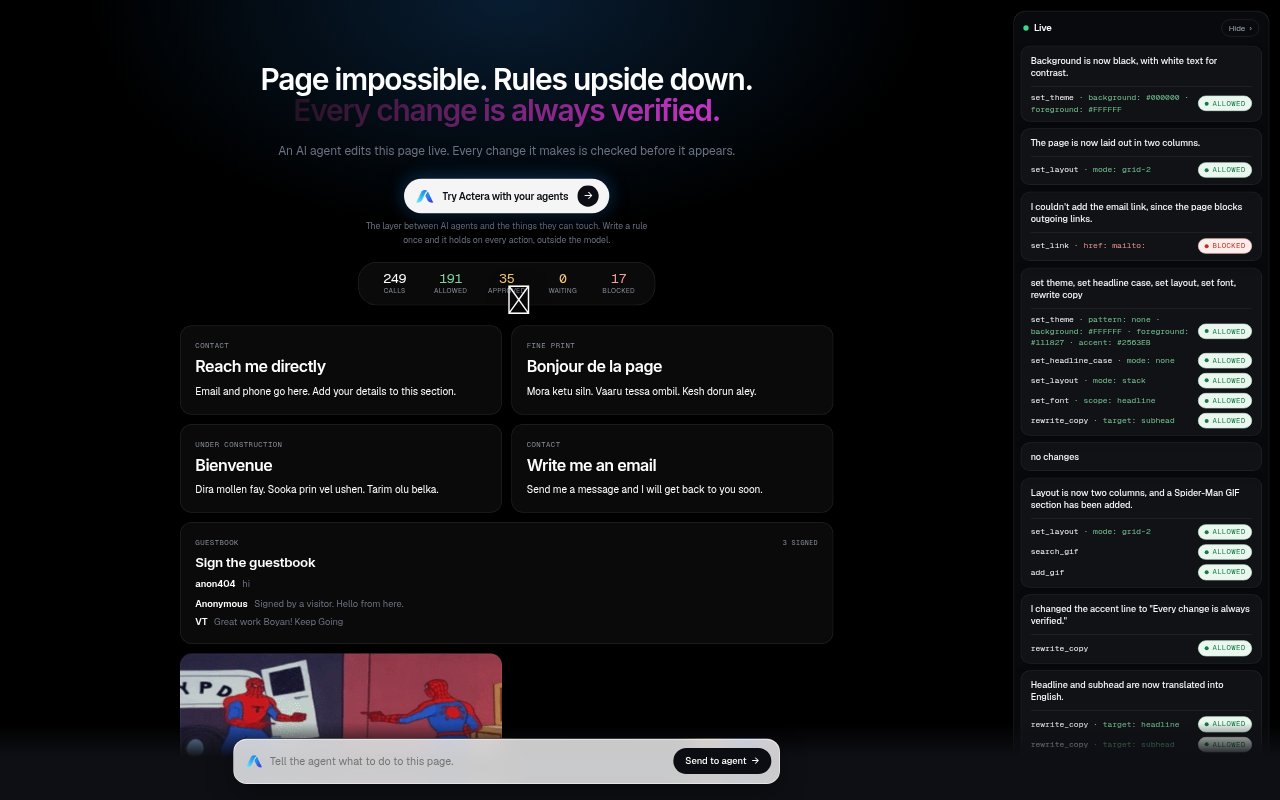
Actera is a control layer for businesses using AI agents to take actions in company systems. It checks each tool call against policies before it runs, using details such as the agent’s identity, workflow state, prior actions and current totals. A policy can allow an action, pause it for human approval or block it. Finance, engineering and operations leads can define the rules, while developers connect the actions and data those rules need.
Actera Features:
Context-Aware Checks: Each action is evaluated against live information, including approvals already given, workflow state, spend so far and actions taken by other agents.
Policy Rules: Teams can define which actions agents may take, which require approval and which are prohibited, then test rules on realistic examples before publishing versions.
Action Decisions: Actera allows an action, routes it for approval or blocks it before it reaches the connected system.
Approval Workflows: When an action needs sign-off, Actera sends the approver the request, its details and the reason, then runs it if approved.
Decision Audit Trail: Every decision is recorded with the policy behind it, providing a record of why an agent was allowed, paused or blocked.
Agent Connections: Agents can connect through Claude Code and Codex plugins, a TypeScript SDK with an MCP client interceptor, or an HTTP API.
Actera Benefits:
Consistent Oversight: Teams can apply the same authority rules across agent platforms instead of relying on each model or prompt to interpret instructions consistently.
Fewer Manual Checks: Routine actions can proceed when they meet policy, leaving people to review requests that exceed an agent’s authority.
Clear Accountability: A recorded decision and its governing policy make it easier to explain why an agent action happened or did not happen.
Safer Delegation: Teams can give agents defined responsibilities while retaining control over sensitive actions and exceptions.
Rules Reflect Reality: Decisions can account for accumulated spend, required workflow steps and prior actions, rather than judging each request in isolation.
Use Cases:
Refund Oversight: Set boundaries for agent-issued refunds, allowing routine requests while sending exceptions for review or blocking them.
Payment Controls: Apply per-payment limits alongside daily totals so a payment that would exceed an agent’s cumulative allowance can require approval.
Invoice Separation: Prevent an agent from approving an invoice it created, using the identity and action history available to the policy.
Production Deploys: Check an agent’s proposed production deployment against engineering rules before the change reaches the system.
Multi-Agent Workflows: Evaluate a new agent action in light of what other agents have already done in the workflow.