

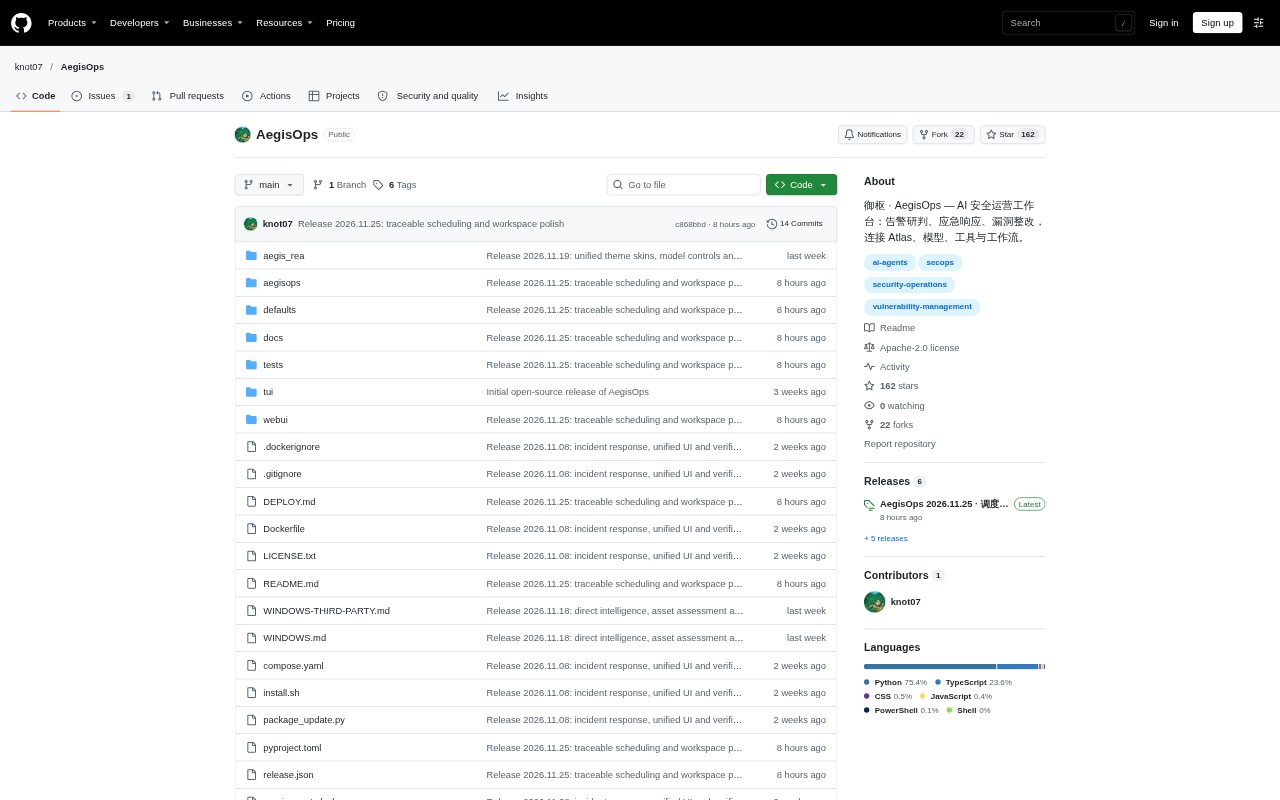
What is AegisOps?
AegisOps is an open-source security operations workbench for teams handling alerts, threat intelligence, incident response, and vulnerability remediation. It brings AI models, agents, tools, workflows, and security operations into one platform, with separate workspaces for security review, response, vulnerability operations, and intelligence. Teams can configure models and connections to their own devices and hosts, then use AI-assisted analysis alongside original records and evidence. It is suited to security teams that can deploy and configure the platform themselves.
AegisOps Features:
Alert Review: Review alerts from connected devices while retaining the source device and original clues, then move confirmed attacks or vulnerabilities into response or vulnerability workflows.
Threat Intelligence: Browse advisories from seven listed intelligence sources, filter by date, severity, or keyword, and view source links with model-assisted Chinese translations.
Asset Checks: Use Atlas to compare existing asset products and versions with intelligence advisories, recording outcomes such as confirmed, possible, excluded, or insufficient information.
Incident Response: Link incident records to device logs, investigate authorized registered hosts over SSH on Linux or WinRM HTTPS on Windows, and collect and analyze files.
Vulnerability Tracking: Maintain an asset directory and vulnerability ledger, associate issues with assets, assign remediation, submit fixes for retesting, and archive history.
Workflow Management: Create, edit, publish, and schedule repeatable workflows, then use the task center to follow workflow node execution, worker progress, and results.
AI Workbench: Configure model providers and available models, and coordinate agents, skills, tools, knowledge, and workflows through chat and workspace controls.
AegisOps Benefits:
Traceable Decisions: Keeping original clues and evidence alongside AI-assisted analysis makes it easier for analysts to review the basis for a conclusion.
Clearer Triage: Separating confirmed, possible, excluded, and incomplete asset findings helps teams avoid treating a product-name match as proof of exposure.
Consistent Follow Through: A shared path from vulnerability records to assignment, retesting, and archiving helps teams keep remediation work accountable.
Visible Execution: Task and worker progress shown beside conversations helps operators see what a workflow has done and inspect its results.
Evidence-Based Reports: Reports that cite evidence identifiers give reviewers concrete material to check rather than presenting recommendations as completed actions.
Use Cases:
Alert Investigation: Review a device alert, preserve its source details, and route a confirmed attack into an incident response process.
Exposure Validation: Check whether an existing asset’s product and version may be affected by a newly reviewed vulnerability advisory.
Host Forensics: Investigate an authorized registered Linux or Windows host, connect relevant logs, collect files, and prepare evidence for review.
Remediation Tracking: Manage a vulnerability from its ledger entry through assigned remediation, retesting, and historical archiving.
Daily Intelligence Review: Filter advisories by date, severity, or keyword, inspect the original source, and identify issues that warrant asset checks.