

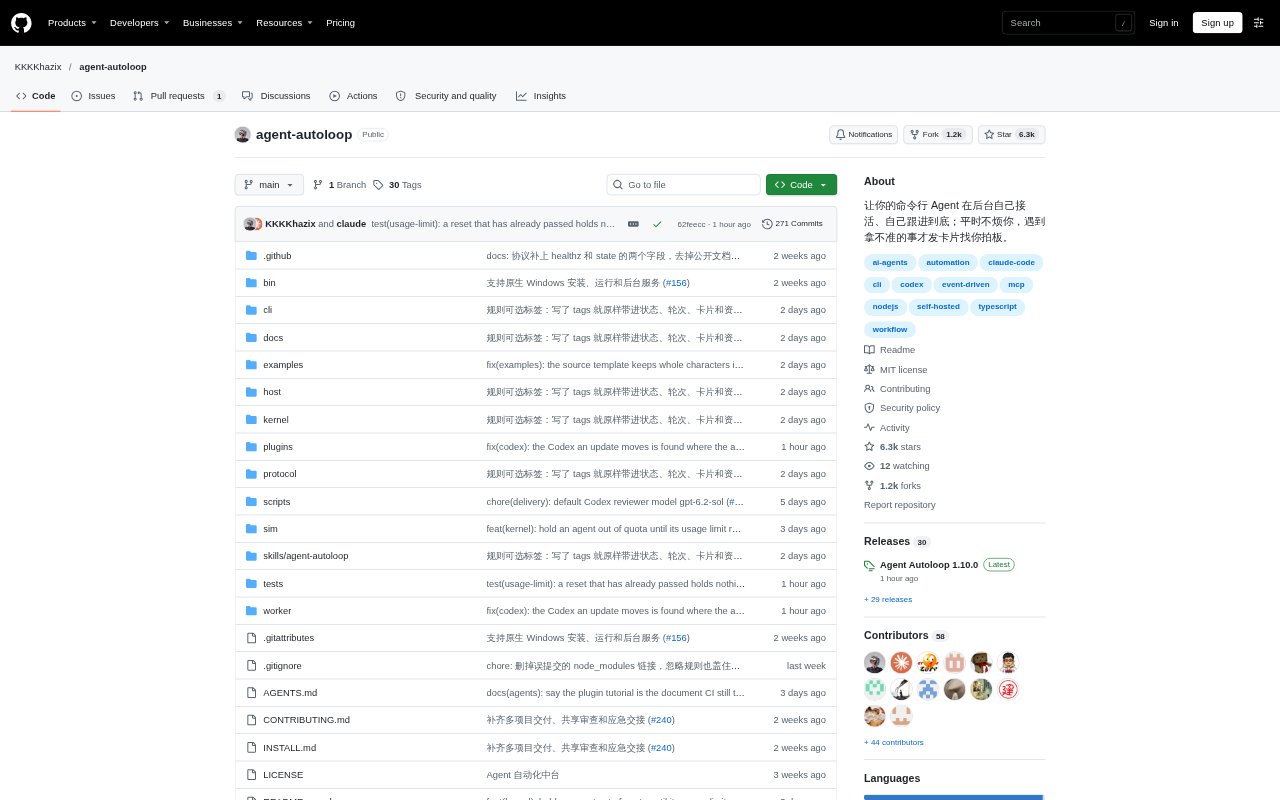
What is Agent Autoloop?
Agent Autoloop is a local automation hub that schedules work and routes events to command-line agents such as Claude Code or Codex. It is for people who want agents to handle recurring or event-driven tasks in the background, while keeping rules, working directories and agent choices under their control. When an agent needs a decision, the tool can ask for approval and resume the same conversation after a response. It runs on Windows, macOS and Linux.
Agent Autoloop Features:
Rule-Based Dispatch: Define what triggers a task, which agent handles it, the working directory and the prompt in a rules file.
Event Sources: Start work from schedules, GitHub or GitLab webhooks, HTTP events and other configurable sources.
Agent Connectors: Use built-in connectors for Claude Code, Codex and other agents, or configure a compatible command-line tool with a command and prompt.
Approval Cards: Send questions and decision options through desktop notifications, Feishu, DingTalk, WeCom, Slack or Discord.
Run History: Inspect completed runs and use a command to trace the events and results behind a particular run.
Delivery Workflow: Configure a GitHub pull request workflow to review code, wait for CI, merge, wait for deployment and check the live version.
Agent Autoloop Benefits:
Less Supervision: Scheduled and event-triggered jobs can move forward while you are away from the terminal, leaving your attention available for other work.
Lower Idle Use: When an agent is waiting for your decision, its process exits, so it does not sit running or consume tokens while paused.
Safer Decisions: Approval checkpoints let you weigh in on consequential steps such as deleting data, stopping a service, spending money or sending a message.
Clearer Handoffs: A run history makes it easier to understand what triggered work, what happened and where a task ended.
Local Operation: Run the hub on your own computer without purchasing a cloud server or opening a public network port.
Use Cases:
Daily Briefs: Schedule an agent to review local notes and Git commits, then write a daily brief to a dated file.
GitHub Issues: Route newly opened issues to an agent to work on local code and notify you to review, without submitting or pushing changes.
Operations Alerts: Send an error report to an agent for investigation, then require your approval before it restarts a service.
Website Checks: Check a site's status and key content on a schedule, alert on an initial problem and update the existing card when service recovers.
Pull Request Delivery: Use a delivery rule to follow a pull request from a designated label through review, CI, merge, deployment and a live-version check.