

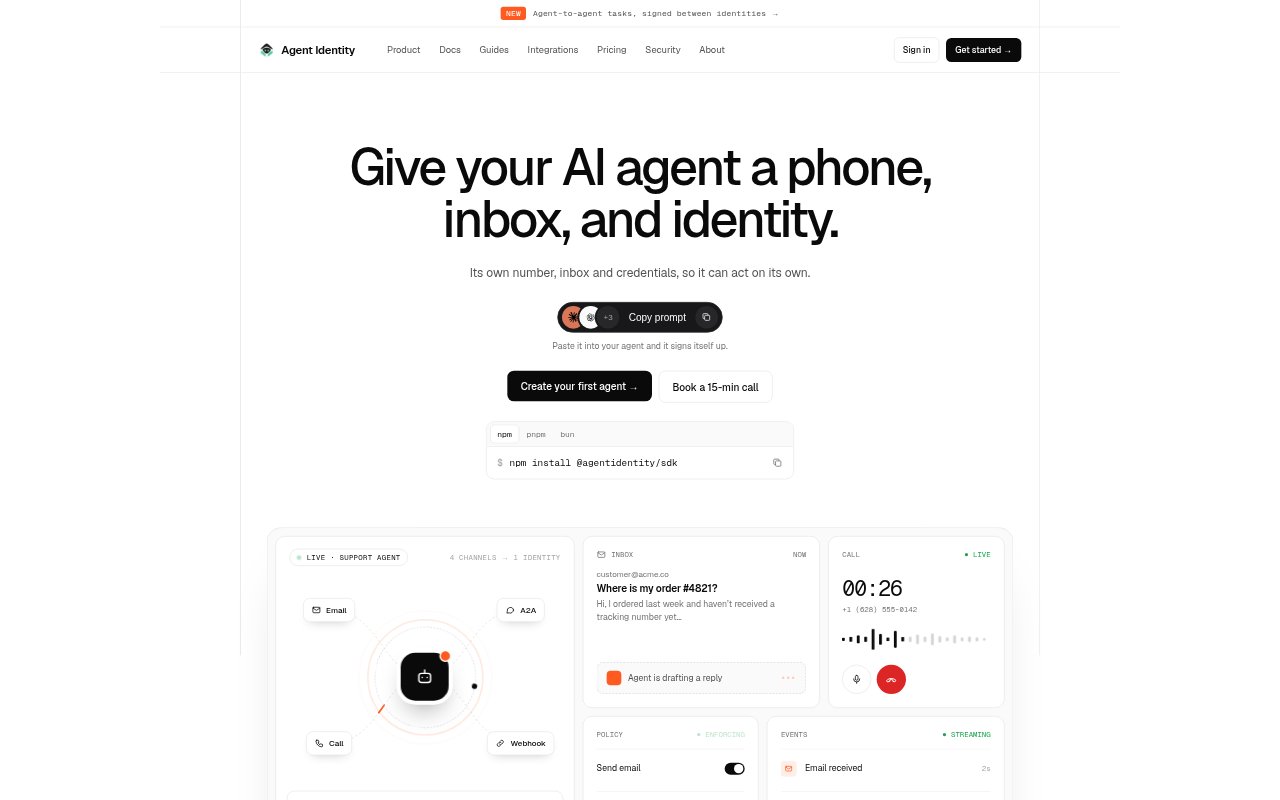
What is Agent Identity?
Agent Identity gives each AI agent a managed identity with an email inbox, public URL, agent-to-agent endpoint, secrets vault and permissions. Developers can create and manage identities through a TypeScript SDK, CLI, MCP server or REST API, and connect them to agent frameworks that can call an API. The service records actions against the agent that performed them. A free plan includes five identities, with paid plans for larger agent deployments.
Agent Identity Features:
Agent Email: Each agent gets its own inbox for sending, receiving and threading email, with replies, bounces and spam complaints delivered as events.
Phone Calls: Agents can have phone numbers for incoming and outgoing calls to US and Canadian numbers, using the built-in voice agent or a WebSocket connection to your own agent.
Scoped Secrets: Secrets are encrypted on your machine before transfer and can be leased to an agent for a single operation instead of kept in its prompt or configuration.
Agent Messaging: Each identity can have an A2A endpoint and public agent card for discovery and task requests, with private, public, allow and block access rules.
Action Policies: Actions are checked against permissions before they run, and the system records both allowed actions and decisions.
Events and Webhooks: Agents can wait for durable events and resume after a restart, or receive signed webhooks that can be verified.
Agent Identity Benefits:
Less Mail Polling: Event notifications for replies and other mailbox activity let agents wait for incoming mail rather than repeatedly checking the inbox.
Clear Accountability: An action history tied to each identity helps teams review what an agent did and when it happened.
Reduced Secret Exposure: Operation-scoped access means an agent can use a credential without keeping it in its prompt or configuration.
Consistent Context: Keeping email, calls and agent tasks connected to an identity helps an agent work across channels with shared conversation context.
Simpler Setup: A common identity layer for inboxes, credentials and permissions can reduce the need to manage those resources separately for each agent.
Use Cases:
Support Inbox Agent: Give a customer support agent its own address so it can receive email and resume work when a reply arrives.
Sales Calls: Assign a sales agent a phone number so it can place or answer calls to US and Canadian numbers.
Research Agents: Create separate identities for research agents that need their own inboxes, credentials and action histories.
Cross-Platform Tasks: Publish an agent card and control access when agents on other platforms need to discover the agent and send it tasks.
Customer Agent Fleets: Set up identities for customer-facing agents that need their own email addresses, with custom email domains available on paid plans.