

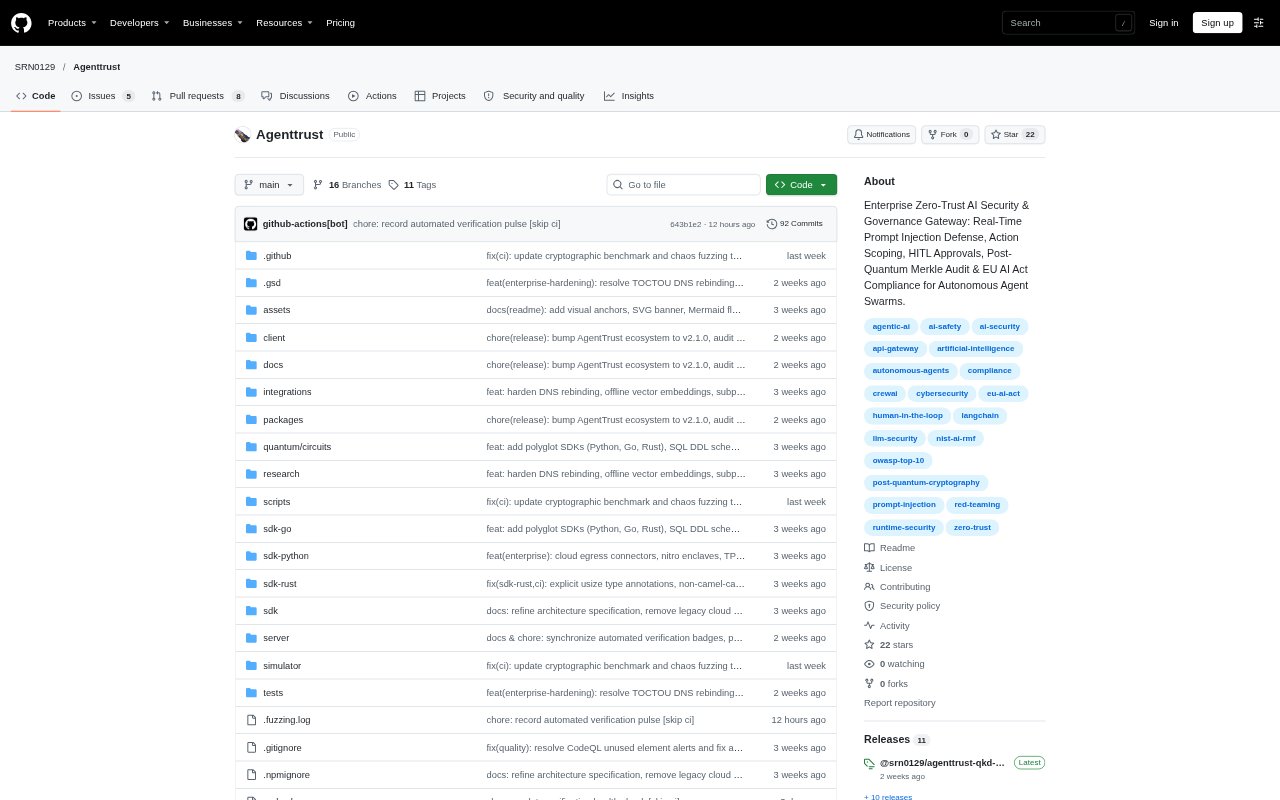
What is AgentTrust?
AgentTrust is an open-source security gateway that sits between autonomous AI agents and the tools or services they can invoke. It inspects proposed actions, applies authorization and risk policies, and records decisions in an audit ledger. The project is aimed at teams building agent workflows that need controls around prompt injection, data exposure, and potentially harmful operations. It includes a local gateway and SOC dashboard, plus a Python wrapper for LangChain agents.
AgentTrust Features:
Prompt Injection Scanning: The gateway scans tool-call payloads for prompt injections and possible data leaks before allowing an action to proceed.
Action Scoping: Action scoping checks which operations an agent is authorized to perform, such as allowing SELECT while forbidding DROP.
Network Egress Shield: Socket-level interception blocks outbound requests to prohibited private IP ranges, including cloud metadata addresses.
Risk-Based Approval: Dynamic blast-radius scoring can send sensitive or high-risk actions to a human approval gate before execution.
Execution Watchdog: A runtime watchdog monitors execution for changes involving cloud permissions and instance metadata access.
Audit Ledger: Decisions are recorded in a Merkle audit ledger with post-quantum ML-DSA signatures and an orbital attestation option for high-impact events.
AgentTrust Benefits:
Fewer Unsafe Actions: Checking requests before execution helps teams reduce the chance that an agent performs an unauthorized or destructive operation.
More Controlled Access: Fine-grained permissions give teams a way to limit what agents can do instead of granting broad access to tools or services.
Clearer Decisions: A record of allowed, blocked, and escalated actions helps reviewers understand how the gateway handled an agent request.
Human Oversight: Routing risky actions for approval lets teams retain a review step without requiring manual review of every lower-risk request.
Faster Investigation: An audit trail of security decisions gives teams evidence to consult when investigating an incident or reviewing agent behavior.
Use Cases:
Database Agent Controls: Use action scoping to let a database assistant run permitted queries while blocking destructive commands such as DROP.
Cloud Access Protection: Place the gateway in front of an agent that can make cloud requests to block access to private or metadata addresses.
Support Email Workflows: Screen tool calls in a customer-support workflow where an email could contain an indirect prompt injection.
High-Risk Operations: Require a person to approve sensitive actions in financial or infrastructure workflows before the agent executes them.
LangChain Deployment: Wrap a LangChain agent with the Python client to intercept its tool dispatches and apply gateway policies.