
What is Agor?
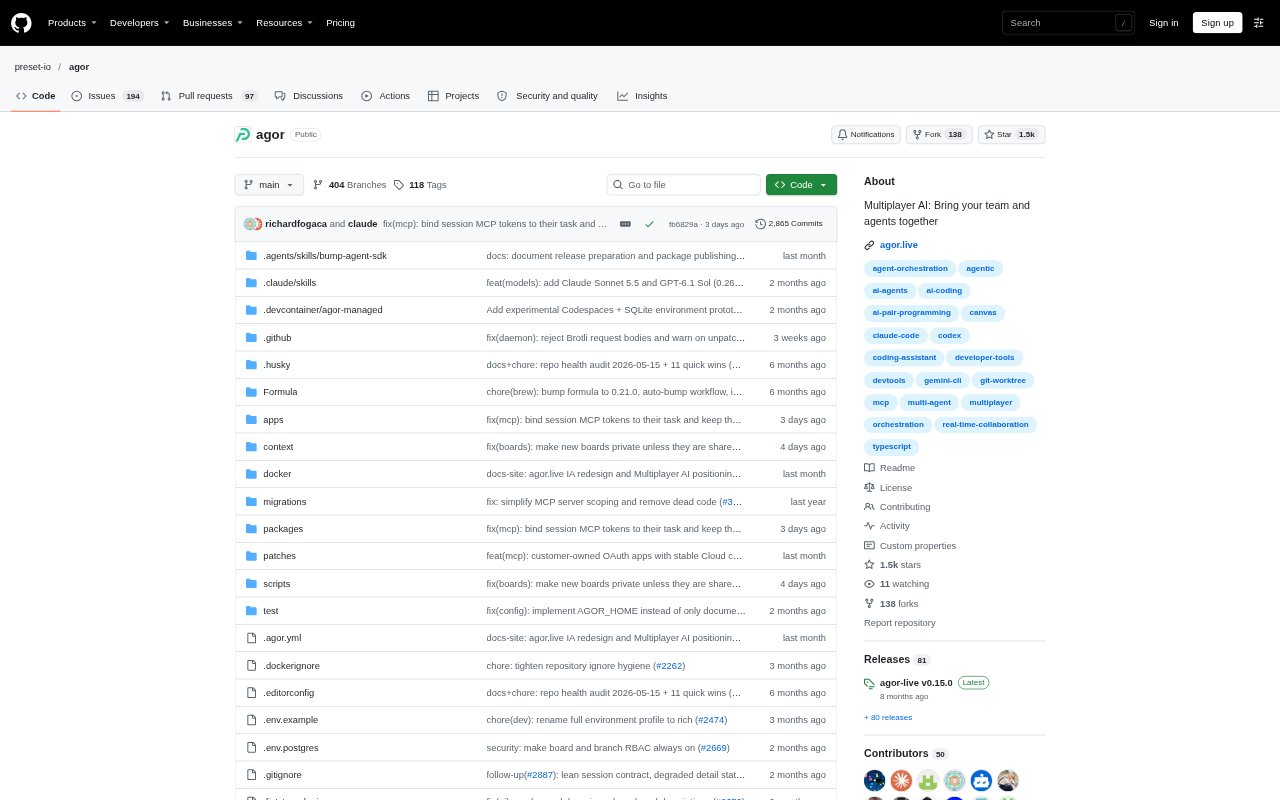
Agor is a web workspace for teams that run coding agents such as Claude Code, Codex, Gemini, OpenCode, Copilot, and Cursor. It puts agent sessions and git branches on shared boards, where colleagues can follow work, comment, and join in. Teams can also create persistent AI teammates with memory, skills, and connections to their tools. Agor uses the agent CLIs and SDKs teams already run, rather than providing its own model, and can be self-hosted or used through its managed cloud offering.
Agor Features:
Live Boards: Arrange branches and agent sessions on a shared canvas with live cursors, comments, and presence so teammates can see work as it happens.
Zones and Prompts: Group work into board zones and trigger a reusable prompt by dropping a branch into the relevant zone.
Branch Environments: Give each git branch its own working directory, conversation history, and development environment, with tools to start, stop, health-check, and inspect logs.
Session Trees: Follow agent tool calls, queue another instruction while a session runs, and fork or spawn sessions to explore alternatives and focused subtasks.
AI Teammates: Create persistent teammates with shared memory, searchable knowledge, skills, MCP tool connections, schedules, and defined limits for when they act or ask for help.
Channel Access: Mention an Agor bot in Slack, Discord, GitHub, or Shortcut to ask for work and receive its reply in the conversation thread.
Controls and Costs: Use branch-scoped permission tiers and per-user credentials, with token and dollar accounting recorded for each prompt.
Agor Benefits:
Shared Visibility: Colleagues can understand an agent’s progress and step into its work directly instead of piecing together updates from screenshots or status messages.
Reusable Practices: Useful prompts, runbooks, decisions, and teammate knowledge can be shared, making lessons from one person’s work available to the wider team.
Fewer Collisions: Isolated branch workspaces and automatically assigned environment ports let teams run parallel work without competing for the same development setup.
Clearer Oversight: Prompt-level usage records and branch-based permissions help teams review spending and manage who can access each piece of work.
Flexible Agent Choice: Teams can choose an agent harness for each session and use their existing provider and subscription instead of committing to a model supplied by Agor.
Use Cases:
Parallel Feature Work: Run coding agents on separate branches for different features, then inspect their sessions and development builds together on a team board.
Pull Request Review: Set up a review zone that starts a consistent prompt when a branch is moved into it, and let reviewers follow the agent’s work.
Recurring Team Updates: Schedule standups, digests, or audits so agents produce recurring work with transcripts the team can review.
Shared Agent Support: Ask a team teammate for help from Slack, Discord, GitHub, or Shortcut and keep the request and reply in the relevant thread.
Exploring Solutions: Fork an agent session to compare alternative approaches, or spawn focused sessions for subtasks while keeping their history connected.