
What is AI Knows Us?
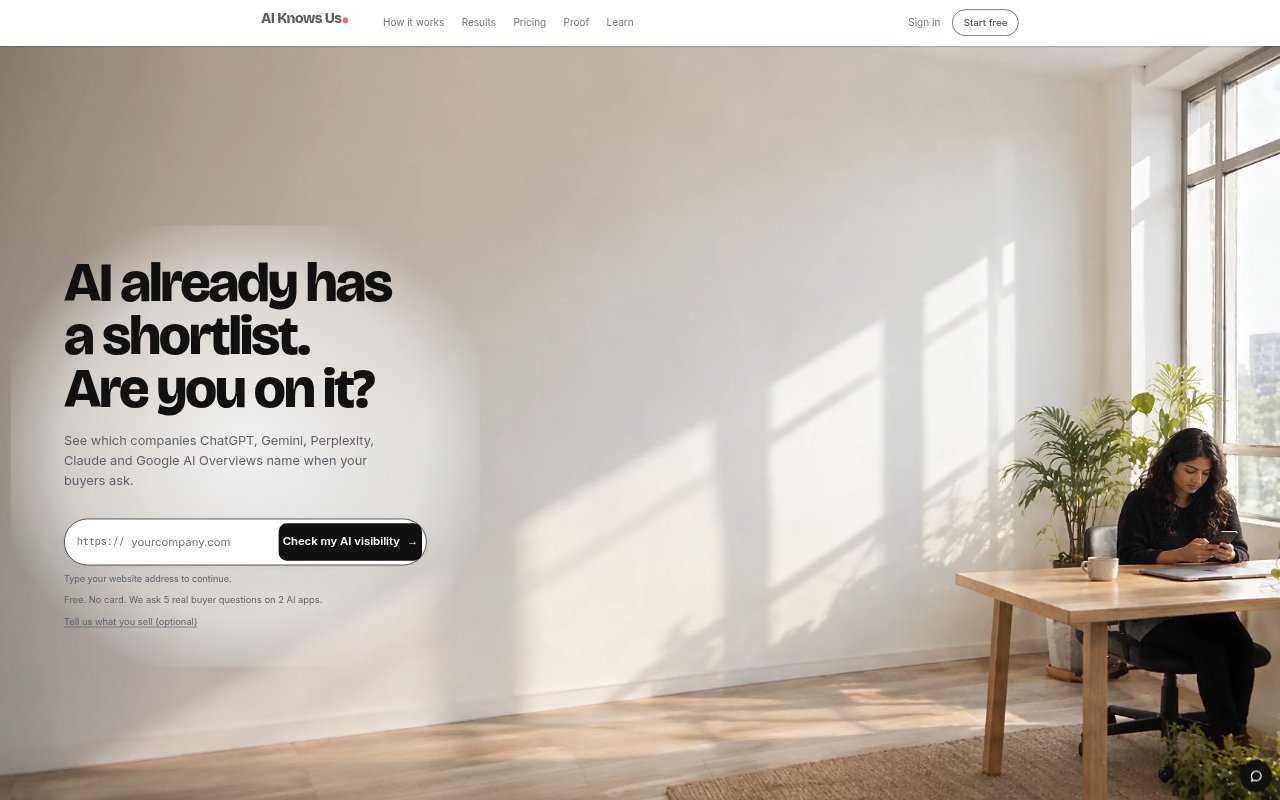
AI Knows Us helps businesses see whether AI assistants recommend them when potential buyers ask for products or services, then works to improve that visibility. It checks real buying questions without including the business’s name, tracks answers across AI apps, and publishes pages and off-site listings intended to influence what those apps cite. The service also supports Google search visibility using demand data from Google’s Ads API. It is aimed at businesses and agencies that want to be found through AI answers and search.
AI Knows Us Features:
Buyer Question Tracking: Track questions people might ask before choosing a provider, including comparisons, alternatives, pricing, location and compliance queries, without naming your business in the prompt.
AI Answer Checks: Check which businesses AI assistants name in response to buyer questions across services including ChatGPT, Gemini, Perplexity, Claude and Google AI Overviews.
Published Pages: Have pages created and published on your own domain, with the number of pages available each month depending on your plan.
Off-Site Listings: Work on external listings and other sources that may affect which businesses AI apps mention in their answers.
Google Demand Data: Use search demand data from Google’s Ads API to guide SEO content, with monthly or weekly demand harvesting depending on the plan.
Visibility Measurement: Review dated AI answer measurements, with priority questions checked weekly and other questions checked at 30 and 90 days on applicable plans.
Page Approval: Review pages and listings during a 24-hour waiting period before they go live, and stop publication if needed.
AI Knows Us Benefits:
Earlier Visibility Gaps: Find out whether potential buyers are hearing about competitors instead of your business before you know which questions to address.
Less Manual Work: Delegate research, content production and publication rather than having your team manage each step across AI apps and search.
Clearer Progress: Compare dated readings over time to see whether your work is changing the answers buyers encounter.
Search-Led Priorities: Base SEO topics on Google demand data rather than relying only on estimated search volumes from a content tool.
Publishing Control: Keep a chance to review and stop content before it is published, while retaining pages on your own domain if you leave.
Use Cases:
SaaS Shortlists: Check whether AI recommends your software for specific buyer needs, such as payroll for a small team, CRM comparisons or accounting tools for freelancers.
Local Provider Discovery: Find out which businesses appear when prospective customers ask AI for recommendations in a particular city or region.
Competitor Comparisons: Track comparison and alternatives questions to learn which competitors are named when buyers weigh products against one another.
Agency Client Work: Monitor AI visibility and publish content for multiple client businesses using plans that support agency accounts.
SEO Content Planning: Use Google demand data to decide which search-focused pages to create for a business website.