

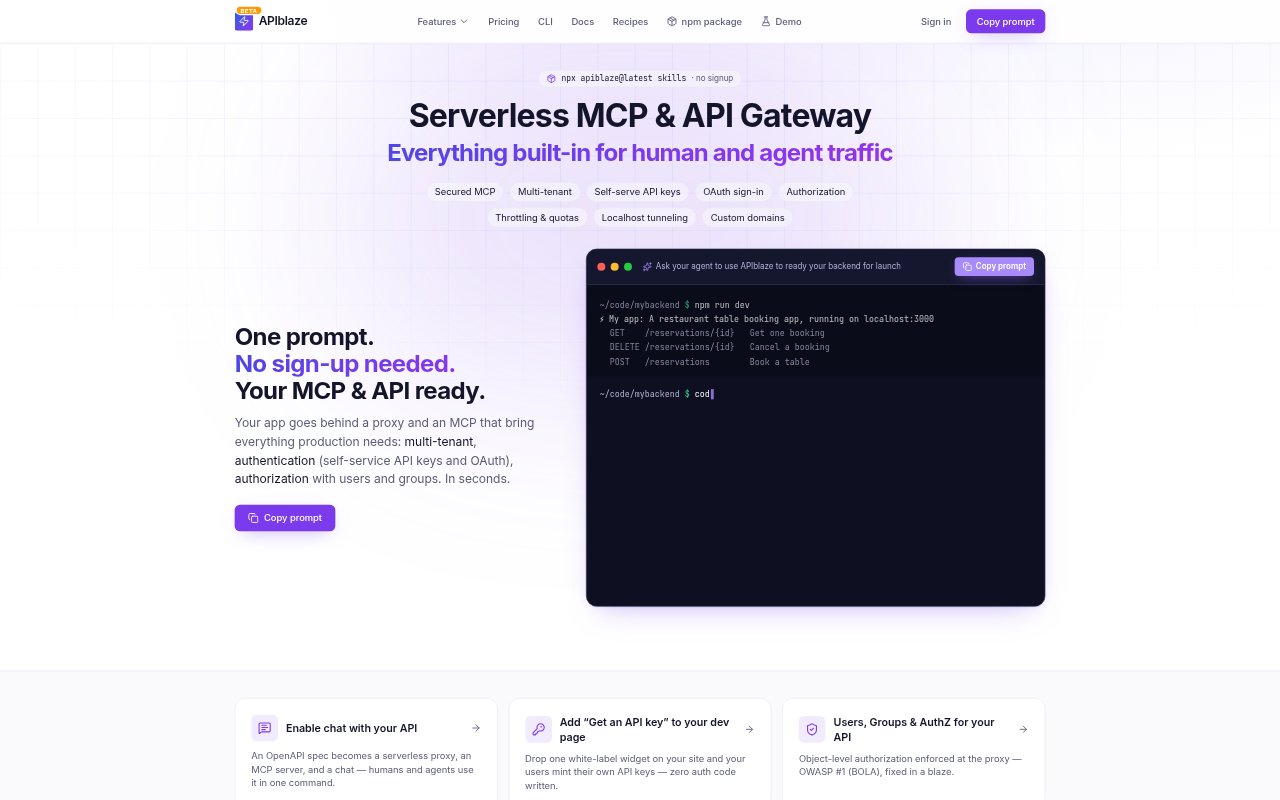
What is APIblaze?
APIblaze is a serverless API gateway that uses an OpenAPI spec to place a proxy and MCP server in front of an existing API. It is for teams that want to give people and AI agents access to API operations, with authentication and access controls handled at the proxy rather than in backend code. Pricing is prepaid and based on usage, with no subscription, and the service can be tried without an account or payment card.
APIblaze Features:
OpenAPI Proxy: APIblaze turns an OpenAPI spec into a serverless proxy in front of an API, without requiring changes to its backend.
Live API Chat: A chat interface can make live requests through the proxy, and show the curl trace for each answer.
MCP Server: The same setup publishes an MCP server so AI agents can call API operations through it.
Authentication Options: Choose OAuth social sign-in, API keys, JWT/OIDC, opaque tokens, or a trusted external issuer through configuration.
Self-Service API Keys: A white-label React widget lets signed-in users create, rotate, and revoke keys, including environment-scoped keys with masked secrets.
Authorization Rules: Define per-route access rules for ownership, roles, groups, or attributes, test them in shadow mode, then enforce them at the proxy.
Tenant Management: Customer admins can manage users, nested groups, co-admins, and provisioning identities through a site-embedded widget or CLI.
APIblaze Benefits:
Keep Backend Code: Keep an existing backend in place while adding authentication and authorization checks in front of it.
Reduce Auth Work: Avoid building API-key and identity-management interfaces from scratch by embedding the supplied widgets on your own site.
Test Rules First: Shadow-testing authorization rules against real traffic lets teams check their effects before enforcing them.
Shared API Access: People can use chat and AI agents can use MCP to work with the same API operations.
Control Spending: Prepaid, usage-based charges avoid subscriptions, and requests pause when the balance runs out instead of creating an end-of-month invoice.
Use Cases:
Customer API Onboarding: Offer API access from a developer page where signed-in customers can create and manage their own keys.
Protect Tenant Data: Apply owner-, role-, or group-based access rules to customer records before requests reach the existing service.
Agent API Access: Publish existing OpenAPI operations as an MCP endpoint for AI agents that need to call business APIs.
Branded API Chat: Add a chat widget to a product site so users can query or act on an API with natural-language requests.
Local API Tunneling: Expose a backend running on localhost through a tunnel while setting up its proxy and MCP server.