

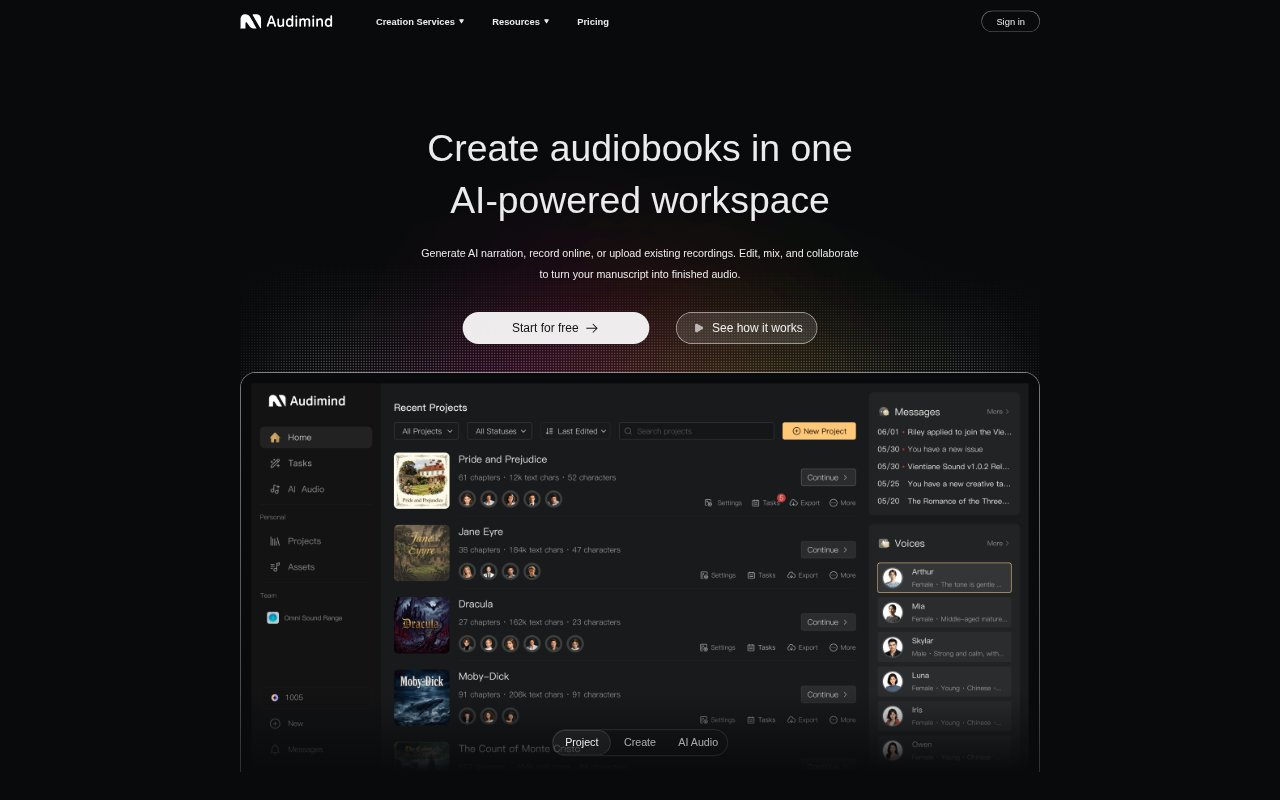
What is Audimind?
Audimind is an audiobook production workspace for independent creators, production teams, studios, and rights holders. It brings script preparation, AI or human narration, online recording, audio editing, mixing, review, and delivery into one project workflow. AI tools can identify characters, prepare dialogue and narration, match recordings to script sections, and help teams manage production tasks. Creators can also use the workspace for shorter voiceovers and audio assets.
Audimind Features:
Smart Scripting: Audimind analyzes a manuscript to split chapters, separate dialogue from narration, identify characters, build character profiles, add emotion tags, and suggest pronunciation guidance.
AI Narration: Choose from AI voices by attributes such as age, gender, and style, with batch voice recommendations for larger casts.
Smart Alignment: Upload long recordings in bulk to transcribe them, divide them into clips, and match clips with their corresponding script segments.
Smart Review: Compare recorded audio with the script and flag possible misreads, omissions, extra reads, and other differences for review.
Audio Editing: Record online or upload existing audio, then edit multiple tracks, reduce noise, add fades, and adjust voice effects.
Team Workflows: Manage projects, teams, and crews in a shared workspace with task assignment, comments, issue tracking, and production handoffs.
Audio Assets: Design AI voices, generate sound effects from descriptions, browse shared SFX libraries, and create short voiceovers without starting a full project.
Audimind Benefits:
Less Manual Matching: Automatic clip-to-script matching and review flags reduce the repetitive work of locating and checking passages in long recordings.
Clearer Production Scripts: Separating characters, dialogue, and narration gives narrators and editors a more organized script to work from.
Flexible Narration: Combining human recording with AI voices lets creators choose an approach that suits the material and production needs.
Fewer Handoffs: Keeping scripts, recordings, editing, review, and team tasks together helps collaborators coordinate production in context.
More Focused Review: Potential differences between a script and its recording are highlighted, so reviewers can direct attention to sections that may need checking.
Use Cases:
Audiobook Production: Prepare a manuscript, assign voices to characters, record or generate narration, and edit the chapters into finished audiobook audio.
Long Recording Cleanup: Bring in lengthy narration sessions and split them into script-aligned clips for easier editing and review.
Character Casting: Develop a cast for a dialogue-heavy book by identifying speaking roles and comparing AI voice options for each character.
Studio Collaboration: Coordinate a small or midsize audiobook production by assigning tasks, tracking issues, and managing project handoffs in a shared workspace.
Short Voiceovers: Generate quick narration from a short text when a creator needs voiceover audio without setting up a complete audiobook project.