

What is Autoblogging AI?
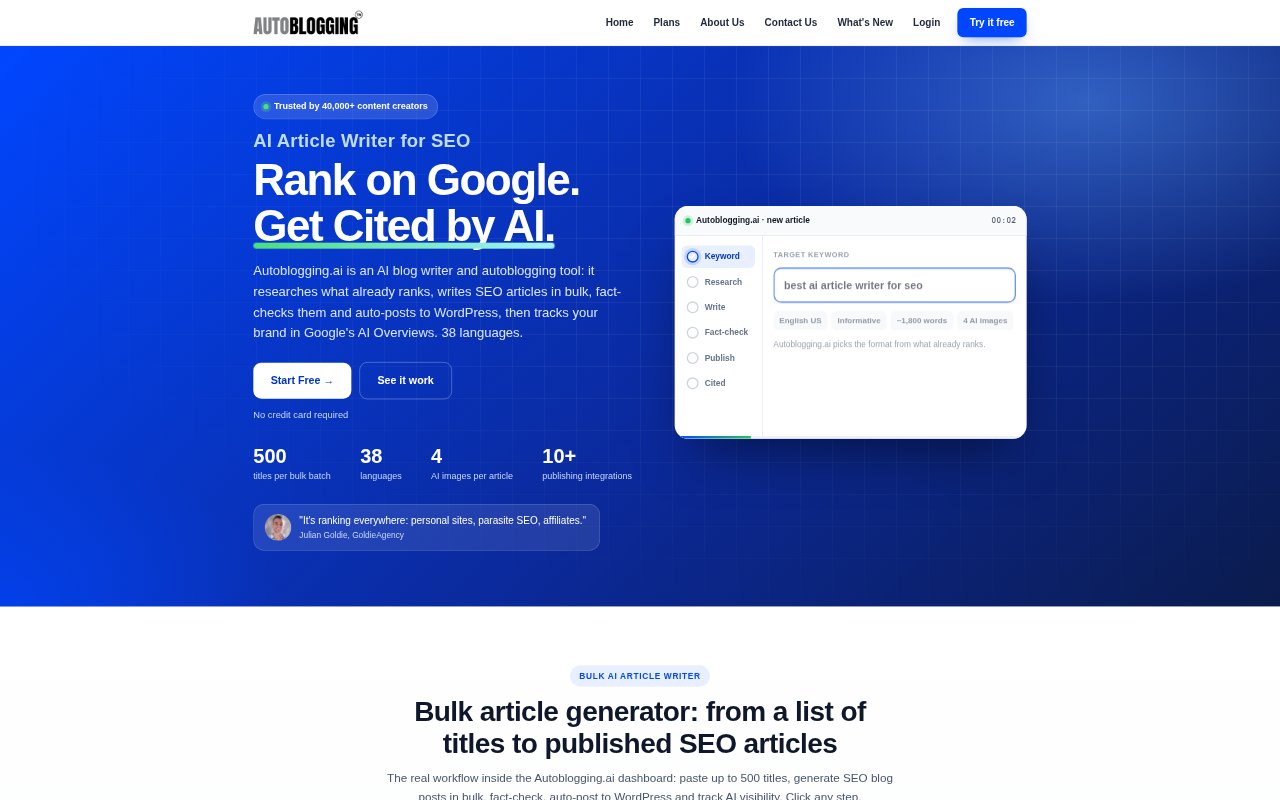
Autoblogging AI is a content workflow for bloggers, agencies and businesses that need SEO articles researched, written and published at scale. It can produce individual posts or batches, with options for SERP research, fact-checking, AI images and brand-specific information. Users can also analyze existing content and monitor whether their brand appears in Google AI Overviews. Articles can be prepared in 38 languages and sent to connected publishing platforms.
Autoblogging AI Features:
Bulk Article Generation: Generate up to 500 articles in one batch from a list of titles, with options for multiple languages, FAQs, key takeaways and AI images.
SERP-Guided Outlines: Analyze selected pages from the top 20 search results and AI Overview sources to identify shared keywords, entities and headings before writing.
Claim Fact-Checking: Check article claims against sources and add sourced statistics, with the aim of reducing unsupported statements.
Brand Knowledge Base: Add documents and brand facts to guide generated content, and save brand details for use across articles.
Publishing Integrations: Publish or schedule content for WordPress, Shopify, Wix, Webflow and Ghost, with additional connections including Medium and Tumblr.
AI Visibility Tracking: Track brand mentions, citations and sentiment in Google AI Overviews, and compare visibility with competitors.
Autoblogging AI Benefits:
Faster Content Production: Generating articles individually or in batches can reduce the manual effort involved in drafting a large editorial backlog.
More Focused Research: A reviewable outline based on ranking pages gives writers a clearer starting point than researching search results one by one.
More Reliable Claims: Checking claims and adding sourced figures can help teams review factual details before content reaches readers.
Consistent Brand Voice: Reusable brand facts and writing settings help teams keep articles aligned with their preferred information and style.
Simpler Publishing Workflow: Sending scheduled posts directly to connected sites can cut down on copying and transferring finished articles between tools.
Use Cases:
Niche Site Planning: A blogger building a topic-focused site can use topical maps to plan article clusters, generate posts in batches and schedule them to WordPress.
Agency Client Content: An agency producing posts for several clients can use saved brand information and connected sites to manage client-specific content in one dashboard.
Search-Led Articles: A content marketer targeting a keyword can review the pages already ranking, edit the suggested outline and create an article from that research.
Existing Content Updates: A site owner can select existing WordPress articles for batch optimization or add keywords while preserving the original voice.
AI Search Monitoring: A business tracking how it appears in AI-generated search results can review its mentions, citations and visibility alongside competitors.