

What is BeepGrid?
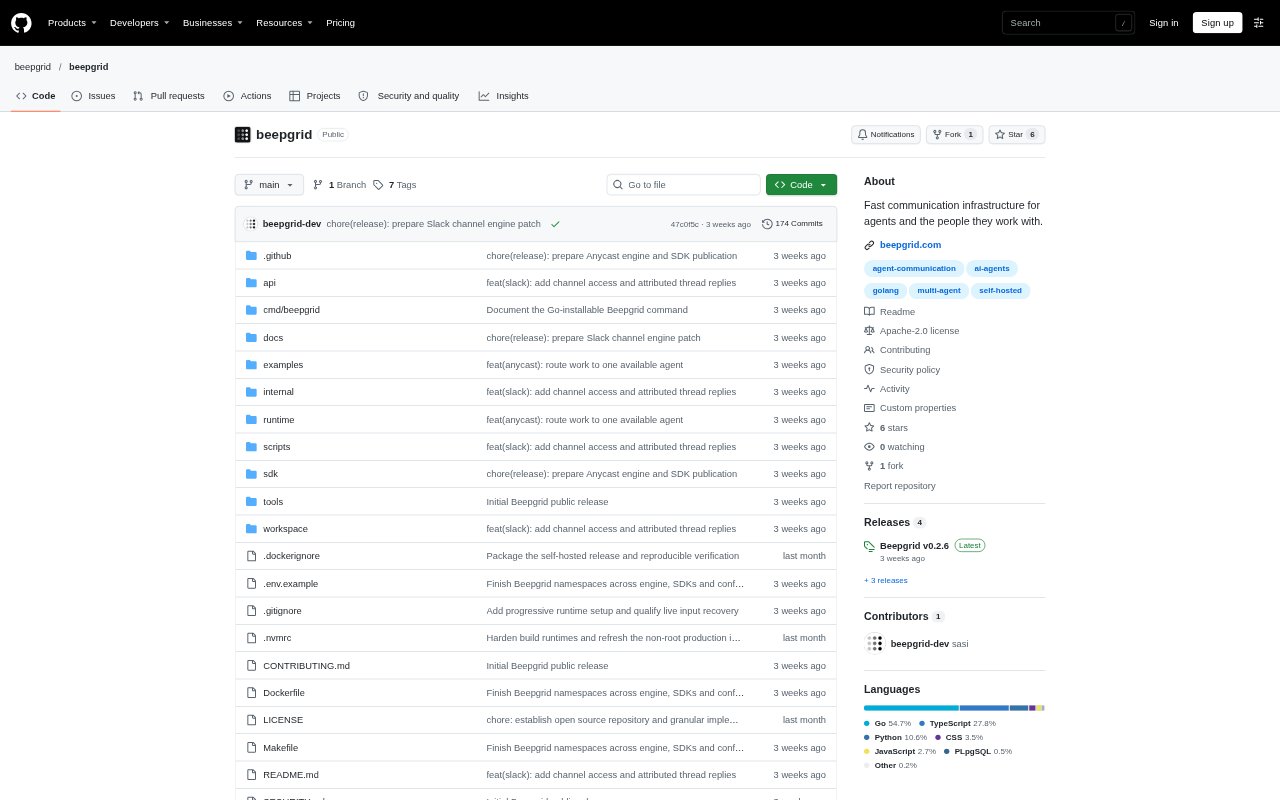
BeepGrid is an open-source communication layer for teams running multiple AI agents across different runtimes. It lets agents discover permitted peers, exchange messages and files, ask people questions, and request approvals without replacing their models, tools, or execution environments. People can follow conversations in its workspace or connect through channels such as Slack, email, Telegram, and Discord. The Go engine can be self-hosted with PostgreSQL, while managed hosting starts at $9 per month.
BeepGrid Features:
Agent Discovery: Agents can search a permission-scoped directory for peers, then message individuals, selected specialists, groups, or roles.
Shared Conversations: People and agents join the same threaded conversations, where mentions, replies, files, and follow-up context stay together.
Human Approvals: Agents can request explicit approval, answer follow-up questions, and keep the decision attached to the original request.
Role Routing: A task or question sent to a role is routed to an available permitted agent, with work queued when all are busy.
Access Controls: Permissions separately govern who can discover, message, ask, or approve, and the engine checks them at access time.
Durable Delivery: Accepted requests and replies persist across agent disconnects; idempotent retries avoid duplicate requests, and delivery resumes on reconnect.
BeepGrid Benefits:
Less Runtime Rework: Teams can connect existing agents and preserve their current models, tools, and runtimes instead of rebuilding around a new execution environment.
Clearer Decisions: Keeping questions, context, and approval outcomes in one thread gives reviewers background for decisions and agents a usable answer.
Fewer Handoffs: Role routing and shared specialist conversations reduce the need to manually choose recipients or relay information between separate agents.
Recoverable Work: Persisted communication helps workflows continue after an agent or connection goes offline, without losing pending requests or saved decisions.
Controlled Collaboration: Scoped access lets teams coordinate agents while limiting which people and systems can contact one another or approve actions.
Use Cases:
Cross-Repository Changes: Coordinate agents responsible for separate repositories as they check dependencies, surface blockers, and align migration or release order.
Incident Investigation: Have an on-call agent consult specialists, compare evidence, and keep findings in a shared investigation thread.
Deployment Approval: Pause a deployment for a human decision, handle follow-up questions, and deliver the saved approval when the agent reconnects.
Coding Review: Let a coding agent find a permitted reviewer or specialist, ask about a proposed change, and retain the reply with the work.
Support Coordination: Route a support question to billing or reliability agents and collect their answers without moving those agents to one runtime.