
What is Canonry?
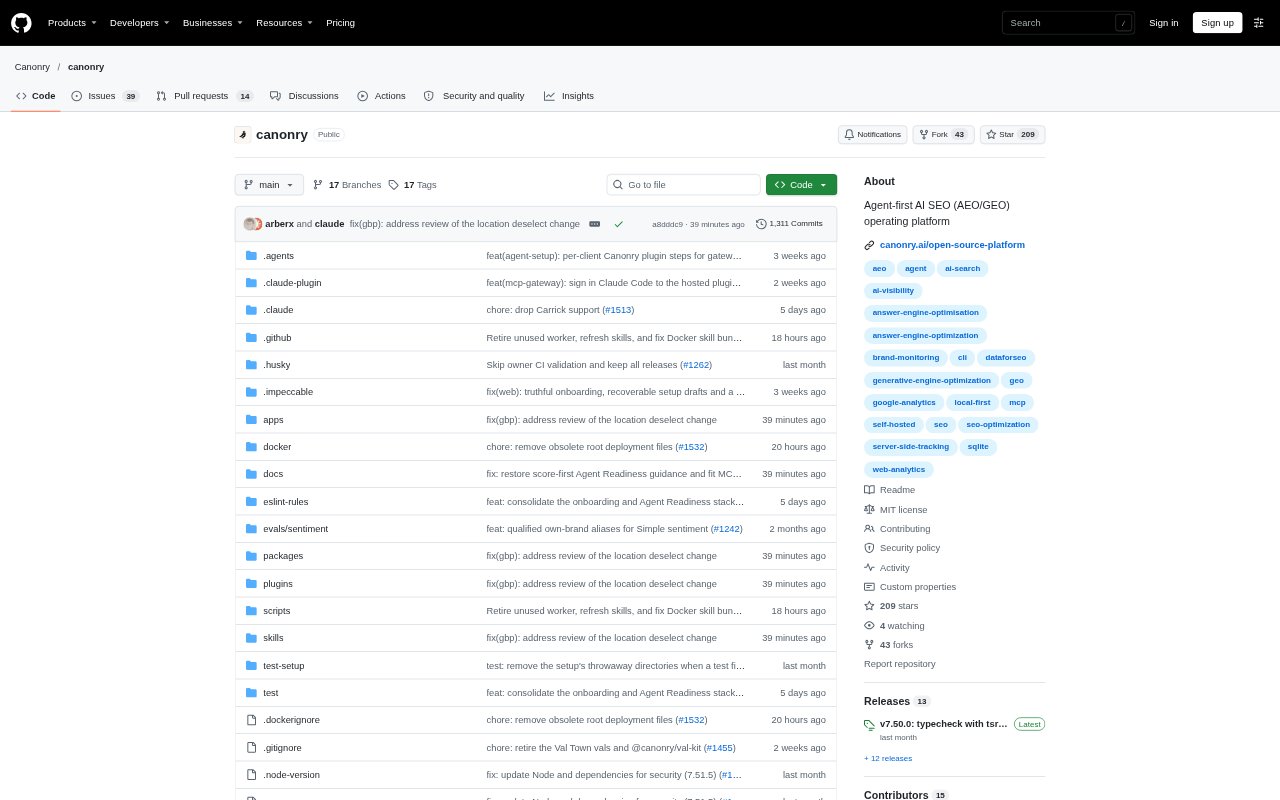
Canonry is a self-hosted platform for monitoring and acting on answer engine optimization (AEO), aimed at marketing teams, businesses, and agencies. It tracks brand mentions and citations in AI answers alongside search data, site activity, and technical audits. Teams can use the dashboard or connect an AI agent through the command line, REST API, MCP, webhooks, or plugins. Canonry keeps project data in a SQLite file by default, with hosting and API keys under the user's control.
Canonry Features:
AI Answer Visibility: Track brand mentions and website citations by query across answer engines, compare results with competitors, and inspect the answers and sources behind each result.
Server Traffic: Review server-log activity from AI crawlers, AI services fetching pages for users, and people arriving through AI referrals.
Agent Readiness Audit: Crawl a site to assess access for AI crawlers, llms.txt, structured data, extractable content, and other factors, with affected pages and internal links shown.
SEO Research: Research keyword volume, difficulty, organic rankings, and gaps between a site and its competitors.
Content and Indexing: Identify content gaps, prepare content for review, publish WordPress drafts, add JSON-LD, and submit pages to Google, Bing, or IndexNow.
Agent Controls: Use CLI, REST, MCP, webhooks, or Codex and Claude Code plugins to let an agent inspect evidence and take actions, with approval checks for changes.
Canonry Benefits:
Find Visibility Gaps: Seeing citations, mentions, and competitor results together helps teams identify where their brand is missing from relevant AI answers.
Read Traffic Clearly: Separating crawler activity, AI page fetches, and referral visits helps teams understand how AI systems interact with their site.
Keep Data in House: Self-hosting and local SQLite storage let teams decide where project data and API keys are kept.
Review Changes First: Approval checks give teams a chance to assess proposed site updates before they are applied.
Compare Work Over Time: A shared timeline for search, site activity, and AI answer checks helps teams examine what changed after their work.
Use Cases:
Agency Client Reporting: An agency can monitor several client projects, review AI answer visibility, and prepare a report on changes for each client.
Competitor Citation Research: A marketing team can find queries where competitors are cited in AI answers but its own site is not.
Technical Site Review: A site owner can audit pages for AI crawler access, structured data, and content that answer engines can extract.
Content Planning: A content team can use search gaps and missing AI citations to choose pages to create or improve, then prepare drafts for review.
AI Referral Analysis: A business can check server logs to see which pages AI crawlers visit and whether people click through from AI services.