

What is catalogaudit?
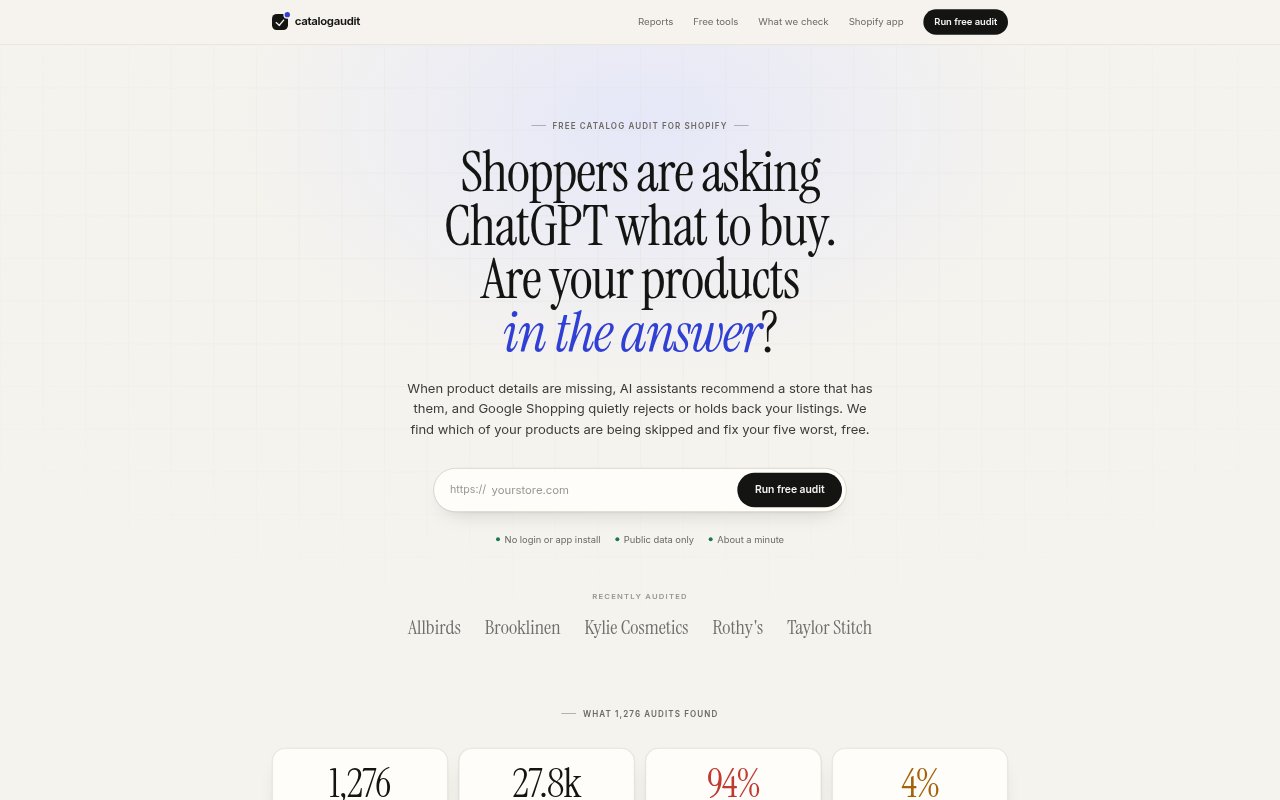
Catalog Audit checks Shopify product catalogs for issues that can affect Google Shopping listings and whether AI shopping assistants can read product details. It reviews public product pages, catalog data, store settings, and policies without requiring a store login or installation for the website audit. Shopify merchants can also use its free admin app to apply and undo fixes, while stores seeking catalog-wide cleanup can arrange separate client work.
catalogaudit Features:
Catalog Audit: The audit checks product pages, catalog data, store settings, and policies against Google Shopping rules and the information AI assistants need to recommend products.
Shopping Checks: Checks cover issues such as missing or invalid barcodes, price mismatches, missing clothing attributes, small images, and titles that break Google rules.
AI Readability: The audit looks for blocked shopping crawlers, product details that load late, and size or color information that assistants may not be able to distinguish.
Free Catalog Tools: Separate tools check crawler access, product structured data, GTIN barcodes, Google Shopping titles, product categories, and CSV or TSV feeds.
Product Fixes: After an audit, the five worst products are rebuilt using the store's own photos and copy, with the fixes ready to use.
Shopify App: The free app applies category, alt text, attributes, specifications, and structured-data fixes in Shopify, showing before and after states and allowing changes to be undone.
catalogaudit Benefits:
Clear Priorities: Issues are explained and ranked by their potential cost, helping merchants focus attention on the catalog problems that matter most.
Fewer Blind Spots: Checking both shopping feed requirements and assistant-readable product facts helps reveal gaps that a review of product copy alone might miss.
Low-Risk Review: Because the website audit reads public pages without logging in or changing the store, merchants can inspect potential issues before granting access or making edits.
Useful First Fixes: Having five problematic products rebuilt gives a team concrete examples to review and use when deciding how to improve the rest of its catalog.
Reversible Changes: Before-and-after views and undo controls let merchants inspect app-applied changes and reverse them if needed.
Use Cases:
Shopify Catalog Review: A store owner can audit a Shopify catalog to identify product data or page issues that may cause Google Shopping listings to be rejected or shown less.
AI Shopping Readiness: A merchant can check whether product facts such as material, size, ingredients, and care details are available to shopping assistants answering shopper questions.
Crawler Access Check: A marketing or ecommerce team can test whether robots.txt blocks ChatGPT, Perplexity, Claude, or Google's AI crawlers and see the lines responsible.
Feed Preparation: Before submitting a product feed, a team can upload a CSV or TSV to find row-level problems and download a list of issues to address.
Product Data Cleanup: A Shopify merchant can use the admin app to correct product categories, alt text, attributes, specifications, and structured data without editing theme code.