

What is cedr?
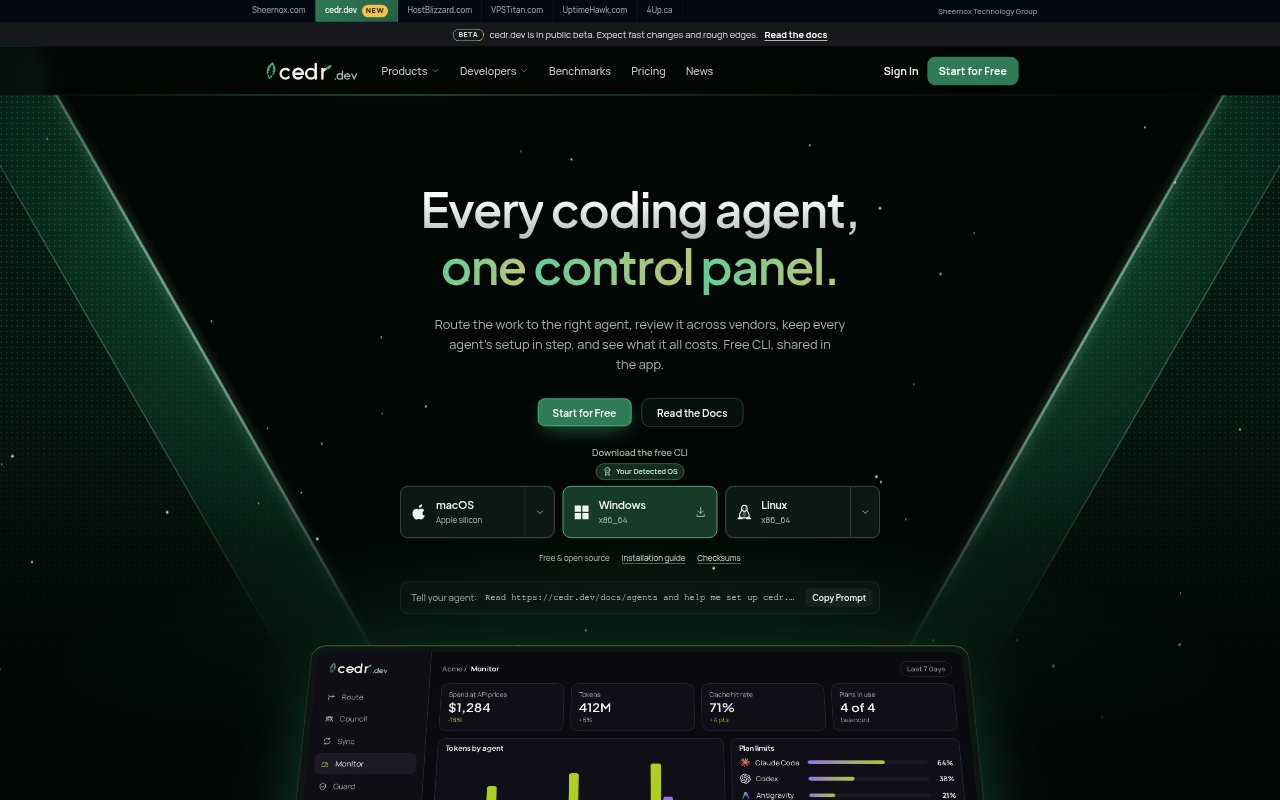
cedr is a suite of developer tools for coordinating coding agents from one command-line interface and optional hosted app. It routes work among agents, brings together independent reviews, keeps agent configurations aligned, and tracks usage and spend. Developers and teams can also compare agent or model setups using their own tests, or run models through a shared benchmark. The CLI tools are free and open source; the hosted app adds shared history, organization rules, and team reporting.
cedr Features:
Agent Routing: Route chooses an agent, model, and effort for each job, then uses the plan with the most remaining capacity within limits you set.
Cross-Vendor Reviews: Council combines independent reviews from several vendors into one gate, with backup reviewers available and scores shown alongside the result.
Agent Configuration: Sync stores rules, skills, MCP servers, permissions, and hooks in .cedr/ and generates the corresponding files for each supported coding agent.
Setup Change Checks: Guard pins repository skills and MCP servers, records what each server offers a model, and reports changes; its GitHub Action can annotate CI checks.
Usage Monitoring: Monitor reads local agent logs and plan readings to report tokens, API-priced spend, cache hits, sessions, errors, and proximity to plan limits.
Agent Comparisons: Compare runs two refs, models, or agents against tests you choose on your machine or in CI, with a set budget and reported pass rates, cost, and uncertainty.
Shared Benchmark: Bench runs models through the same twelve tasks in a clean, pinned environment and reports task costs, completion time, dropped checks, and review images.
cedr Benefits:
Less Manual Routing: Teams can direct different kinds of work to agents with available plan capacity instead of repeatedly checking plans and assigning tasks by hand.
Broader Review Coverage: Independent vendor reviews give developers more perspectives on risky changes before they pass through a shared review gate.
Consistent Agent Setup: Writing setup once and distributing it across agent harnesses reduces duplicated configuration and mismatches between a team's tools.
Clearer Spend Picture: Usage and plan-limit reporting helps developers see where agent capacity is going and whether a plan is nearing its limit.
Evidence-Based Choices: Comparisons and repeatable benchmarks make it easier to weigh agent performance, task success, time, and cost using results from your own tests.
Use Cases:
Assigning Coding Work: Use Route to send a code review, research task, or other job to an agent and model according to the limits set for each plan.
Reviewing Risky Changes: Run Council when a change needs independent feedback from several vendors before it is accepted.
Managing Team Configurations: Use Sync to maintain shared rules, permissions, and tools across multiple coding agents and repositories.
Checking Agent Spend: Use Monitor to review tokens, estimated API-priced spend, sessions, errors, and plan usage across supported agents.
Choosing a Coding Setup: Run Compare against a repository's own tests to assess two models, agents, or code references before changing a team's workflow.