

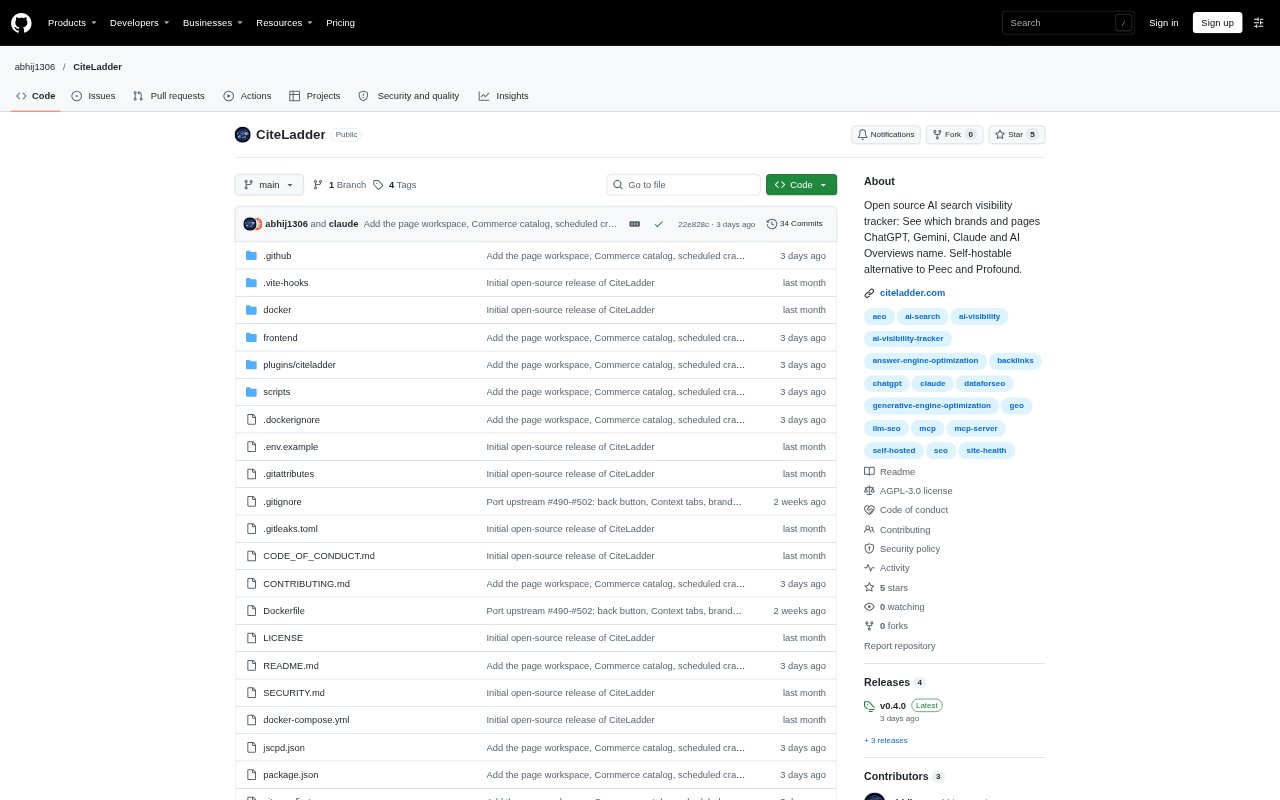
What is CiteLadder?
CiteLadder is an AI search visibility and website analysis platform for marketing and SEO teams, founders, agencies, and ecommerce businesses. It tracks how ChatGPT, Gemini, Claude, and Google AI Overviews mention brands and cite pages, then helps teams identify issues and plan improvements. The open-source version can be self-hosted, while CiteLadder Cloud offers a hosted option. Teams can also connect their own model keys and use the built-in MCP server to work with project data through an AI assistant.
CiteLadder Features:
AI Visibility: Run scheduled audits across AI engines and markets to track brand mentions, visibility, share of voice, citations, competitors, perception, and fact checks.
Buyer Prompts: Generate buyer questions based on your website, market, and competitors to use in visibility tracking.
Cited Sources: Review the domains and pages cited in AI answers, including which sources mention competitors but leave your brand out.
Site Health: Crawl your website on a schedule, assess AEO readiness, and find technical or content issues with evidence and suggested fixes.
AI Traffic: See which AI crawlers read your pages and which AI answers send visitors to your site.
Search Data: Bring Google Search Console, Google Analytics 4, and Bing Webmaster data into one view, with keyword, volume, and backlink research available through DataForSEO.
MCP and API: Use the MCP server or public API to access project data and actions from an AI assistant or your own code.
CiteLadder Benefits:
Spot Changes: Comparing visibility over time and across engines helps teams see where brand presence is improving or slipping.
Focus Fixes: Evidence-backed issues and a ranked action list help teams prioritize work instead of sorting through site problems manually.
Check Results: Repeating prompts and comparing like-for-like answers makes it easier to distinguish a meaningful change from variation between responses.
Keep Control: Self-hosting lets teams keep their project data and model keys on their own machines.
Connect Insights: Viewing search performance and AI referral activity alongside visibility data helps teams understand how AI discovery relates to site visits.
Use Cases:
Brand Monitoring: Track whether AI assistants mention your company when buyers ask questions about your category, and compare that presence with competitors.
Citation Research: Find the websites and pages AI answers cite when describing products or services in your market.
Technical Audits: Check whether crawlers can access important pages and identify content or site issues that may affect AI and search visibility.
Content Planning: Use buyer questions and identified site issues to decide which pages or content to review and improve.
Product Discovery: For ecommerce teams, review how products appear in AI shopping answers and which product details or prices those answers quote.