

What is Codela?
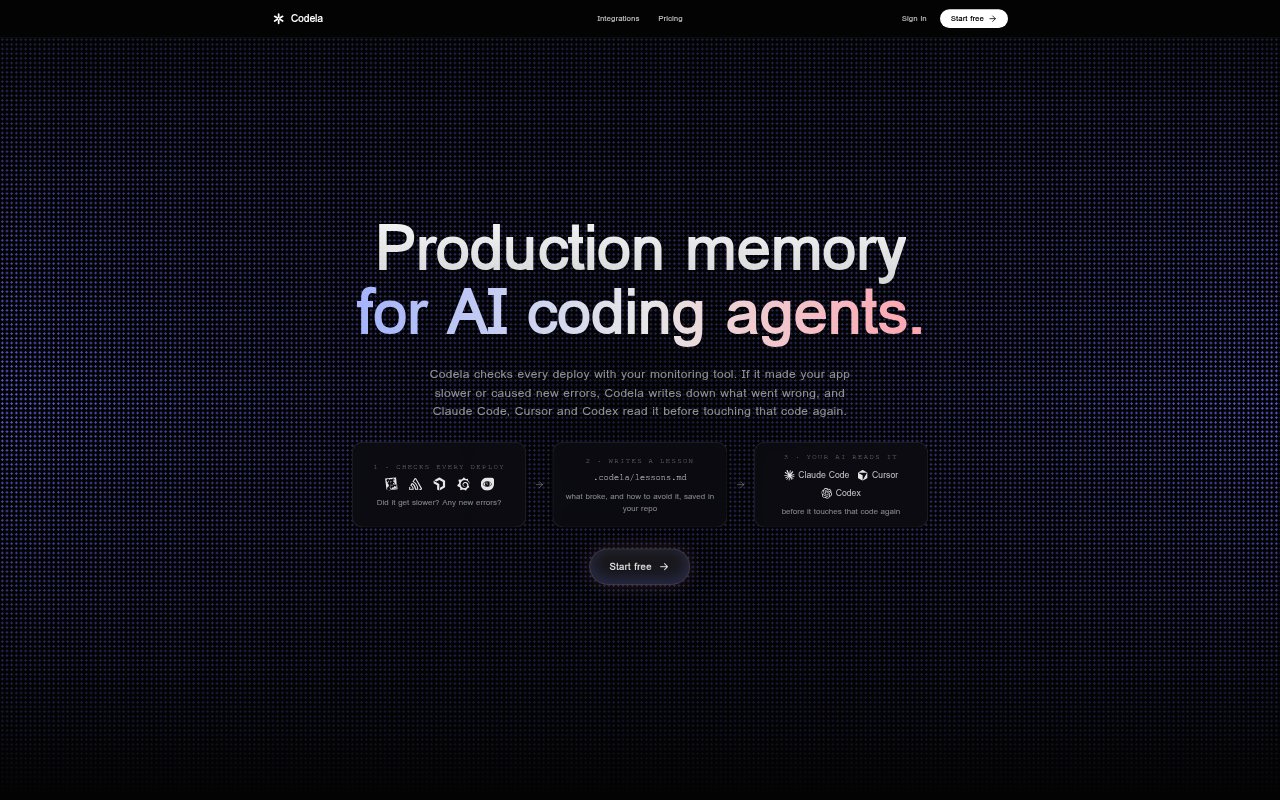
Codela connects a GitHub repository to an observability tool and checks each deploy for performance regressions and new errors. When it links a problem to a code change, it records what happened and how to avoid it in lesson files that AI coding agents read before changing the repo; it can also flag repeats on pull requests. It is designed for teams using Claude Code, Cursor or Codex. A free tier covers one repository and 20 monthly pull request checks; Pro costs $7.99 per person per month.
Codela Features:
Deploy Checks: Codela checks each deploy against monitoring data for slower performance and new errors.
Production Lessons: When a code change is linked to a production problem, Codela records what broke and how to avoid it in lesson files added through pull requests.
Monitoring Connections: Connect SigNoz, Datadog, Sentry, New Relic or Grafana with a read-only key.
Pull Request Warnings: Codela comments on a pull request when its changes repeat a mistake documented in the repository's production lessons.
Agent Context: Claude Code, Cursor and Codex can read repository lessons before writing code, without a separate plugin or key.
History Scan: On setup, Codela reviews the previous 30 days of deploys and a year of Git history, including reverts and production fixes.
Codela Benefits:
Earlier Detection: A warning in a pull request gives the team a chance to address a known production issue before another deploy.
Fewer Repeat Incidents: Documented causes and prevention steps help agents and developers avoid making the same production mistake again.
Less Manual Analysis: Automatic checks connect production changes with relevant code, reducing the need for someone to investigate each deploy by hand.
Shared Team Context: Repository-based lessons give each team member's agents access to the same production knowledge.
Useful Historical Review: A scan of past deploys and fixes helps teams see which lessons the tool could surface before they rely on ongoing checks.
Use Cases:
Reviewing Agent Code: Use pull request comments to check whether an AI-generated change repeats a production mistake already recorded for the repository.
Checking New Deploys: Monitor a release for new errors or slower performance, then give coding agents a lesson about a linked code change.
Preparing Agent Repos: Scan a repository's past reverts and production fixes to build context for agents before they take on new changes.
Sharing Incident Lessons: Keep production lessons in a shared repository so the team's coding agents can consult them across future work.
Watching App Services: Connect an existing monitoring service to check deploys without replacing the team's current observability tool.