

What is Cordane?
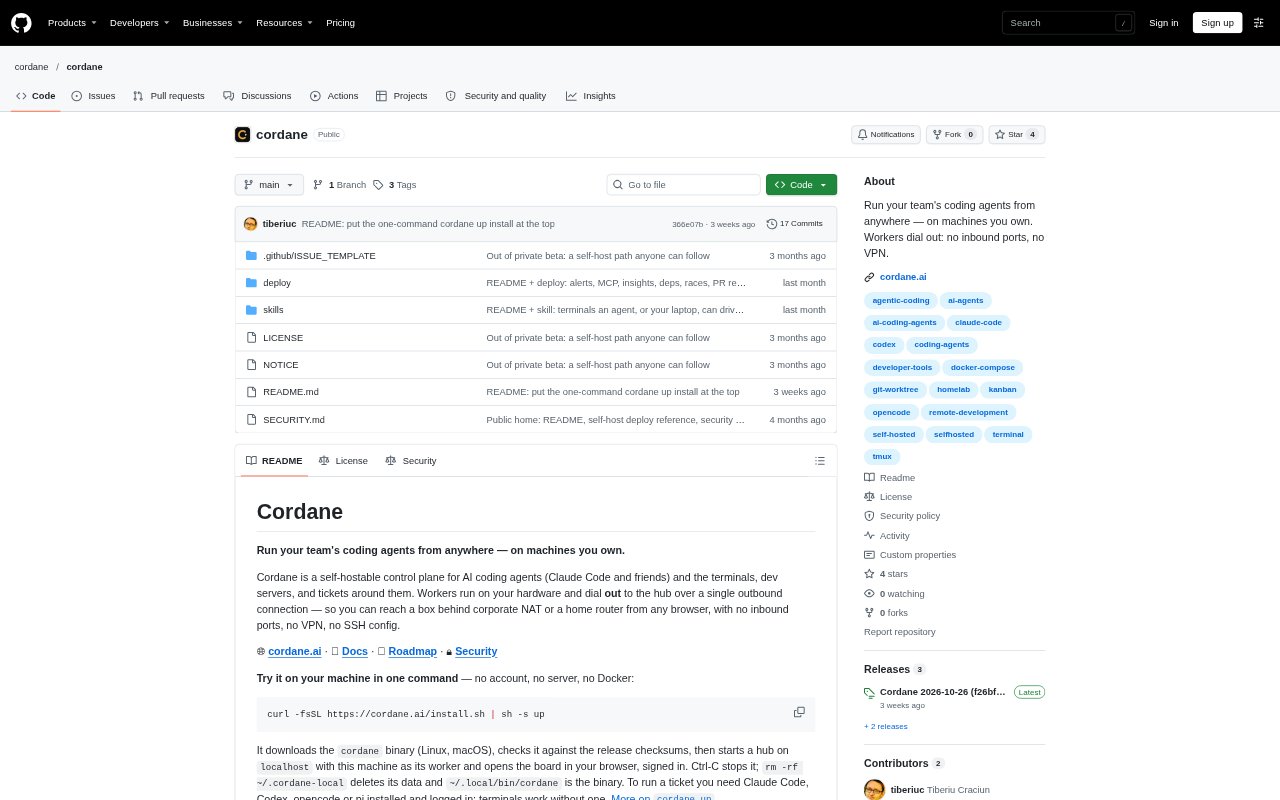
Cordane is a self-hostable control plane for running AI coding agents, terminals, development servers, and ticket work across machines a team owns. Workers connect outward to a hub, so people can reach them from a browser without opening inbound ports or setting up a VPN. Software teams can use it to hand tickets to coding agents, watch their work, review changes, and manage persistent terminals from a shared web interface.
Cordane Features:
Outbound Workers: Workers run on your hardware and connect to the hub over an outbound connection, making machines behind a NAT or firewall reachable from a browser.
Persistent Terminals: Open real terminals in a browser that keep running through closed tabs, network drops, and hub restarts, with support for shared access and saved layouts.
Ticket Execution: Assign a kanban ticket to an agent to create a Git worktree, start a development server, and work on a separate branch, immediately or at a scheduled time.
Review Workflows: Inspect diffs and check results, merge completed work, or request revisions with notes pinned to specific lines; configured failing checks can also trigger another agent pass.
Agent Coordination: Break work into dependent sub-tickets, race multiple agents on separate worktrees, or let an agent use tools to interact with other terminals in its space.
Issue Connections: Bring tickets in from Sentry, Jira, GitHub Issues, or Linear by pasting an issue URL or using a filter, with the upstream issue closed when work is done.
Cordane Benefits:
Keep Control: Your code, secrets, and compute stay on machines you control, whether you self-host the hub or use Cordane’s managed cloud.
Work From Anywhere: A browser-based view lets team members check terminals, agent runs, and reviews without being at the worker machine.
Shared Visibility: Live ticket activity and review details give teammates a common view of agent progress and changes before they merge.
Faster Feedback: Line-specific review notes and repeat runs on failing checks make it easier to direct fixes without restarting the work from scratch.
Compare Approaches: Side-by-side branches, diffs, and checks help teams judge competing agent results before choosing which one to keep.
Use Cases:
Overnight Ticket Runs: Schedule a ticket to start in your time zone so an agent can work while you are away and leave a branch and diff for morning review.
Remote Shell Access: Keep a development shell running on a home or office machine and reconnect to it from another browser or phone.
Agent Code Review: Review an agent’s branch, inspect its checks, pin requested changes to diff lines, and send the work back for another pass.
Compare Agent Runs: Run two or three coding agents against the same ticket in separate worktrees, then compare their changes and check results.
Team Issue Handling: Route incoming issues from an existing tracker into agent work, then follow execution and completion without replacing that tracker.