

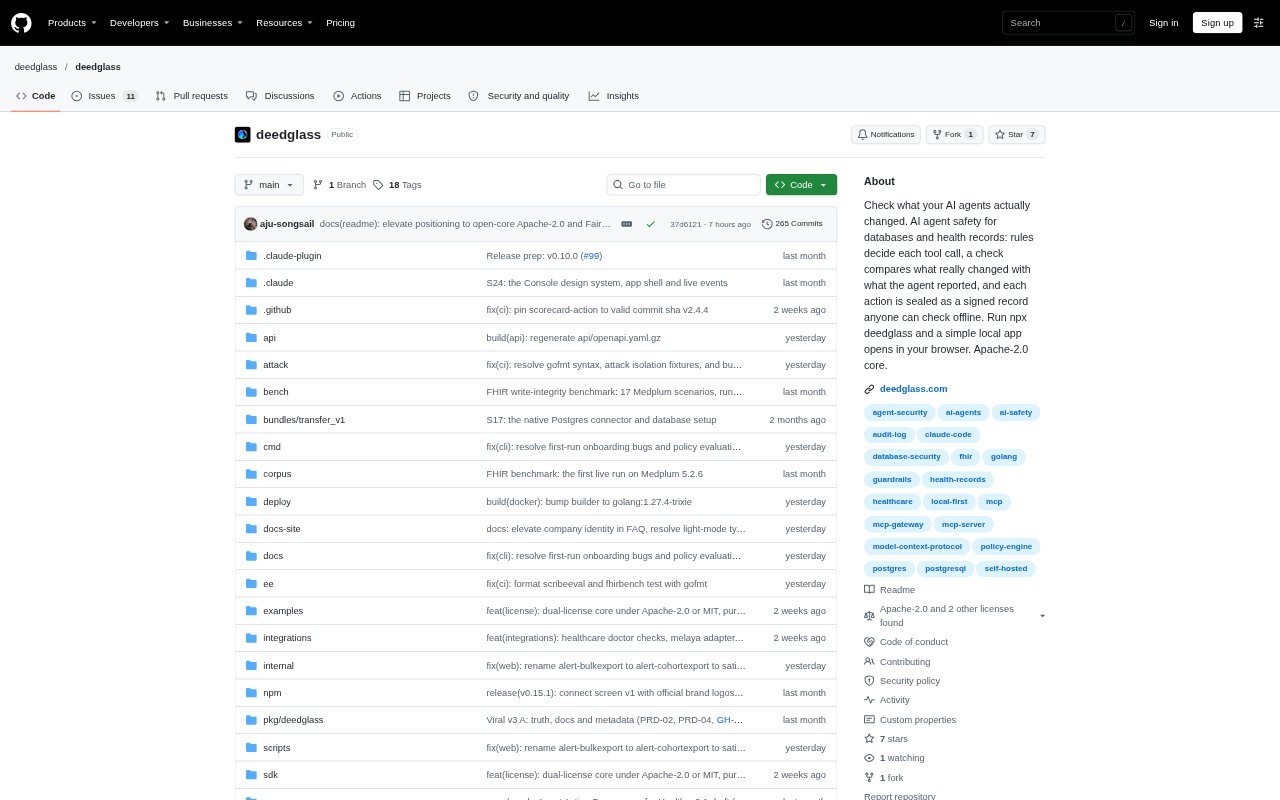
What is Deedglass?
Deedglass is a self-hosted safety layer for AI agents that make changes to databases and health records. It applies rules to tool calls, checks the resulting changes against what the agent reported, and seals the outcome in a signed record that can be verified offline. Developers, platform and security teams, and health-tech organizations can run it locally, with a browser console for reviewing agent activity, approvals, and records.
Deedglass Features:
Postgres Change Checks: Deedglass reads Postgres’s change log to compare the rows a transaction actually changed with the agent’s report.
Policy-Gated Actions: Rules can allow, block, or require a person’s approval before an agent tool call runs.
Signed Audit Records: Each check can be saved in a signed, hash-chained record that people can verify offline.
Human-Approved Undo: For supported Postgres changes, Deedglass can prepare to restore affected rows and require a person to approve the undo.
FHIR Write Checks: The FHIR connector reads writes back from a FHIR R4 server and checks them against the version reported by that server.
Local Browser Console: A local app shows agent activity, approvals awaiting review, and sealed records without sending data to Deedglass.
Deedglass Benefits:
Catch Side Effects: Teams can spot unexpected database changes, such as a trigger affecting many more rows than the agent intended.
Limit Agent Risk: Approval rules give people a chance to review sensitive actions before they change connected systems.
Check the Evidence: Signed records provide an audit trail that does not depend on trusting an agent’s account of its own work.
Recover With Oversight: When supported database changes need reversal, a human approval step helps prevent an automatic second write.
Keep Data Local: Self-hosting and a local console let teams inspect activity on their own computer rather than sending it to the service.
Use Cases:
Agent Database Writes: Put a policy and change check in front of a coding or support agent that updates records in Postgres.
Production Agent Access: Require a person to approve high-risk writes before engineering teams let agents act on production systems.
Unexpected Row Changes: Investigate a report that an agent updated one record when database triggers or other effects changed additional rows.
Healthcare FHIR Workflows: Check writes made by health-tech agents against a connected FHIR R4 server, including HAPI FHIR or Medplum.
Security Review: Give security teams offline-verifiable records to inspect when reviewing what an AI agent changed.