

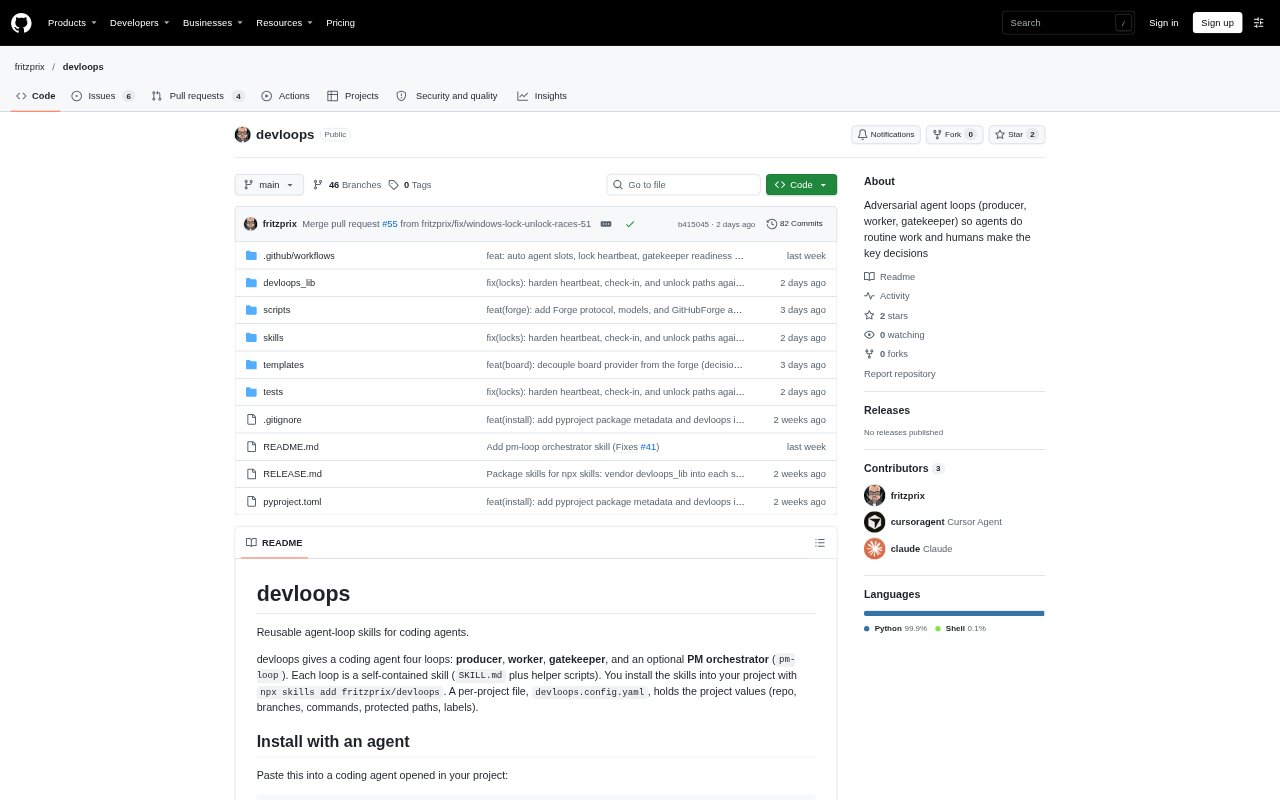
What is devloops?
devloops provides reusable skills that let coding agents handle recurring software maintenance through producer, worker, and gatekeeper loops, with an optional PM orchestrator. The producer identifies problems and opens candidate issues, the worker turns approved issues into pull requests, and the gatekeeper reviews the work and requests changes or approves it. It is for project teams using skills-compatible coding agents with a GitHub repository, and keeps issue approval and merging in human hands.
devloops Features:
Producer Audits: The producer can run configured tasks such as security, end-to-end testing, regression checks, UI and UX review, usage-log review, documentation drift checks, and cleanup.
Worker Pull Requests: The worker implements approved issues as pull requests and handles open PRs first, including conflicts, review comments, gatekeeper findings, and failing CI.
Independent Review: The gatekeeper checks issues against the code and reviews pull requests independently, posting a verdict and a gatekeeper label.
Issue Approval Flow: Candidate issues move through configurable producer, validation, rejection, and approval labels, and the worker skips issues that lack the approved label.
Tick Coordination: Tick scripts use locks, fingerprints, and worker claims to coordinate runs, avoid starting an unchanged idle worker, and keep two worker slots off the same issue or PR.
Project Configuration: A per-project YAML file sets the repository, branches, verification commands, protected paths, labels, producer tasks, and loop limits.
devloops Benefits:
Fewer Routine Decisions: Teams can leave routine issue-to-review work to the loops while keeping decisions about issue scope, user-visible behavior, sensitive changes, and merging with people.
Focused Human Review: A separate gatekeeper checks the worker’s changes, so people can concentrate on the decisions the workflow reserves for them rather than performing every review step.
Clear Work Boundaries: Approval labels define which proposed issues are ready for implementation, helping prevent the worker from taking on unapproved scope.
Fewer Idle Runs: Fingerprint checks let an unchanged, idle worker tick end without starting the coding agent, while work or failures leave the next tick able to run again.
Safer Parallel Work: Locks and claims help prevent overlapping ticks in one slot and keep worker slots from taking the same issue or pull request.
Use Cases:
Security Issue Triage: Run the producer’s security task to identify candidate issues, then have the worker address only the findings a person approves.
Regression Follow-Up: Use the producer’s regression or end-to-end task to create candidate work and route approved fixes through implementation and review.
Documentation Drift: Schedule the documentation drift task to surface candidate issues when project docs no longer match the code.
Cleanup Proposals: Run the cleanup task on its configured period and protect specified branches from being proposed for deletion.
Pull Request Reviews: Use the gatekeeper loop to review a pull request, request changes when it finds defects, and check the worker’s updates before a person merges.