

What is Elicit?
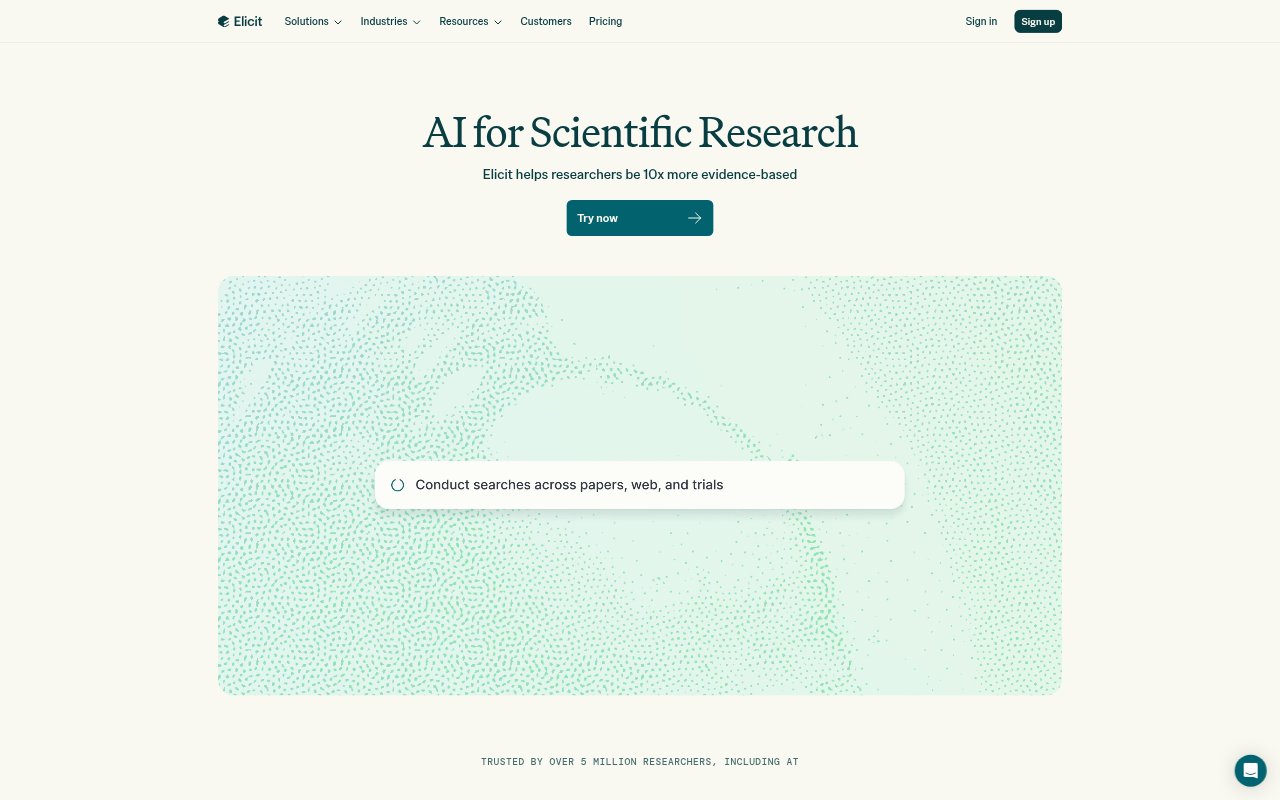
Elicit is an AI research tool for researchers and teams who need to find, assess, and synthesize scientific evidence. It searches academic papers and clinical trials, and can also work with uploaded documents and other data sources. Use it for focused questions or broader review workflows, then turn findings into cited reports, tables, charts, and other research outputs.
Elicit Features:
Semantic Search: Search more than 138 million academic papers and conference proceedings by the meaning of a question, rather than relying only on matching keywords.
Clinical Trials: Search more than 545,000 trials listed on ClinicalTrials.gov, with trial data updated in real time.
Research Agent: Ask complex research questions and have the agent search sources, extract data, analyze figures and tables, model data, and create charts.
Cited Findings: Review the agent’s approach and follow each claim to the supporting passage, table, or figure.
Custom Reports: Generate research briefs inspired by systematic reviews and tailor which papers and information they cover.
Review Workflow: Use a dedicated systematic literature review workflow to screen up to 5,000 papers on the Pro plan.
Elicit Benefits:
Faster Discovery: Semantic search can surface relevant work even when you do not know the exact terminology used in a field.
Traceable Decisions: Source links make it easier to check the evidence behind findings before using them to guide important choices.
Clearer Synthesis: Structured briefs and tables help make findings across multiple papers easier to compare and communicate.
Less Manual Review: Automated extraction and screening can reduce repetitive work when assessing a large body of research.
More Focused Research: Customizing the papers and information included in a report helps keep the output relevant to the question at hand.
Use Cases:
Evidence Review: Gather and compare published studies when preparing a literature review or assessing what research says about a topic.
Trial Landscape: Find clinical trials related to a research question and examine how the existing study landscape is shaped.
Target Prioritization: Review scientific evidence when deciding which research or development targets deserve further attention.
Competitor Comparison: Compare evidence across studies to understand how competing approaches or products perform.
Research Briefs: Create a cited summary of findings for a proposal, program design, experiment plan, or internal decision.