

What is Fastagent?
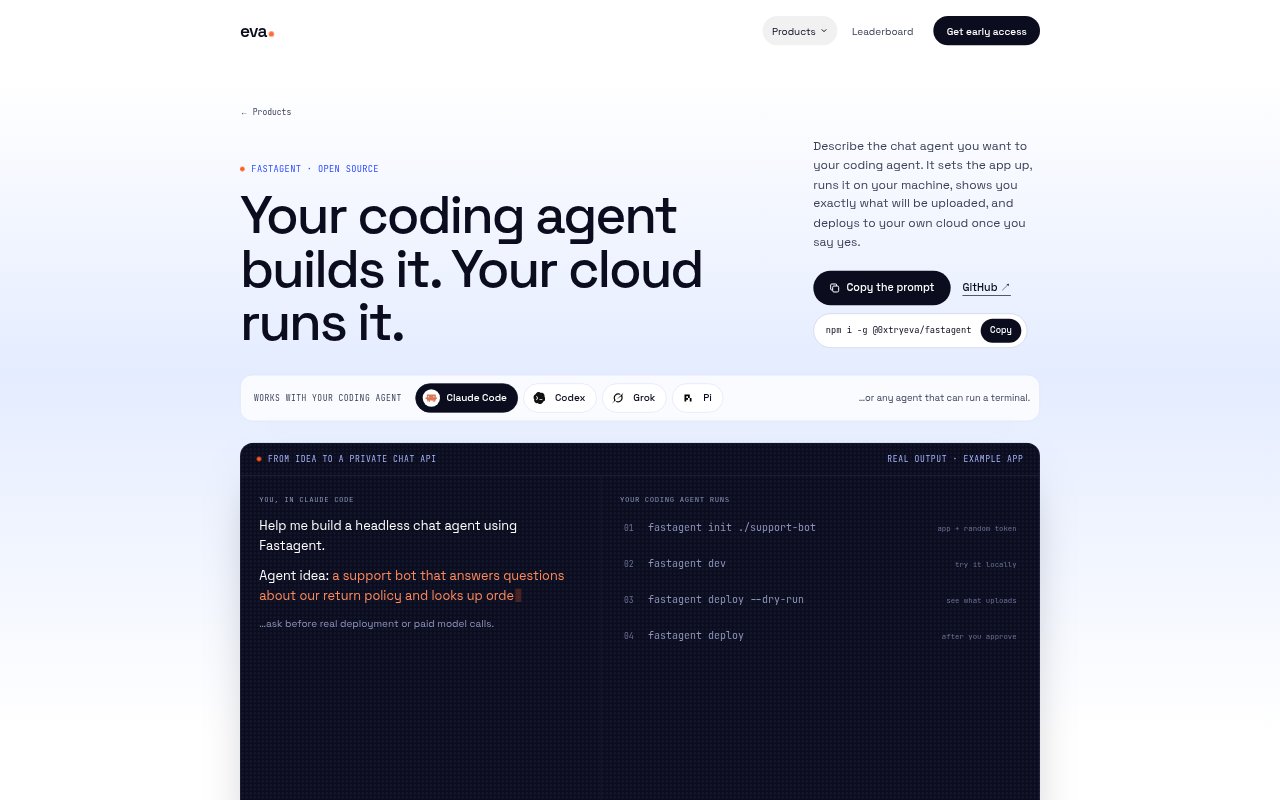
Fastagent is an open-source command-line tool for builders who use coding agents such as Claude Code or Codex to create chat agents. You describe the agent you want, try it on your machine, review what will be uploaded, and approve deployment to your own cloud. It provides a private HTTPS API for a website, app, or bot to send messages to; it does not include a chat website or handle individual user logins.
Fastagent Features:
Prompt-Based Setup: Describe the chat agent you want to a coding agent, which uses Fastagent to set up the application without requiring you to handle the server setup yourself.
Local Testing: Run the agent on your own machine before deployment so you can try its behavior before putting it in the cloud.
Upload Review: See exactly what will be uploaded and approve it before the deployment proceeds.
Cloud Deployment: Deploy to your own Google Cloud Run account, with Railway also supported but not yet verified live.
Chat API: Get a private HTTPS address that your own website, app, or bot can use to send messages to the agent.
Conversation Handling: Stream replies to callers and remember each conversation, while using one bearer token for the whole app rather than individual user logins.
Fastagent Benefits:
Less Server Work: Builders can spend more attention on what the agent should do instead of setting up and managing its server infrastructure.
Deployment Control: Reviewing the upload and approving deployment gives you a chance to check what leaves your machine before the agent goes live.
Account Ownership: Keeping the agent in your own cloud account means you retain control of its data, keys, and cloud bill.
Cost Protection: Restricting use to people you approve helps prevent strangers from running up cloud or model costs through the agent.
Repeatable Setup: Repeatable steps and plain explanations of problems make it easier to recover when setup or deployment runs into trouble.
Use Cases:
Support Bot: Build a bot that answers questions about a return policy and looks up order status, then connect it to an existing website, app, or bot.
Website Agent: Create a headless chat agent for a website that needs to send user messages to a private API and display streamed replies.
App Integration: Give an existing app a chat-agent endpoint that can keep track of each conversation without adding an individual login flow through Fastagent.
Local Prototype: Try an agent concept on your own machine before deciding whether to upload and deploy it to your cloud account.
Bot Backend: Build a chat-agent service for a bot that needs a private HTTPS address, streamed responses, and conversation memory.