What is Gnothi?
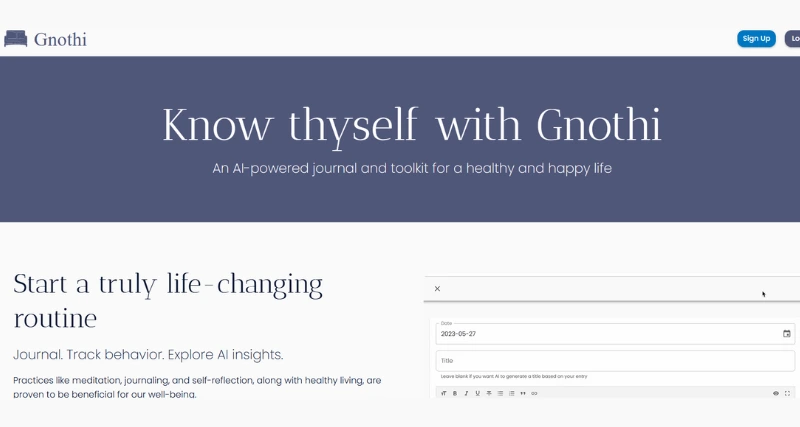
Gnothi is an open-source AI-powered journaling platform designed to foster self-discovery and personal growth. By leveraging artificial intelligence, it analyzes journal entries to provide insights, summaries, and personalized recommendations, making it a valuable tool for content writers crafting reflective pieces, self-help content, or mental health-focused narratives. Hosted on AWS with a focus on privacy, Gnothi empowers users to explore their thoughts and emotions deeply.
Gnothi Features:
AI Summaries: Generates summaries of daily, weekly, or yearly journal entries for quick reflection.
Theme Analysis: Identifies recurring themes, behaviors, or dream patterns in entries using AI.
Book Recommendations: Suggests self-help books tailored to the content of your journal.
Prompt-Based Interaction: Allows users to “chat” with their journal for deeper insights (local language model integration in progress).
Privacy-Focused: Stores data securely with no third-party sharing, using AWS VPC and Aurora Serverless v2 Postgres.
Open-Source Development: Invites community contributions via GitHub to enhance features and accessibility.
Multi-Platform Access: Available on web browsers, with potential for future mobile app expansion.
Upcoming Sharing Feature: Will enable sharing journals with therapists for collaborative insights.
Upcoming Q&A Feature: Allows users to ask AI questions about themselves based on journal data.
Gnothi Benefits:
Enhanced Self-Awareness: AI-driven insights help writers uncover patterns and themes for personal or professional content.
Time Efficiency: Summaries and theme analysis reduce manual review time, streamlining content creation.
Inspiration for Content: Book recommendations and thematic insights spark ideas for articles or stories.
Community-Driven: Open-source model ensures continuous improvement and accessibility for all users.
Secure and Private: Robust AWS infrastructure protects sensitive journal data, fostering trust.
Use Cases:
Reflective Writing: Use AI insights to craft personal essays or blog posts on self-discovery and mental health.
Content Ideation: Leverage book recommendations and themes to create self-help guides or book reviews.
Therapeutic Content: Develop materials for mental health blogs by exploring AI-analyzed emotional patterns.
Social Media Engagement: Share anonymized insights or journaling tips derived from Gnothi’s summaries.
Research for Narratives: Analyze recurring themes to inform character development or storytelling in creative writing.