

What is Graph-MIND?
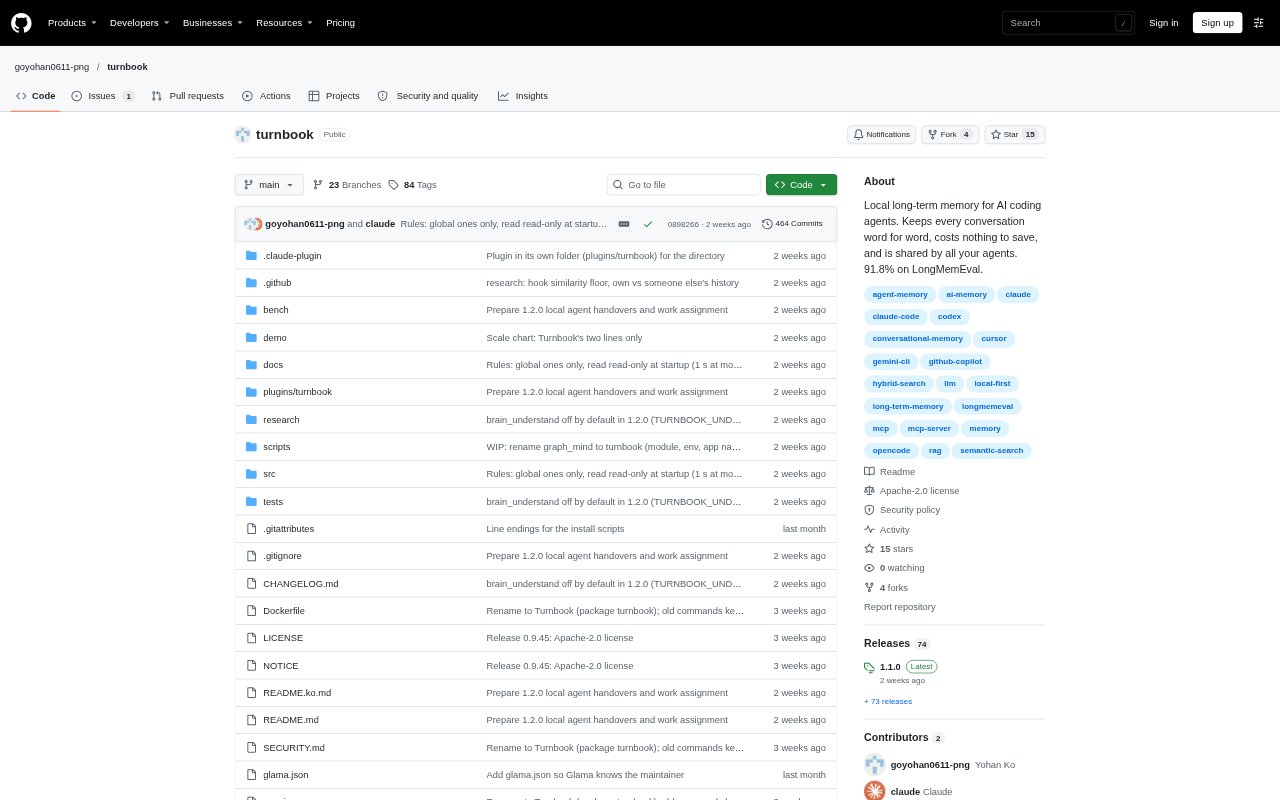
Graph-MIND is a local memory tool for people who work with AI coding agents and want those agents to retain information between sessions. It records conversations word for word on the user’s PC, then retrieves relevant passages when an agent needs context from the past. The same memory can be used across supported agents, including Claude Code, Codex, Cursor, Copilot CLI, Gemini CLI and OpenCode. It also provides MCP tools for other compatible clients.
Graph-MIND Features:
Verbatim Capture: Conversations are stored turn by turn in a local SQLite file without an LLM rewriting them into summaries or extracting facts.
Shared Agent Memory: Supported agents and MCP clients can read from and write to the same memory, with each entry retaining its app and session source.
Automatic Context: For supported agents, the tool searches past conversations and adds relevant memories to messages before the model answers.
Local Search: Search combines word matching, a local embedding model and time information, then returns a short packet of source turns.
Document Search: Markdown and text files can be added for section-by-section search, with the index kept up to date as the files change.
Privacy Controls: The tool masks secrets before storage, supports deleting a previously entered password, and can export or import memories as files.
Graph-MIND Benefits:
Less Repetition: People can move into a new session or another supported agent without re-explaining decisions and project details.
Original Evidence: Keeping conversations in their original wording lets agents retrieve what was actually said instead of relying on rewritten notes.
No Save-Time Tokens: Because saving does not call a language model, capturing conversations avoids model-token costs for that step.
Private Storage: Keeping the memory on the user’s PC gives them local access to conversation history without sending it to a memory service’s cloud.
Faster Handoffs: A shared record helps agents and parallel workflows pick up prior decisions without waiting for someone to transfer context manually.
Use Cases:
Resume Coding Work: Start a fresh coding session and ask what changed in a particular component or where work on a feature stopped.
Recall Decisions: Check which database or implementation approach was chosen for a project and retrieve the discussion behind that choice.
Switch Agents: Move from one supported coding agent to another and continue using shared project context instead of starting from scratch.
Coordinate Agents: Run several agents on the same project so each can consult decisions and progress recorded by the others.
Search Project Files: Add a folder of Markdown or text documentation and look up relevant sections alongside past conversation turns.