

What is Graphicle?
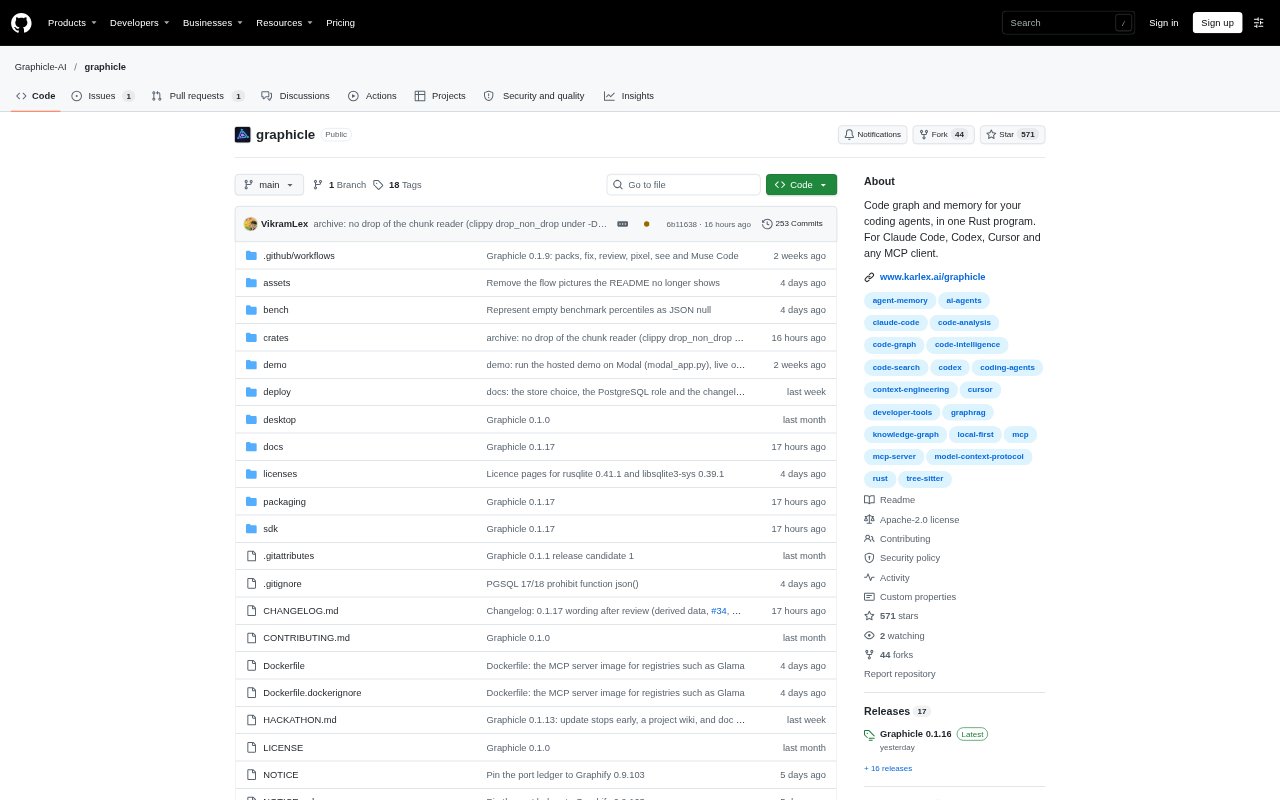
Graphicle is a local code graph and project-memory tool for coding agents, packaged as one Rust program. It indexes a repository, connects to supported agents through MCP, and supplies cited excerpts from code, project documents, decisions, and past sessions. Developers can also ask questions from its command line or browse the graph and memory in its app. It works with Claude Code, Cursor, Codex, VS Code, Claude Desktop, and other MCP clients.
Graphicle Features:
Repository Code Graph: Graphicle maps code structure, including calls, imports, and impact, and updates the graph as repository files change.
Cited Retrieval: Agents receive relevant code, documents, and decisions as excerpts that identify their source file and lines, within a token budget you set.
Project Memory: It indexes Markdown, PDF, Office, and HTML documents alongside reviewed decisions, procedures, and past Claude Code and Codex sessions.
Session Capture: Capture preserves finished agent turns, and new sessions can start with reviewed memories and the latest captured turns.
Memory Review: Memories proposed from sources wait for approval, and reviewed memories are linked to the function they concern and flagged as stale when that code changes.
Local Installation: One install includes the graph, memory, MCP server, command-line interface, and web app, storing data in a local SQLite file without requiring a database server.
Graphicle Benefits:
Less Context Switching: Agents can consult implementation details and project decisions in one place instead of requiring developers to repeatedly supply background.
Checkable Answers: File-and-line citations make it easier to inspect the evidence behind an agent’s response before relying on it.
Work Continuity: Carrying project knowledge and recent turns into later sessions helps developers avoid re-establishing context after an agent session ends.
Simpler Setup: Combining the graph and memory in a single program avoids maintaining a separate memory server and database service.
Local Data Control: Keeping project data on the developer’s machine supports workflows where code and project materials should not leave the device without permission.
Use Cases:
Trace a Code Path: Ask an agent where requests are retried, then inspect cited functions and their relationships in the repository graph.
Onboard to a Project: Give a coding agent access to project documentation, procedures, and reviewed decisions when starting work in an unfamiliar repository.
Resume Agent Work: Continue a coding task in a later Claude Code or Codex session with relevant reviewed memories and recent turns available.
Assess Change Impact: Use the graph to examine what a proposed change to a function may affect before editing or testing dependent code.
Review Agent Context: Check the cited source lines behind an agent’s answer when debugging a failure or validating a suggested code change.