
What is Halv?
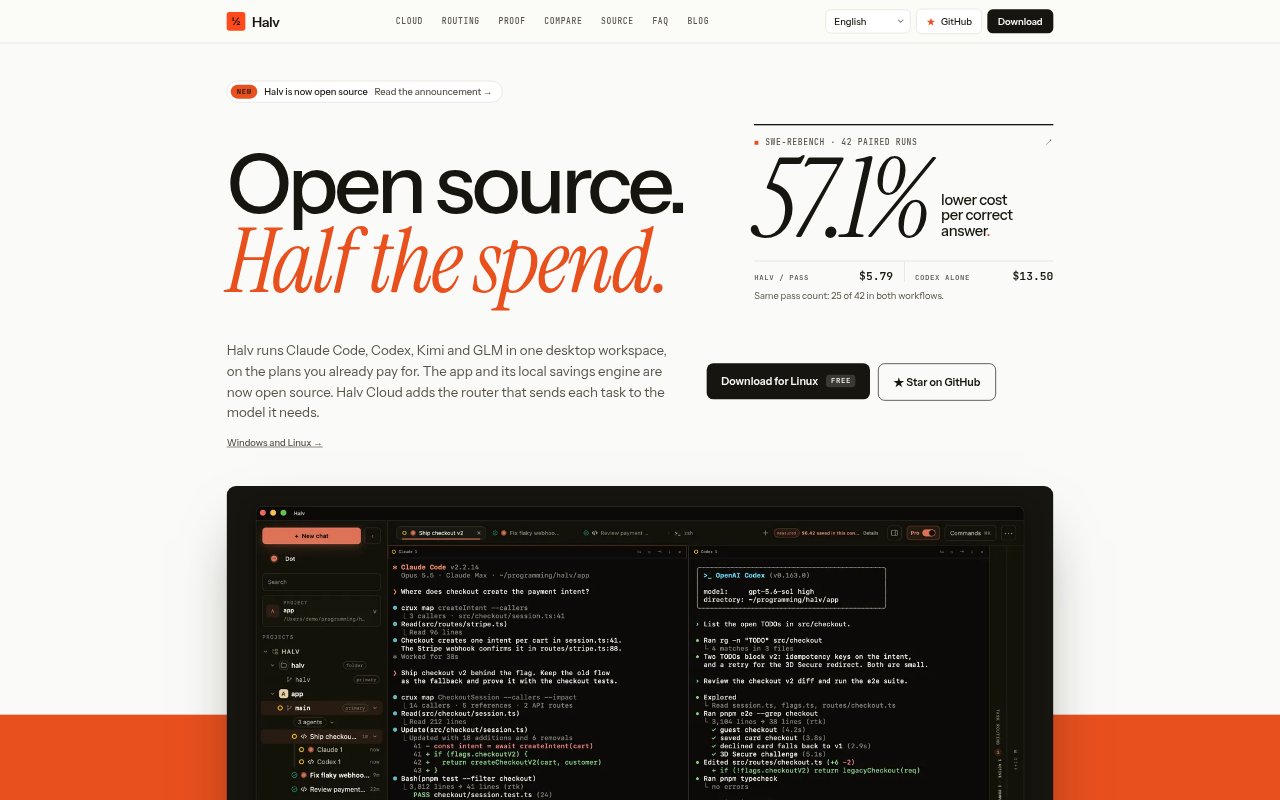
Halv is an open-source desktop workspace for developers using Claude Code, Codex, Kimi or GLM. It brings the agents together in one app, with native terminals, code indexing and local tools for filtering command output and compressing context. An optional cloud service routes coding tasks to a model and effort level based on the brief, and tracks savings across sessions and machines. Halv runs workers on supported subscriptions users already have, while its local workspace and savings tools are free.
Halv Features:
Multi-Agent Workspace: Run Claude Code, Codex, Kimi and GLM in one desktop app, with native Pro-mode terminals, subagent fan-out and up to 32 live panes.
Code Navigation: Crux indexes code to answer questions about callers, references and impact without reading files one by one.
Local Context Tools: RTK filters command output and Headroom compresses context on the developer’s machine.
Project Safeguards: Use a local OS sandbox, per-project approvals, turn diffs and revert controls to manage agent changes.
Cloud Task Routing: JEV reads an approved task brief and selects a lane, model and effort level; tasks that fail checks can move to a stronger tier.
Savings and Rotation: Halv Cloud tracks savings across sessions, projects and machines, and can move work to another account when a plan reaches its usage window.
Halv Benefits:
Lower Model Costs: In Halv’s interim benchmark, both workflows passed 25 of 42 runs, while recorded model cost was 57.1% lower with Halv.
Faster Code Discovery: Crux can help developers locate code relationships from an index instead of spending time opening and searching files individually.
Less Context Overhead: Filtering command output and compressing context locally can reduce unnecessary material passed through coding-agent sessions.
Keep Existing Plans: Developers can work with their existing Claude or ChatGPT subscriptions rather than replacing them with a separate worker plan.
More Review Control: Approvals, diffs and revert options make it easier to inspect agent work and undo changes before they become part of a project.
Work Across Machines: Cloud history synced across machines gives developers a place to review routed work from different sessions and projects.
Use Cases:
Parallel Coding Sessions: Keep several coding agents and terminal panes open while working on multiple tasks in the same project.
Unfamiliar Codebases: Use Crux to find callers, references and potential impact when tracing a function or assessing a proposed change.
Mixed-Complexity Tasks: Route routine changes to a lower-effort model and let tasks that fail their checks escalate to a stronger tier.
Reviewing Agent Changes: Apply project approvals and inspect turn diffs when an agent edits files that need human review before acceptance.
Managing Plan Limits: Use automatic account rotation to keep work moving when one connected plan reaches its usage window.