

What is HiPath AI?
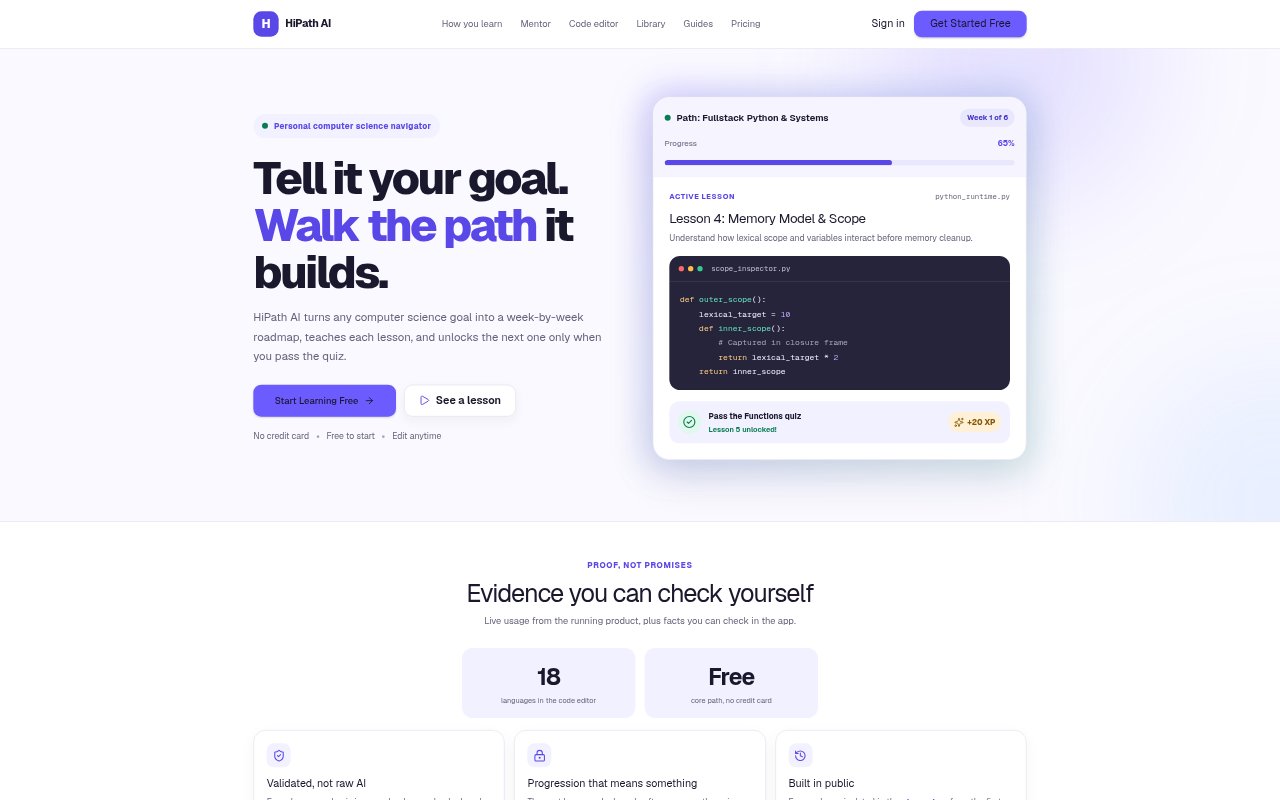
HiPath AI is a guided learning platform for computer science and technology, designed for beginners, students, and self-taught learners. It turns a learning goal, current level, and available schedule into a phased roadmap, then teaches each lesson through explanations, runnable examples, practice, and quizzes. Learners move forward by passing quizzes, while the platform tracks mastery and gives a tutor context about their roadmap, lesson history, and weak topics.
HiPath AI Features:
Adaptive Roadmaps: Set a goal, level, and schedule to generate a phased plan with lesson-sized steps, phase exams, and a final capstone.
Guided Lessons: Each lesson moves through an explanation, runnable example, targeted practice, and quiz, with depth adapted to the learner’s level.
Code Editor: Write and run code in an 18-language editor with multi-file projects, tabs, local autosave, standard input, run history, and export.
Persistent Tutor: Ask for direct or Socratic help from a tutor that can use your roadmap, current lesson, quiz history, and weak topics as context.
Mastery Tracking: Track mastery by lesson and topic alongside a skill graph, streaks, XP, levels, and a study heatmap.
Review and Capstones: Use a spaced-review queue for lessons that need another pass, and save private project links for capstone feedback and completion checks.
HiPath AI Benefits:
Clear Direction: A goal-based roadmap gives learners a defined next step instead of leaving them to choose what to study on their own.
Steady Progress: Quiz-gated lessons and phase checkpoints help learners check their understanding before moving further into a subject.
Focused Practice: Practice shaped around missed questions helps learners spend study time on topics they have not yet understood.
Visible Growth: Lesson and topic mastery records make it easier to see where skills are developing and where more work is needed.
Flexible Study: Adjustable plans, locally saved editor projects, and cached lessons let learners fit study around changing schedules and offline periods.
Use Cases:
Starting Python: A complete beginner can set a Python goal, follow a staged roadmap, and learn concepts through explanations and runnable examples.
Changing Careers: A career-switcher can map out a path from foundational topics to a capstone project and study in short sessions.
Filling Class Gaps: A student can use a roadmap to revisit computer science concepts their classes moved through too quickly or did not cover.
Building Web Skills: A self-taught learner can organize web development study into lessons, practice code in the editor, and check progress with quizzes.
Reviewing Weak Topics: A learner who misses quiz questions can return to relevant practice, ask the tutor for help, and revisit topics through spaced review.