

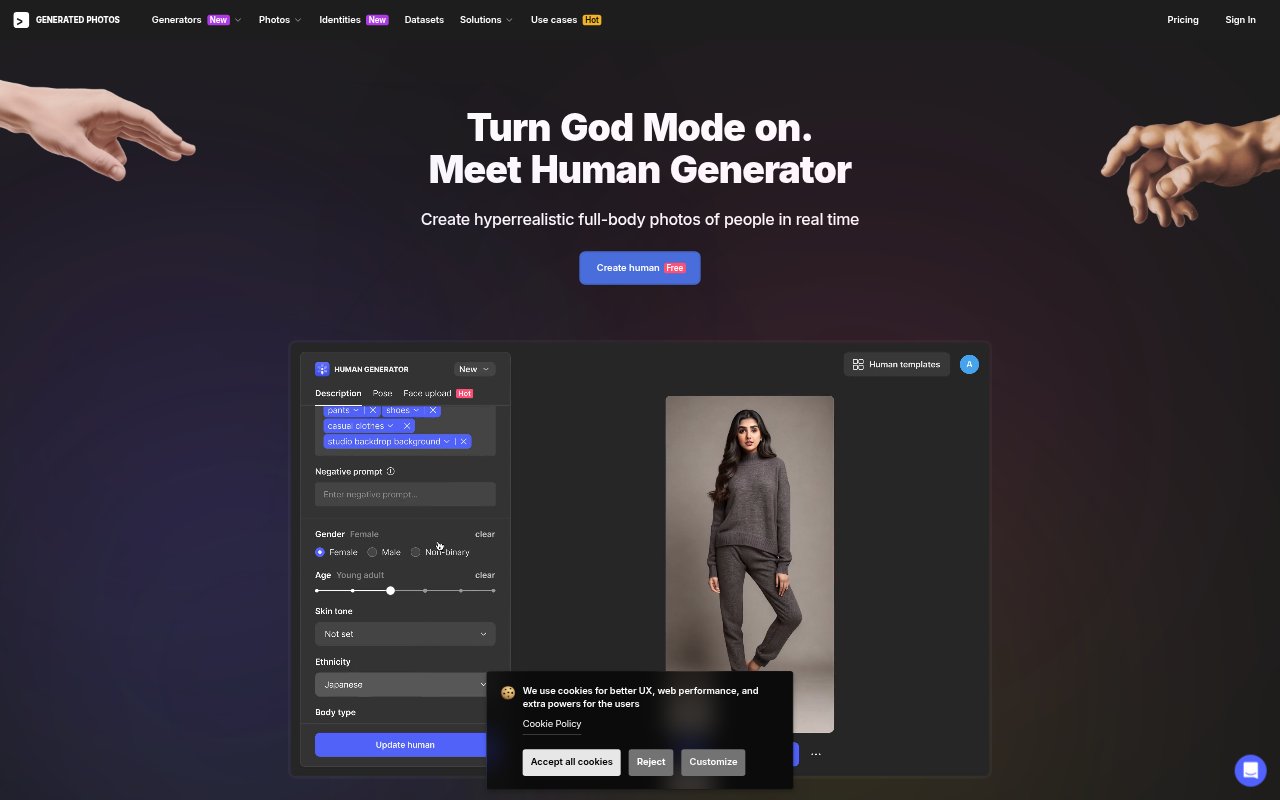
What is Human Generator?
Human Generator creates full-body images of people who do not exist. Users can change clothing, adjust facial and body traits, choose different postures, and download the results. It also supports generating variations and using real faces in the creation process. The tool is for people who need customizable human imagery, with applications including marketing, design, machine-learning data, and research.
Human Generator Features:
Full-Body Generation: Create images of synthetic people as full-body subjects rather than generating only faces.
Appearance Controls: Change clothing and modify facial or body traits to adjust a generated person's appearance.
Pose Options: Download generated people in different postures to show them in more than one pose.
Outfit Variations: Explore varied outfits when creating people, instead of limiting an image to one clothing look.
Real-Face Use: Use real faces as part of the Human Generator creation process.
Generated Variations: Create variations of generated people and access animations and a history area within the product.
Human Generator Benefits:
Creative Control: Adjusting several visual traits in one place makes it easier to steer an image toward a particular creative direction.
Layout Flexibility: Access to different postures gives users more options when fitting human imagery into varied compositions.
More Choices: Generating variations lets users compare alternatives and select an image that better suits their project.
Synthetic Subjects: People who do not exist provide human imagery without depicting a specific generated identity as a real person.
Free to Try: The generator is presented as free, lowering the cost of experimenting with synthetic people for a project.
Use Cases:
Marketing Concepts: Create advertising or campaign concepts that need images of people in particular outfits or postures.
Design Compositions: Add adjustable human imagery to design work when a layout calls for a person in a specific visual style.
Machine-Learning Training: Generate images of people for training machine-learning systems that work with human imagery.
Model Testing: Use generated people as test material when evaluating systems that process human images.
Research Projects: Prepare human imagery for academic research, gaming, or demo materials that call for synthetic people.