

What is iResolve?
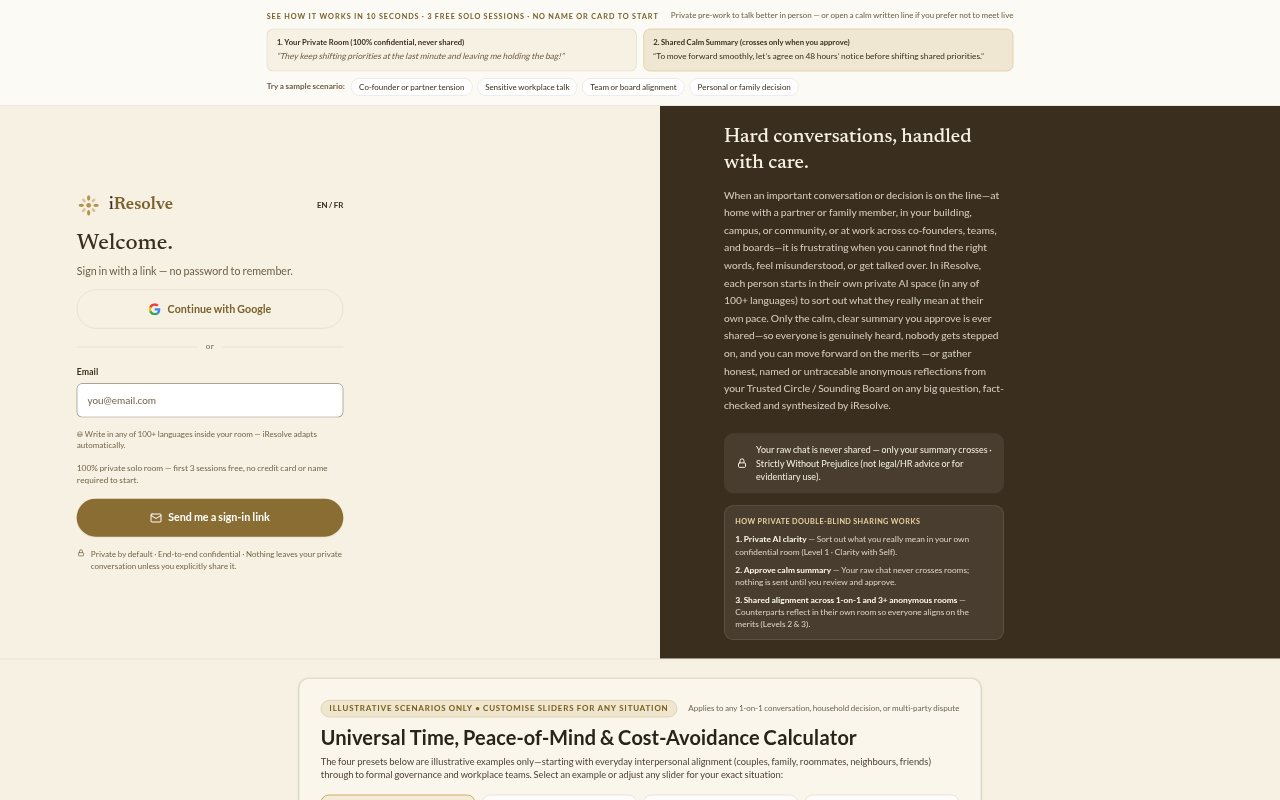
iResolve is a private AI platform for working through personal or group disagreements, from one-on-one conversations to rooms with three or more participants. Each person first uses a separate room to clarify their thoughts, then can review and approve a calm summary before anything is shared. The platform is designed for individuals, teams, institutions and practitioners handling conflict, with support for conversations in more than 100 languages.
iResolve Features:
Private Rooms: Participants work in separate AI-supported rooms for individual reflection, one-on-one alignment or group conversations with three or more people.
Approved Summaries: Raw chat stays in its private room, and a participant must review and approve a summary before it is shared with others.
Anonymous Replies: In rooms with three or more participants, people can provide optional untraceable replies to share perspectives.
Summary Synthesis: The platform uses double-blind summary synthesis to help participants compare perspectives without sharing their raw conversations.
Language Support: Private rooms support automatic conversations and summary synthesis in more than 100 languages.
Session Privacy: Raw chats are described as ephemeral and invisible to the thought partner and mediator, with no use of party narratives or case records for LLM training.
iResolve Benefits:
Calmer Communication: Participants can express frustration privately and share a more considered account, helping keep discussions focused on needs rather than raw reactions.
Less Scheduling Friction: Asynchronous interest exploration gives people a way to begin working through issues before they can arrange a joint session.
More Candid Input: Separate rooms and optional anonymous replies can make it easier for people to share perspectives without the pressure of group politics.
Participant Control: Reviewing summaries before sharing lets each person decide what others receive from their private conversation.
Practitioner Continuity: Practitioners can use the platform as neutral infrastructure while retaining their advisory relationships and client day fees.
Use Cases:
Couple Disagreements: Partners can sort through their needs privately and exchange approved summaries before trying to reach agreement.
Family Conflicts: Family members can clarify what matters to them in separate rooms before sharing a calmer account with one another.
Shared Living: Roommates or neighbours can use private rooms to explore an issue and communicate approved perspectives without starting with a joint confrontation.
Workplace Teams: Team members can contribute perspectives to a group room, including anonymous replies when the conversation has three or more participants.
Institutional Governance: Boards and other stakeholders can collect perspectives through separate rooms and compare approved summaries before a joint discussion.