

What is Limitbreak?
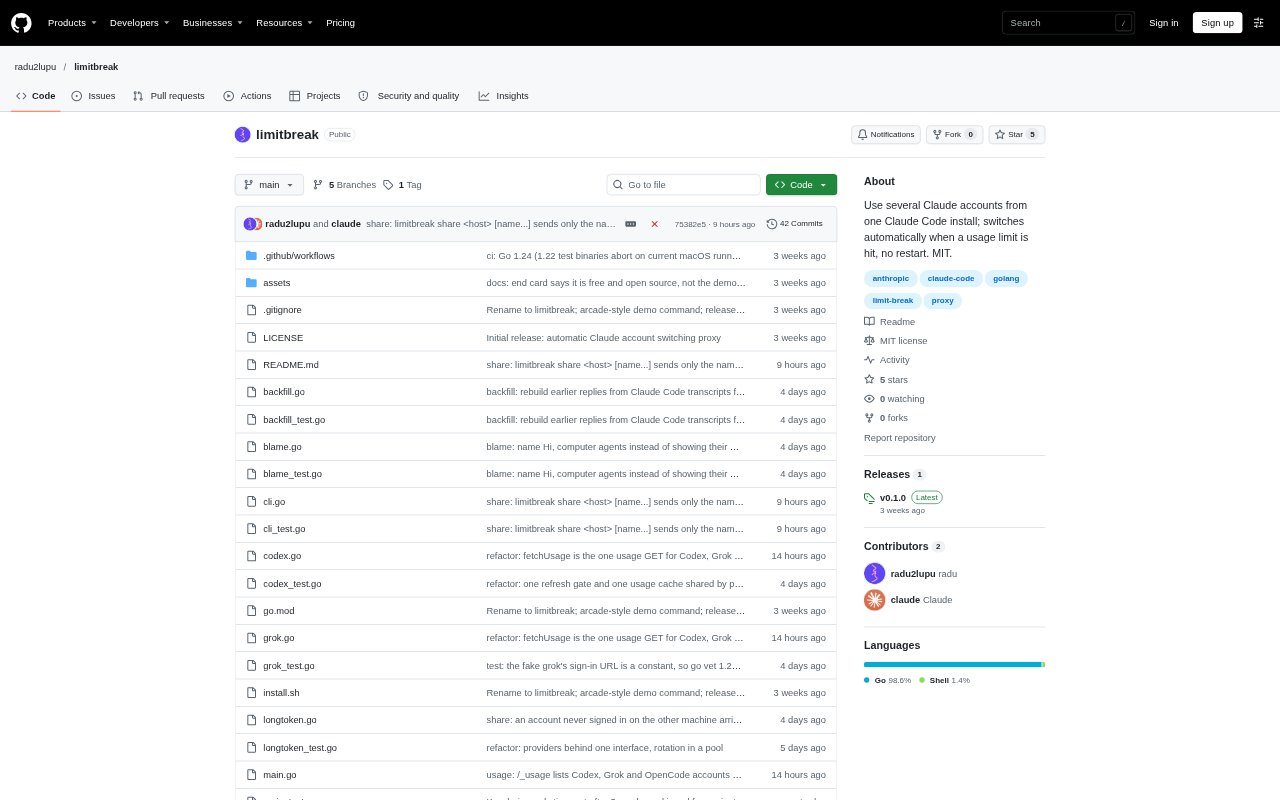
Limitbreak is a local proxy that lets people use multiple Claude accounts from one Claude Code installation and switches accounts when one reaches a usage window limit. It can also rotate Codex between ChatGPT sign-ins. The proxy retries the request on another available account before Claude Code or Codex receives a limit error, so work can continue in the same session. It is aimed at developers who use these command-line tools and manage more than one login.
Limitbreak Features:
Automatic Account Switching: The proxy tracks accounts that have reached a usage limit and routes subsequent requests to another available account.
Request Retry: When Claude returns a qualifying window rejection, Limitbreak replays the same request on the next account before passing an error to Claude Code.
Local Proxy: A small Go service runs on macOS or Linux and sits between the command-line client and the service API.
Account Management: The command-line interface can add, list, and remove named Claude accounts, with browser sign-in handled through Claude Code.
Usage Reports: Limitbreak records Claude request metadata, token counts, session identifiers, models, and observed usage-window utilization for reports by session, project, account, or model.
Credential Handling: Tokens are not exposed in the status endpoint or logged, and Claude Code remains responsible for refreshing its own sign-in.
Limitbreak Benefits:
Fewer Interruptions: A session can continue after one account reaches its usage window, rather than stopping for the user to switch logins manually.
Session Continuity: Because retries happen within the proxy, Claude Code can keep its existing session history when an account change is needed.
Usage Visibility: Session and project reports help users see where recorded Claude requests and token use are going.
Credential Privacy: Keeping tokens out of logs and status responses reduces the chance of exposing login credentials through routine inspection.
Existing Workflows: Claude Code keeps its own credentials for requests outside the proxied message endpoint, so connectors and local MCP servers can keep working.
Use Cases:
Long Coding Sessions: Keep a Claude Code task moving when the active account reaches its five-hour or weekly usage window.
Multiple Claude Logins: Use separate Claude accounts from one Claude Code installation instead of manually changing the active login between tasks.
Codex Account Rotation: Route Codex requests among ChatGPT sign-ins when an account reaches its usage limit.
Usage Investigation: Review which Claude sessions or projects contributed to recorded request and token use over a chosen period.
Multi-Machine Setup: Share named Claude account tokens between your own machines over SSH when setting up Limitbreak on another host.