

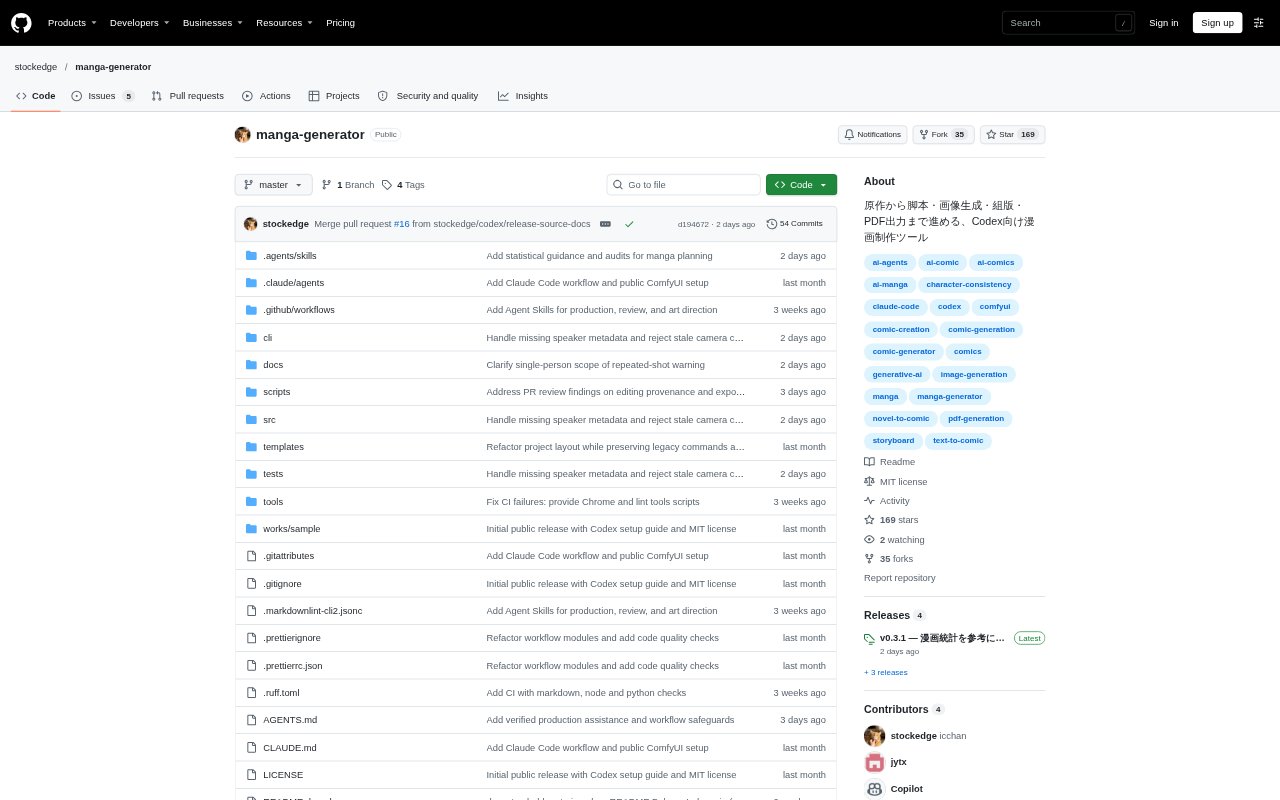
What is manga-generator?
Manga Generator is a local, agent-assisted workflow for turning a novel or other written source into a manga, from scripting and panel planning through generated artwork, lettering, review, and PDF output. It is designed to work with Codex, with documented workflows for Claude Code and skills for compatible agents such as Cursor. Users provide UTF-8 text or paste the source, while an agent coordinates production through command-line tools; full automation depends on image generation, visual inspection, and independent review being available in the agent environment.
manga-generator Features:
Source to Script: Start from a UTF-8 text file or pasted story and use an agent-led workflow to develop the script and panel plans.
Pre-Art Review: Require the script and complete set of panel plans to pass review before artwork begins, with a recorded approval that can be reopened for revisions.
Image Generation: Coordinate the creation of reference images and individual panel images as part of the production process.
Visual Inspection: Review the actual generated images and make corrections, with production able to pause and report when required image or review capabilities are unavailable.
Separate Lettering: Place dialogue and speech balloons separately from the artwork, so text can be changed after the images are made.
Production Audit: Check panel proportions, character size, and page density, and flag measures such as unused area, face size, and oversized explanation-only panels.
Reading and PDF: Prepare a reading view, export the completed manga as a PDF, and create a package for reproducing the work.
manga-generator Benefits:
Fewer Manual Steps: Delegating setup and command-line work to a supported agent lets non-engineers focus more on the source material and creative decisions.
Safer Art Approval: Checking the script and panel plans before drawing helps catch story or layout concerns before they carry into finished artwork.
Flexible Dialogue: Keeping words and balloons apart from images makes dialogue edits less likely to require rebuilding the artwork.
Clearer Review: Recorded decisions and targeted review give creators a way to track why changes were made and which parts still need attention.
Visible Layout Issues: Warnings about page and panel measurements help creators spot composition concerns for human review instead of relying on an unseen defect.
Work Can Resume: Saved production history and a reproduction package help creators return to an in-progress project and preserve its production context.
Use Cases:
Novel Adaptation: Turn a prose story or novel chapter into a scripted, panel-by-panel manga workflow using the original text as source material.
Agent-Led Production: Have Codex coordinate setup and manga production when the user wants to provide a manuscript without handling every command themselves.
Panel Planning: Review a complete set of panel plans and resolve story or composition concerns before committing to generated images.
Dialogue Revision: Update speech and balloons after image generation when a character line needs editing or the lettering needs adjustment.
Page Quality Check: Inspect page density, panel proportions, and character scale during production or after layout, then review flagged images manually.
PDF Delivery: Finish a manga for reading and PDF sharing while retaining a package that supports reproducing the production.