
What is memdebug?
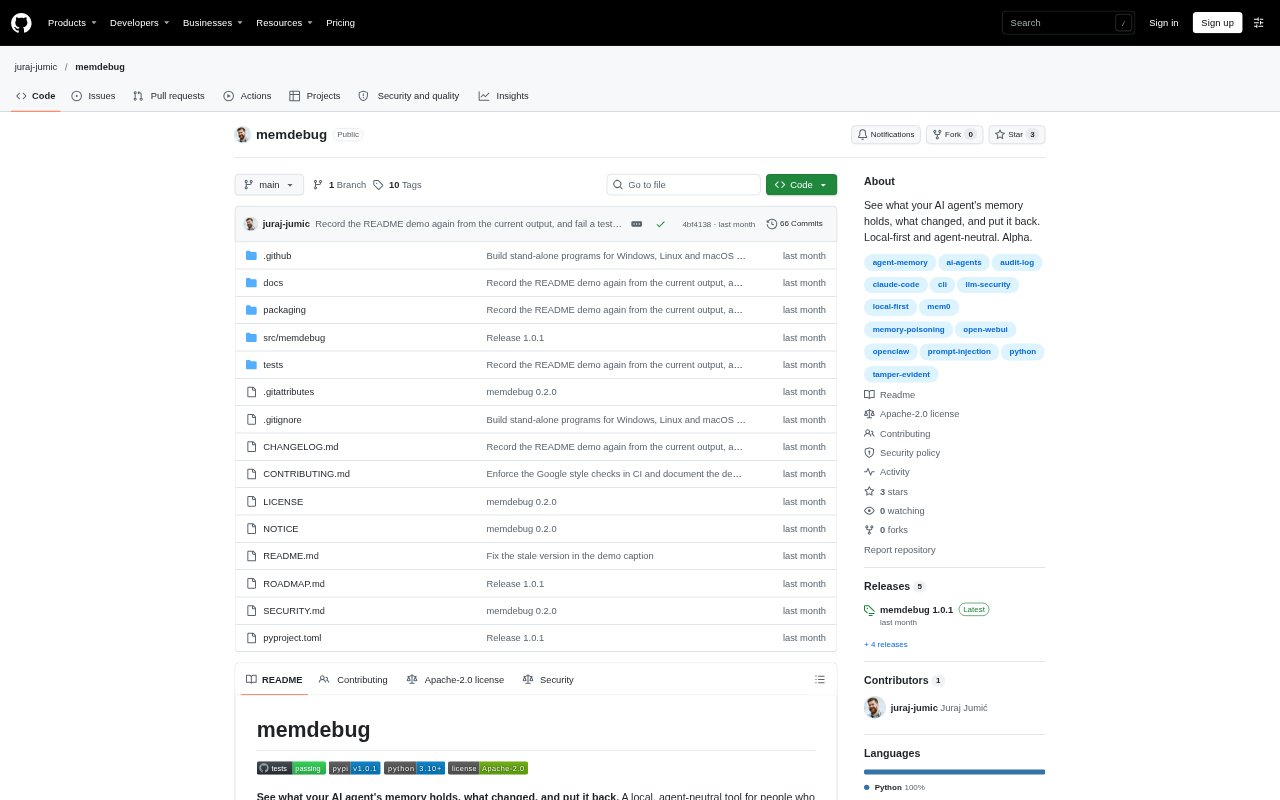
memdebug is a local, agent-neutral command-line tool for inspecting AI agent memory stored in folders, Git repositories, Open WebUI, MCP memory files, or self-hosted Mem0. It records snapshots in a tamper-evident ledger, reports changes and wording worth reviewing, and can roll supported Markdown memory back. It observes stores without connecting to or interrupting the agent, making it suited to people who can access the files or memory store their agents use.
memdebug Features:
Tamper-Evident Ledger: Records agent memory in a ledger designed to reveal changes to the stored record itself.
Change Detection: Compares snapshots and catches edits made outside a store's own history, including changes that bypass Git.
Continuous Monitoring: Checks memory once on demand or keeps watching and reports when something changes.
Wording Flags: Highlights wording in memory that may deserve a closer look during a review.
Markdown Rollback: Shows a dry run before applying a rollback of supported Markdown memory to a selected snapshot.
Browser Viewer: Serves a read-only browser view of the same change information available from the command line.
Agent Discovery: Finds recognized agents and their memory locations, then helps save a first snapshot for each.
memdebug Benefits:
Earlier Review: Changes that might otherwise go unnoticed become visible for investigation before they are treated as reliable memory.
Clearer History: Snapshots help users understand what changed and when, rather than relying only on the current contents of a memory file.
Safer Recovery: A dry run lets users inspect the proposed rollback before confirming that a prior memory state should be restored.
Low Disruption: Because memdebug runs locally as an observer, teams can inspect memory without placing it in the agent's runtime path.
Away-Time Visibility: Keeping its watcher running from login can reveal a change that was made and undone while the user was away.
Use Cases:
Folder Memory Review: Track Markdown notes kept in a local folder and check whether an agent or another process changed them.
Git Note Audits: Monitor agent memory in a Git repository and catch edits that did not pass through Git history.
Open WebUI Checks: Inspect the memory used by an Open WebUI installation and review changes to its saved content.
MCP Store Monitoring: Watch a file used by an MCP memory server for unexpected edits and compare its contents with earlier snapshots.
Claude Code Investigation: When a change is flagged, consult the associated logged Claude Code session as context for reviewing it, not as proof of its origin.