
What is Mnemolith?
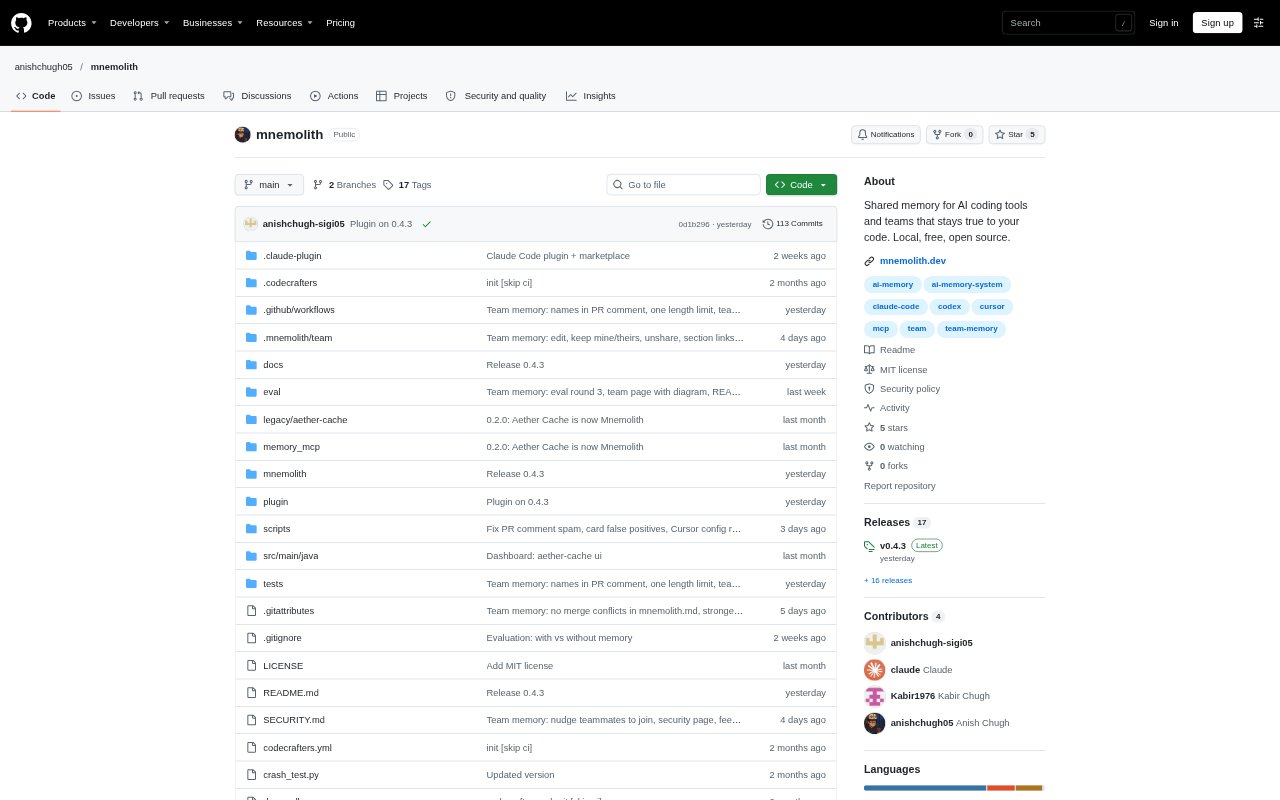
Mnemolith is a local memory system for AI coding tools, designed for developers and teams working across projects and sessions. It saves project facts, links them to relevant files, and flags memories when those files change so they can be checked before being used again. Claude Code, Claude Desktop, Cursor, Codex, and other MCP tools can share the same project memory, while teams can share selected memories through files in their repository.
Mnemolith Features:
Shared Tool Memory: Mnemolith connects through MCP so Claude Code, Claude Desktop, Cursor, Codex, and other MCP-compatible tools can use the same project memories.
File-Linked Memories: Memories can be linked to relevant project files and their Git content snapshots, allowing Mnemolith to flag them when those files change.
Memory Dashboard: A browser dashboard shows memories awaiting review alongside the file versions they depend on, with options to confirm, correct, or retire them.
Conflict Review: When a new fact conflicts with an older one, users can replace the outdated memory, and near-identical repeats are merged.
Memory History: Each memory keeps a record of its source tool and session, linked file versions, and status changes such as confirmation or replacement.
Team Memory: Shared memories are stored as repository files for pull-request review, and can be made available to teammates’ AI tools.
Drafted Fixes: The beta Mender feature drafts a correction when a memory goes stale, leaving the decision and approval to the user.
Mnemolith Benefits:
Less Repeated Context: Project decisions and working details can carry into a new session, so developers spend less time re-explaining information to their AI tools.
Fewer Stale Assumptions: Reviewing memories after related code changes helps prevent an AI tool from relying on project details that are no longer accurate.
Clearer Decisions: A record of where a memory came from and how it changed makes it easier to judge whether it still applies.
Shared Team Context: Teams can pass useful project knowledge to colleagues through normal repository review, rather than relying on each person to repeat it.
Less Conflicting Guidance: Replacing outdated facts and merging repeated ones helps keep project context focused instead of leaving competing notes for an AI to interpret.
Use Cases:
Switching Coding Tools: Use one project’s context when moving between Claude Code, Cursor, Codex, or another connected tool during development.
Reviewing Changed Code: After changing a configuration file or other code, check which saved project facts depend on it and confirm or update them.
Sharing Team Decisions: Record a project decision for teammates and review the shared memory through a pull request before it becomes available to their AI tools.
Importing Existing Notes: Bring information from CLAUDE.md, AGENTS.md, or Cursor rules into Mnemolith as memories linked to the files those notes mention.
Recurring Project Questions: Save details such as test setup requirements so a later session can recall them when someone asks how to run the project’s tests.