

What is Ollama?
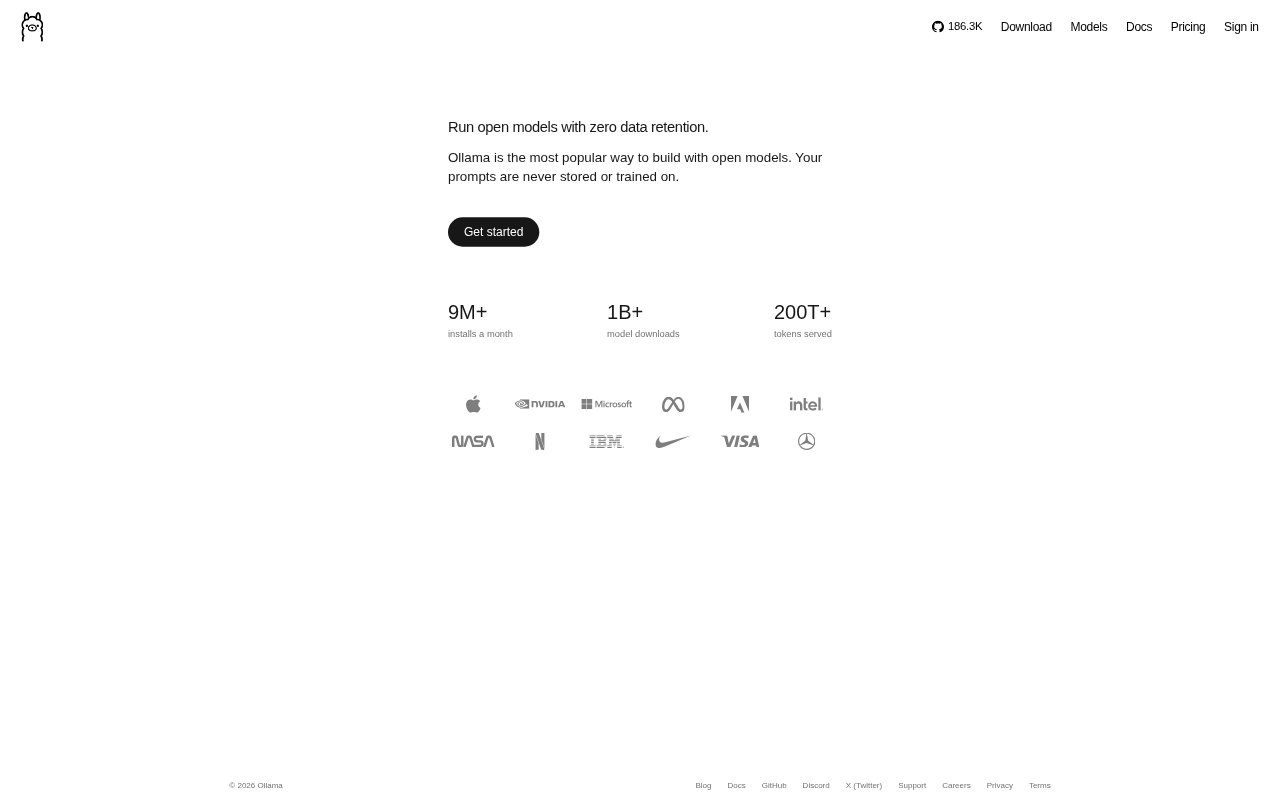
Ollama is a platform for running and building with open AI models locally or in the cloud. It supports macOS, Windows, and Linux, and is aimed at people who want to use open models on their own computers or through cloud services. Individuals can run models without a subscription, while paid options add cloud usage credits and team administration. Prompts are not stored or used for training.
Ollama Features:
Local Models: Run open AI models on macOS, Windows, or Linux, with local model use included in the pay-as-you-go option.
Cloud Models: Use cloud models with token-based billing, with model rates charged per million input, cached input, and output tokens.
Tool Calling: Cloud models trained for tool use are tested for tool calling and real agent workflows before they become available.
Prompt Privacy: Prompts are not stored or used to train models, whether you are building with open models or running them through Ollama.
Team Administration: Team subscriptions provide unlimited users, shared usage credits, centralized billing, and administration, while Enterprise adds model access controls and user or API-key budgets.
Concurrent Requests: The pay-as-you-go option includes three concurrent requests, while Max includes ten concurrent requests.
Ollama Benefits:
Choice of Setup: Teams and individuals can choose between running models on their own computers and using cloud access, rather than committing to a single environment.
Usage Visibility: Per-token cloud pricing and included plan credits give users a way to relate model usage to its associated charges.
Privacy Assurance: Knowing prompts are not retained or used for training can help users assess whether Ollama fits work involving sensitive input.
Shared Operations: Centralized team billing and administration reduce the need to manage each team member's cloud usage as a separate account.
Use Cases:
Local Model Testing: Try open models on a Mac, Windows PC, or Linux machine while comparing how different models suit a development project.
App Prototyping: Build an early version of a product that uses an open model, choosing local execution or cloud model access for testing.
Agent Workflows: Test cloud models trained for tool calling in workflows where an agent needs to use tools as part of its work.
Team Model Access: Give a team a shared way to use cloud models, with common billing and administration for its members.
Model Cost Planning: Estimate cloud model expenses by comparing token rates and plan credits before selecting models for a project.