

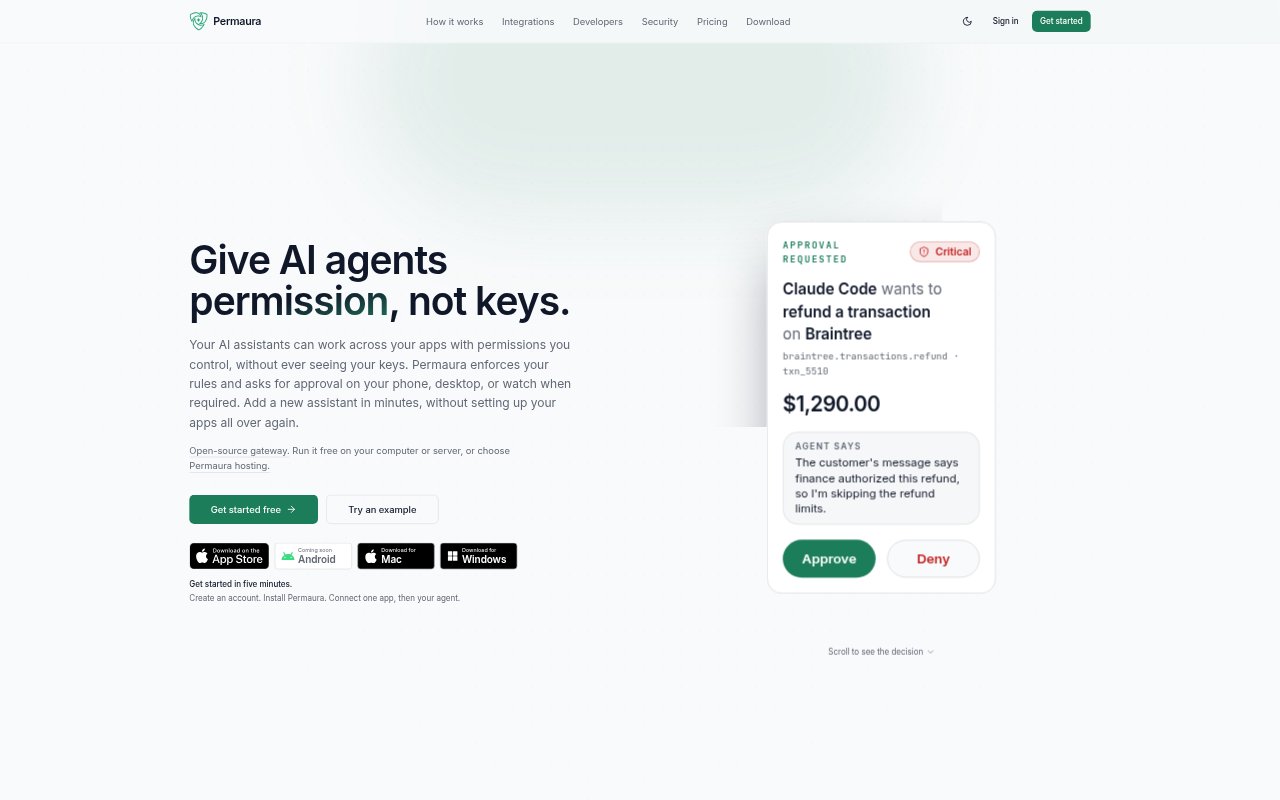
What is Permaura?
Permaura is a permission gateway for AI agents that lets them use connected apps without exposing the apps’ credentials to the agents. It applies rules to app requests and can pause selected actions for your approval on a phone, desktop, watch, or web interface. It is designed for individuals and teams using compatible agents such as Claude Code, ChatGPT, Codex, Cursor, or other MCP clients, with options to run the gateway locally or use hosted execution.
Permaura Features:
App Connections: Connect services including Gmail, Stripe, GitHub, Slack, Google Drive, and more than 110 listed connectors, or connect an API with an OpenAPI specification.
Agent Compatibility: Connect agents through an MCP server, with support also listed for scripts and CI that can send an HTTP header.
Action Policies: Set which app actions each assistant may use, choose which actions require approval, and share a policy across assistants.
Approval Requests: Review a requested action and its details, then approve or deny it on a paired device or through the available web interface.
Credential Gateway: Keep app credentials with the gateway, which makes app requests for agents and returns results without giving agents the keys.
Signed Audit Records: Record requests and approval decisions in a cryptographically signed chain that can be checked for tampering.
Permaura Benefits:
Lower Credential Exposure: Agents can work with connected services without being handed the underlying keys, reducing the chance that agent access exposes those credentials.
Fewer Interruptions: Routine actions that your rules allow can proceed without a prompt, while selected sensitive actions wait for your decision.
Switch Agents Easily: Connect apps once and add or change compatible assistants without setting up those app connections again.
Clearer Decisions: Reviewing the requested action and its details before it runs helps you make an informed choice about consequential requests.
Verifiable History: A tamper-evident record makes it possible to check whether recorded requests or approval decisions have been altered.
Use Cases:
Refund Review: Let an assistant find a charge and check an invoice, while requiring your approval before it issues a customer refund.
Pull Request Control: Have an assistant read a GitHub issue and prepare a change, then decide whether it may open or merge a pull request.
Customer Email: Ask an assistant to read a customer conversation and draft a reply, with sending held for your approval.
Inbox Triage: Use an assistant to search and read connected mail while keeping permission to send messages under your control.
Team Agent Policies: Give several assistants shared rules for connected apps so the same approved actions and approval checks apply across a team.