

What is Proofsource?
Proofsource helps brands and agencies understand how often AI answer engines recommend a brand, what competitors they mention, and which buyer questions reveal visibility gaps. It tracks ChatGPT, Perplexity, Claude and Google AI Overviews, then helps teams investigate and address what they find. Brands can use it to monitor their own visibility, while agencies can manage client work and resell the service under their own name.
Proofsource Features:
AI Visibility Metrics: Track brand mention rate, share of voice and average position across AI answers, with a 95% confidence interval alongside each rate.
Competitor Discovery: See which brands appear in answers instead of yours, including competitors that were not added to your tracking list.
Buyer Question Tracking: Review suggested buyer questions grouped by topic, marked as branded or unbranded, and ranked by monthly search demand.
Search Fan-Outs: See the web searches an engine runs before answering where available, and check how your pages rank for those searches.
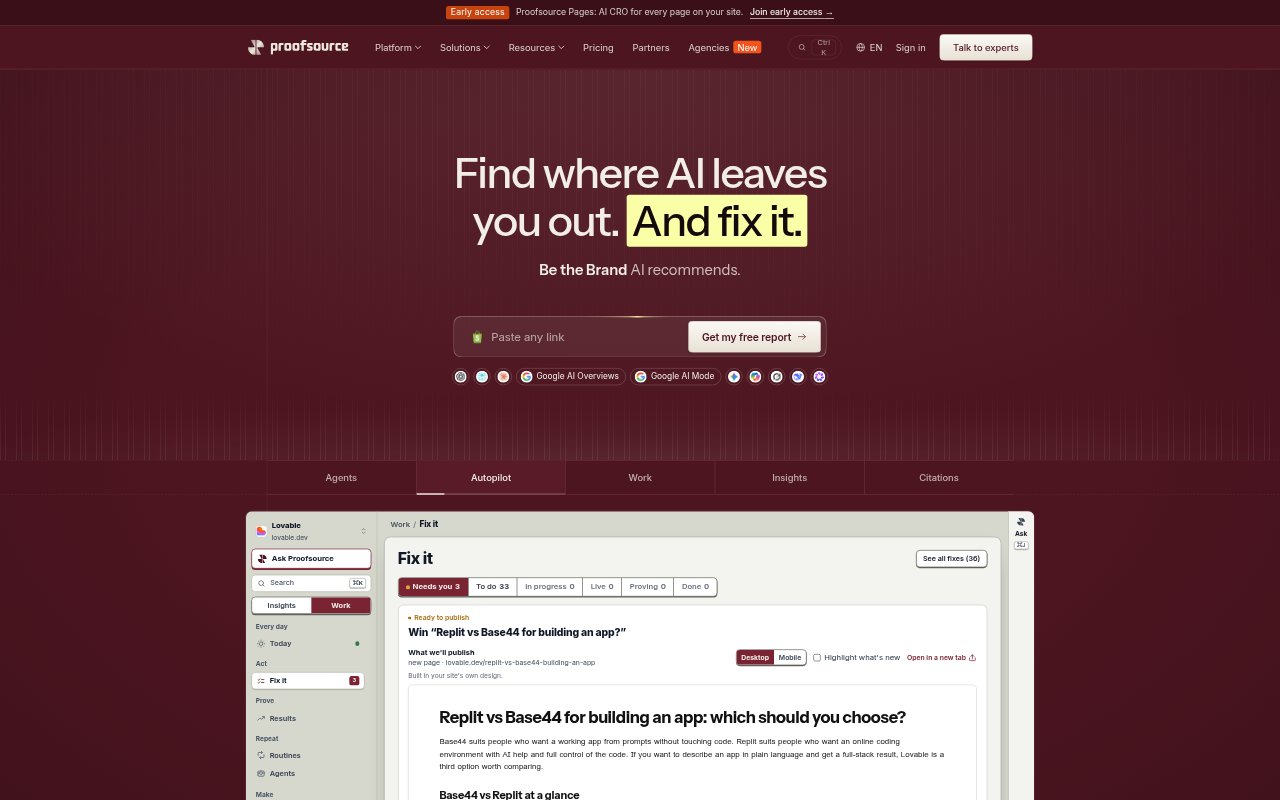
Fix Drafts: Get proposed fixes based on visibility gaps, with Autopilot able to open a GitHub pull request and show a Cloudflare preview for approval.
Team and Agency Tools: Use a Chrome extension to view AI information and editable response drafts on a page, or manage client visibility under an agency's own name.
Proofsource Benefits:
Clearer Performance Reads: Confidence intervals help teams distinguish a meaningful visibility change from variation in a small sample.
Better Prioritization: Combining buyer-question demand with mention rates helps teams focus on gaps tied to questions more people search.
Less Guesswork: Competitor findings and the searches behind AI answers give teams concrete leads for investigating why a brand is missing.
Visible Progress: Repeated scans let teams compare answers over time and assess whether changes have shifted the results.
More Shared Work: Team members can review and edit drafts in their own voice, making it easier to coordinate follow-up across a company.
Use Cases:
Brand Visibility Audits: A marketing team can check whether AI assistants recommend its brand for common questions buyers ask before choosing a product.
Competitor Monitoring: A brand manager can identify which alternatives AI names in the same answers and compare visibility by engine or topic.
Content Planning: An SEO team can use high-demand questions and engine search fan-outs to identify pages and topics to investigate.
Accuracy Checks: A communications team can review branded answers to find descriptions that misstate what the company does.
Agency Client Reporting: An agency can monitor multiple clients, share reports on visibility changes, and offer AI visibility tracking under its own name.