
What is Reference Points?
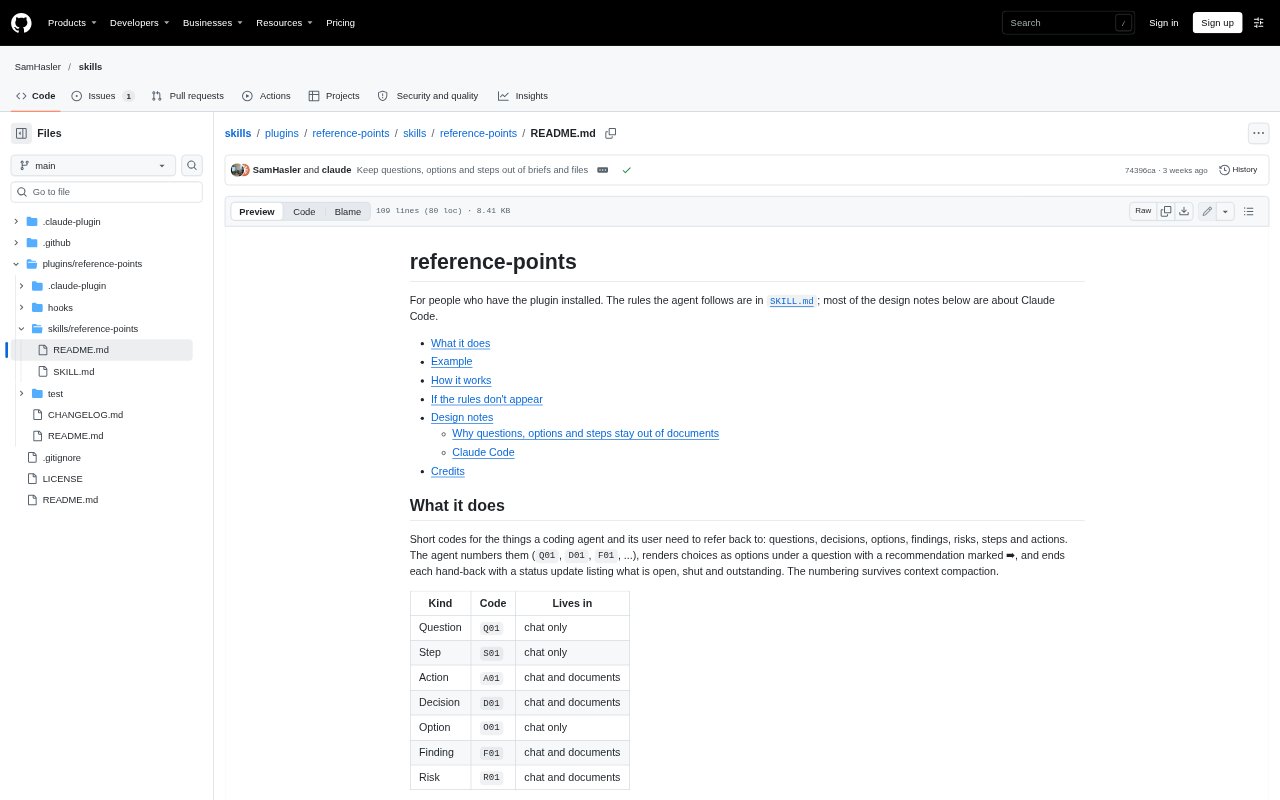
Reference Points is a Claude Code plugin for organizing the information exchanged during a coding session. It uses short codes for questions, decisions, options, findings, risks, steps, and actions, and adds an end-of-turn status update. Its numbering is designed to continue through context compaction, helping Claude Code users keep a consistent reference system as a conversation progresses. The plugin is available through Sam Hasler’s Claude Code plugin marketplace and is installed separately.
Reference Points Features:
Short Codes: The plugin uses compact codes to mark questions, decisions, options, findings, risks, steps, and actions in a conversation.
Question Marking: Questions receive a distinct reference category, making them easier to distinguish from decisions, findings, and other discussion.
Decision Tracking: Decisions and options have separate short-code categories, so a chosen direction can be differentiated from alternatives.
Risk Findings: Findings and risks are represented as separate kinds of reference, keeping observations distinct from potential problems.
Step And Action Codes: Steps and actions have their own short-code categories for labeling procedural items and follow-up work.
Turn Status: An end-of-turn status update gives the conversation a designated point to summarize where things stand.
Persistent Numbering: Numbering is designed to survive context compaction, so references can continue across that change in conversation context.
Reference Points Benefits:
Faster Scanning: Compact categories make it easier to locate a particular kind of information without treating every conversational note as interchangeable.
Clearer Decisions: Separating selected decisions from options helps keep the current direction distinct from possibilities that were considered.
Visible Follow-Up: Distinct labels for steps and actions help users see which points describe a process and which call for further work.
Structured Reviews: Keeping findings and risks in separate categories makes it easier to review what was observed alongside what may need attention.
Conversation Continuity: Numbering that persists through compaction helps maintain a usable reference trail as a Claude Code conversation continues.
Use Cases:
Coding Questions: Use question references during a coding session to keep unresolved points distinct from findings and decisions already made.
Comparing Options: Mark alternatives and decisions separately while considering different approaches to a coding task in Claude Code.
Reviewing Risks: Use separate finding and risk references when examining observations and potential problems during a coding discussion.
Tracking Work: Label steps and actions while organizing the sequence of work and identifying follow-up items in a session.
Resuming Context: Rely on continuing numbering when a conversation undergoes context compaction and needs to retain its reference system.