
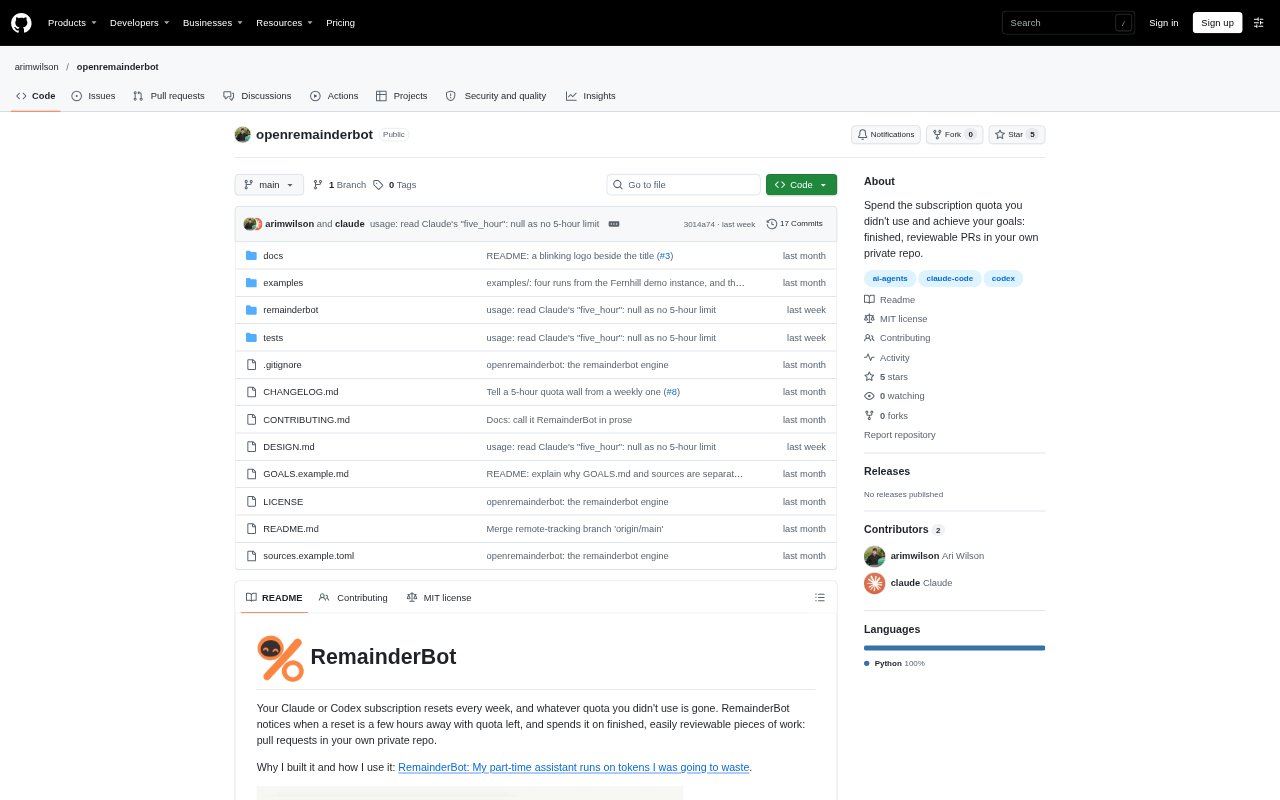
What is RemainderBot?
RemainderBot is a self-hosted Python tool that uses leftover Claude Code or Codex subscription quota to produce reviewable pieces of work before the weekly quota resets. It runs on a dedicated machine, reads tasks and priorities from sources you configure, and works toward a pull request in your private repository. You review the result before merging it, so the bot can handle selected tasks without automatically shipping its changes.
RemainderBot Features:
Quota Monitoring: An hourly scheduled check reads CLI quota numbers and starts a run when a weekly reset is less than four hours away with at least ten percent remaining.
Goal-Based Selection: The agent compares candidate tasks from your configured sources with GOALS.md priorities and verdicts from previous runs before choosing work.
Task Sources: Adapters can read GitHub issues and roadmaps, Google Tasks and Docs, Markdown files, local files, or the output of a command.
Deadline-Bound Work: Each run works against a deadline based on the reset time and remaining quota, producing an artifact such as a document, tested feature, or prototype.
Private Repo Pull Requests: Runs create branches and pull requests in a private repository, with a summary of the work, verification details, and a next step for shipping it.
Review Feedback: Merging a pull request marks a run approved, while closing it with a comment gives the next run feedback on what to change.
Setup Checks: A doctor command checks CLI logins and quota access, source configuration, committed edits, and whether the repository is private and can accept a push.
RemainderBot Benefits:
Use Remaining Quota: Subscription capacity that would otherwise expire can go toward useful work instead of being left unused.
Work on Priorities: A goals file helps direct the agent toward tasks that matter to you rather than treating every item in your task sources equally.
Review Before Shipping: Pull requests give you a chance to inspect the output and decide whether it is ready before incorporating it into your project.
Avoid Repeated Tasks: Run history and review decisions help the agent avoid doing work it has already attempted.
Limit Public Exposure: Requiring a private repository keeps run branches and their recorded work from being pushed to a public repository.
Use Cases:
Resolve Open Issues: Use remaining quota to take on a prioritized customer issue from GitHub and submit a change for review.
Build Small Features: Ask the agent to implement a scoped product feature with tests, then review the resulting pull request.
Work Through Roadmaps: Point it at repository README files and TODO, roadmap, or plan documents to select a worthwhile next task.
Draft Written Materials: Use outline notes and Markdown sources to prepare a newsletter draft or another document for you to check.
Handle One-Off Requests: Add a manual goal for a specific task and let it take priority over other candidate work during a run.