
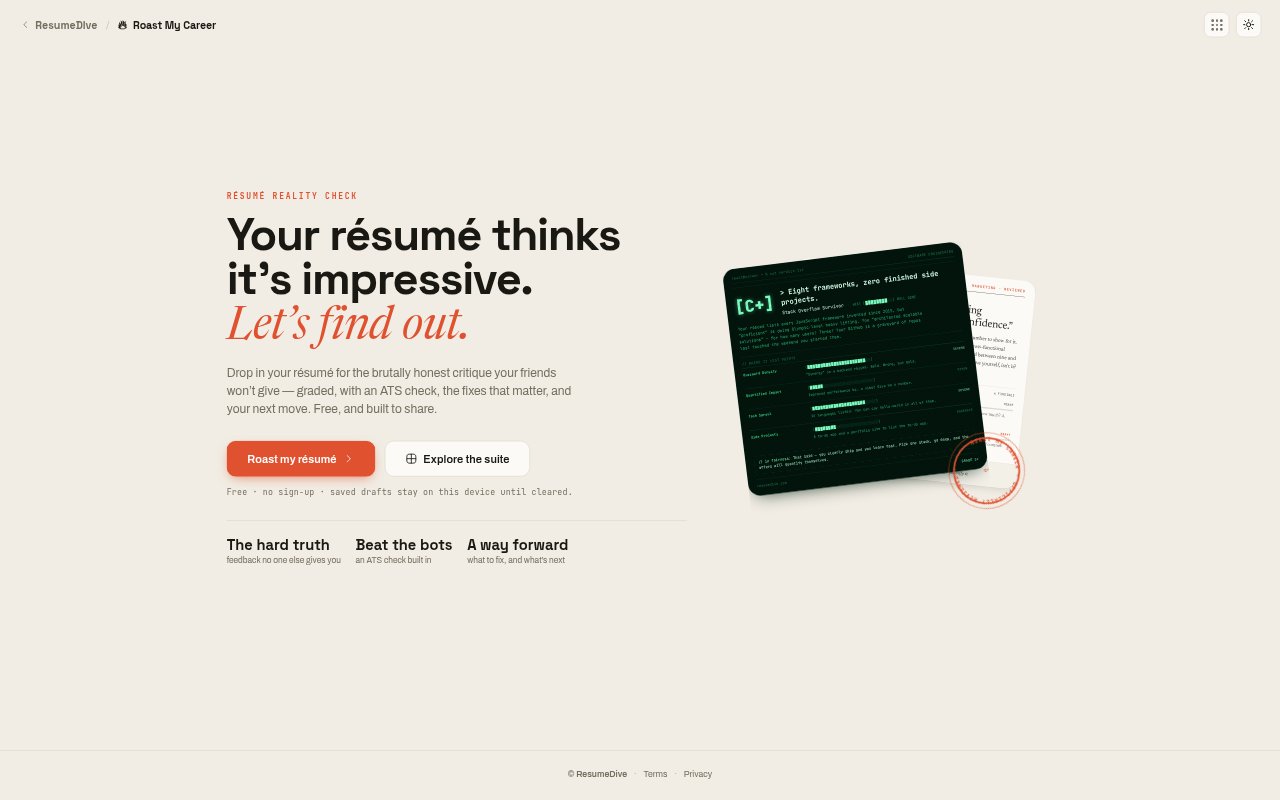
What is ResumeDive?
ResumeDive is a free résumé review tool for people who want candid feedback on how their résumé comes across. It grades the résumé, checks it for ATS concerns, and identifies fixes and a next move. It suits job seekers reviewing a draft before putting it to use, and its critique is designed to be shared. No sign-up is required, and saved drafts stay on the user’s device until cleared.
ResumeDive Features:
Direct Critique: ResumeDive gives a frank, sometimes kind review of a résumé, calling attention to claims or wording that may not say much about the work.
Résumé Grade: The review includes a grade, giving users a clear assessment alongside the written critique.
ATS Check: An ATS check is included to help users review their résumé with applicant tracking systems in mind.
Priority Fixes: The tool points out the fixes that matter, so users can focus on changes rather than receiving critique alone.
Next Move: Each review offers a suggested next move to help users decide what to do after reading the feedback.
Shareable Review: The critique is built to be shared, making it possible to show the review to someone else.
On-Device Drafts: Saved drafts stay on the user’s device until cleared, and the tool does not require an account.
ResumeDive Benefits:
Spot Vague Claims: Direct feedback can help users notice when confident-sounding phrases leave the reader unsure what they actually accomplished.
Focus Revisions: A shortlist of important fixes helps users spend their editing time on the changes the review flags as most relevant.
See Overall Read: A grade paired with written comments gives users both a quick assessment and context for understanding it.
Consider ATS Needs: An ATS check gives users another perspective to consider while preparing a résumé for an application.
Get Outside Input: A shareable critique makes it easier to bring another person into the review without relying only on personal judgment.
Use Cases:
Before Applying: Review a résumé before submitting it for a role, using the critique and ATS check to decide what to address first.
After Drafting: Get a fresh read on a newly written résumé when its author wants to know whether the language communicates their work clearly.
Reworking Bullets: Use the feedback to identify résumé statements that sound broad or self-congratulatory and need a more useful explanation.
Choosing Revisions: Consult the suggested fixes and next move when deciding which part of a résumé to revise rather than editing everything at once.
Requesting Feedback: Share the review with a friend or adviser to give them a concrete starting point for a conversation about the résumé.