

What is Ryph?
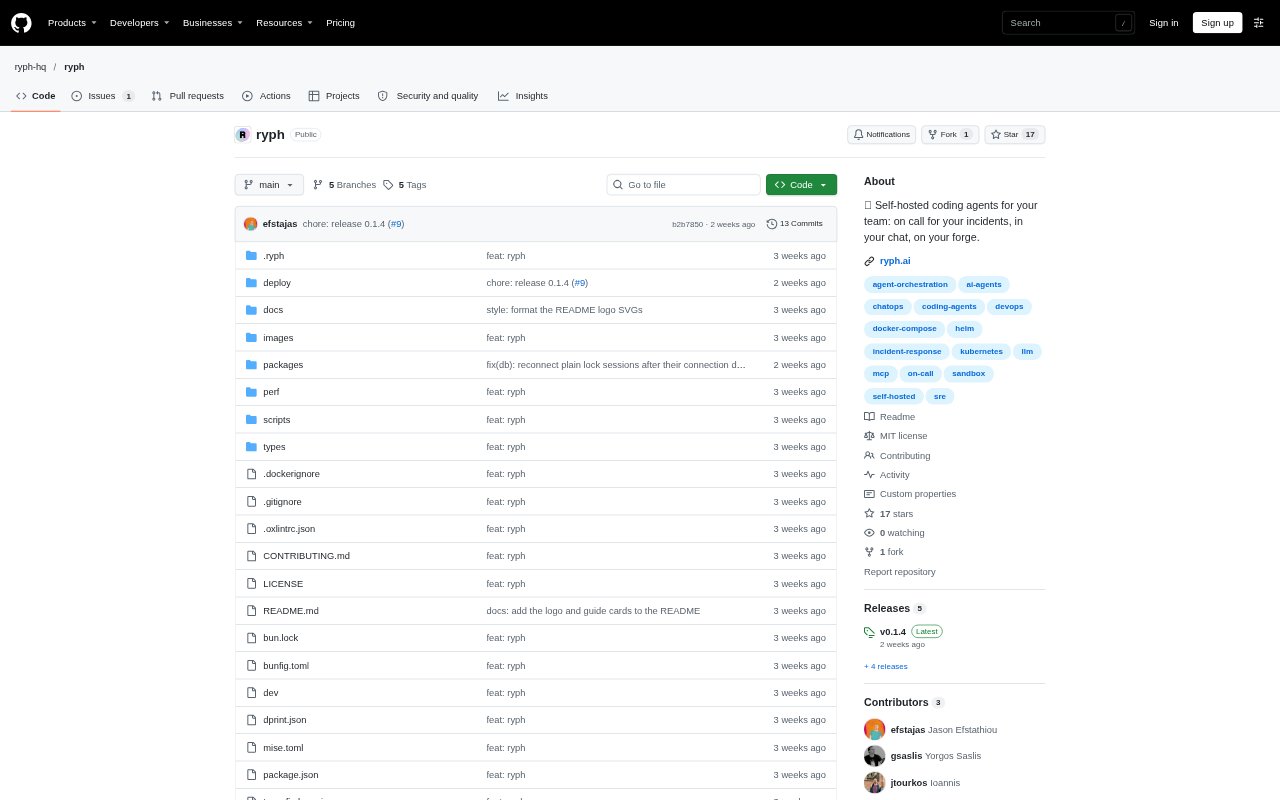
Ryph is an open-source platform for running coding agents on a team’s own infrastructure, from a laptop to a Kubernetes cluster. Teams can start agents from alerts, scheduled automations, chat, forge comments, or the web app. Each run works in a sandbox with access to selected repositories and can return changes as a pull request. Ryph is designed for teams that want agents to help investigate incidents, handle code tasks, and work alongside engineers.
Ryph Features:
Sandboxed Runs: Each agent run gets its own container and repository environment, with dependencies prepared from an image built for that repo.
Incident Response: An alert can start an agent that examines telemetry and code, joins an incident chat, responds to follow-up direction, and submits a fix.
Scheduled Automations: Recipes can run on a cron schedule or in response to signed webhooks from alerting, monitoring, or CI systems.
Forge Commands: A /ryph comment on a GitHub or GitLab issue or pull request can start work to fix, review, or update it.
Checks and Pull Requests: Ryph runs repository checks on agent changes and can turn the resulting patch into a pull request, subject to repository safeguards.
Shared Memory: Agents can carry forward learnings from earlier runs, merge duplicate claims, resolve contradictions, and flag memories that code changes may have outdated.
Protected Credentials: Credentials stay outside agent sandboxes behind Ryph’s gateways, while agents access models and tools through proxies.
Ryph Benefits:
Faster Incident Work: Starting investigation and fix work from an alert helps responders move from diagnosis toward a reviewed change within the incident workflow.
Less Repeated Context: Shared memories let later runs draw on useful findings from previous work instead of making teammates restate every runbook detail.
Reviewable Changes: Returning work as a patch or pull request gives engineers a familiar way to inspect agent changes before they are merged.
More Controlled Access: Keeping real credentials outside run containers reduces the need to expose sensitive keys directly to agents.
Team-Owned Deployment: Running Ryph on your infrastructure lets teams keep their code and agent environments within systems they operate.
Use Cases:
Incident Investigation: When a monitoring alert fires, have an agent inspect relevant telemetry and code, share findings in the incident chat, and prepare a hotfix.
Routine Maintenance: Schedule recurring tasks such as scanning for stale documentation or upgrading dependencies, then review the changes the agent proposes.
Issue Triage: Ask an agent from an issue or pull request to investigate a bug, implement a fix, or respond to review feedback.
Team Code Questions: Let teammates ask an agent in chat about selected repositories and request a report or a pull request for a code change.
CI Failure Follow-Up: Trigger an automation from a CI webhook so an agent can investigate a failure and prepare a change for engineer review.