

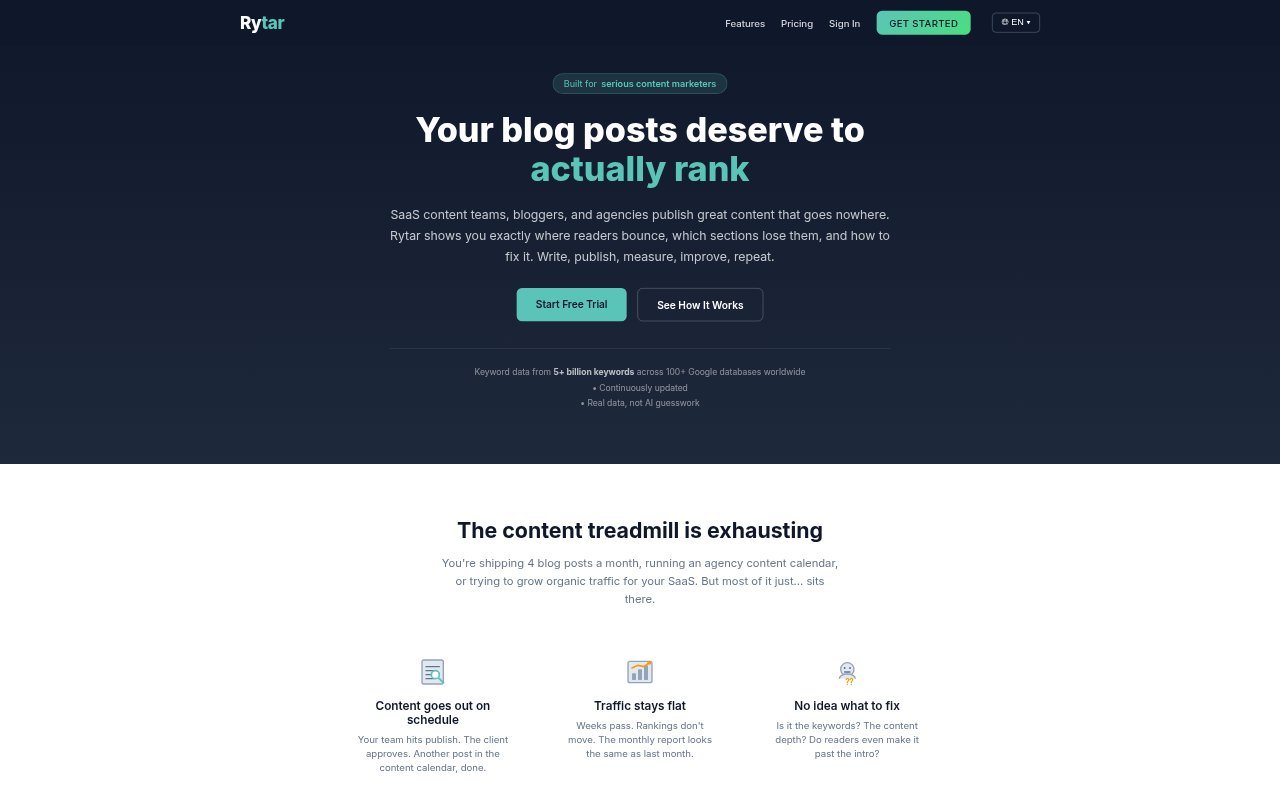
What is Rytar?
Rytar is an SEO and content platform for SaaS teams, bloggers, and agencies, combining keyword research, AI writing, search analysis, and reader behavior analytics. It supports the content cycle from finding search opportunities and preparing briefs to creating drafts, measuring engagement, and improving existing posts. Teams can also use it for technical site audits, rank tracking, backlink and competitor research, and client reporting; a free plan is available.
Rytar Features:
Keyword Research: Find search terms with difficulty scores, volume trends, and related keywords, then organize them by project or client.
Content Briefs: Review top-ranking search results and use their headings, topics, and content depth as the basis for writer-ready outlines.
SEO Writing: Generate first drafts informed by search results, with keyword placement and heading structure for formats such as how-tos and comparisons.
Reader Analytics: Measure scroll depth and clicks, review session recordings, and compare engagement across individual posts or campaigns.
Content Optimization: Check engagement by section, identify where readers drop off, get AI rewrite suggestions, and track ranking changes after edits.
SEO Suite: Run technical site audits and use rank tracking, backlink analysis, competitor research, and client-ready reports for SEO work.
Rytar Benefits:
Focused Research: Difficulty scores and search volume help teams spend content effort on topics they can assess before committing to a draft.
Clearer Assignments: Search-based briefs give writers a shared view of the topics and depth a piece should cover, reducing guesswork during production.
Faster Drafting: SERP-informed first drafts give writers a starting point, helping teams increase content output without expanding the writing team.
Evidence for Edits: Engagement data helps teams explain which parts of a post need attention and show clients the reasoning behind content changes.
Connected Workflow: Keeping research, writing, measurement, and optimization together makes it easier to carry lessons from published posts into future content.
Use Cases:
SaaS Blog Planning: A SaaS content team can find attainable search topics, group related terms, and prepare briefs before scheduling upcoming blog posts.
Agency Calendars: An agency can organize keyword research by client, hand writers structured briefs, and prepare reports for recurring content campaigns.
Refreshing Posts: A blogger or marketer can review an older article's engagement, locate weak sections, revise them, and monitor subsequent ranking changes.
Draft Production: A small content team can generate an initial how-to, listicle, or comparison draft to give its writers a faster starting point.
Client SEO Reviews: An agency can audit a client's site, track target keyword rankings, and use engagement recordings to explain reader behavior in a review.