

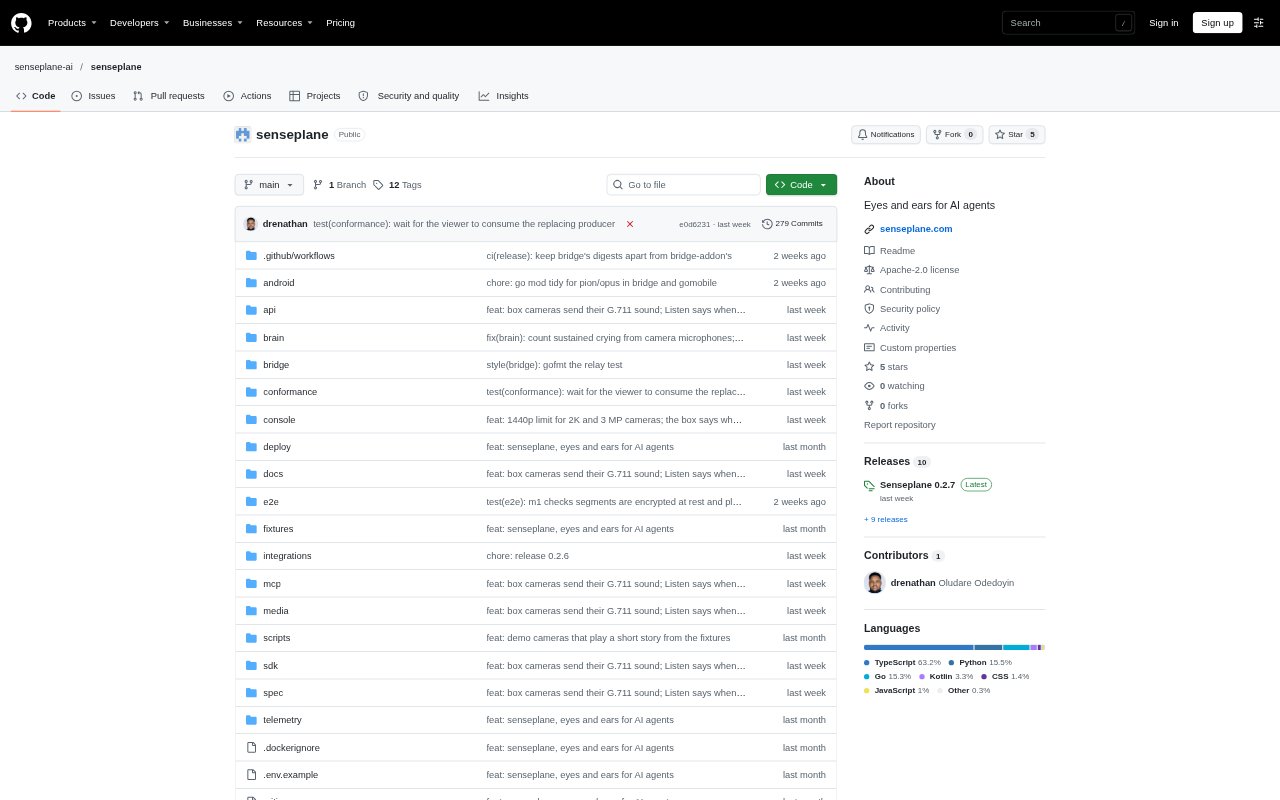
What is Senseplane?
Senseplane connects cameras, microphones and other sensors to AI agents, giving them a way to observe events, answer questions about footage and send reports. It is designed for home, eldercare and small-business monitoring, and can work with existing cameras, phones, Home Assistant sensors and Matter devices. You can run it yourself or use the hosted version, which is free during the alpha; the project is early-stage, so expect rough edges.
Senseplane Features:
Camera and Sensor Inputs: Connect phone or laptop cameras, IP cameras through a bridge, Home Assistant sensors and Matter devices to supply observations.
Custom Event Watches: Describe an event to watch for, such as a package at the door, an after-hours entry or a warming cold room.
Questions and Measures: Ask when an event happened or request activity measures, such as meal counts, sleep duration or changes in sound levels.
Clips and Stories: Replay footage within the retention period, retrieve event clips, or combine several cameras into a story about an object or pet.
Agent Connections: Connect agents through MCP, REST, signed webhooks, Telegram, or the TypeScript and Python SDKs.
Privacy Controls: Blur faces and number plates, apply privacy masks, keep sound off until enabled, and encrypt recordings at rest.
Senseplane Benefits:
Fewer Routine Checks: Event-based summaries and alerts can help families stay informed without repeatedly calling or reviewing footage themselves.
Focused Notifications: Reports can go to the right person with evidence, helping teams attend to relevant incidents instead of monitoring every camera.
Lower Analysis Load: Continuous basic detection and occasional vision-model checks avoid needing a vision model to inspect every moment of video.
Controlled Automation: Agents receive observations and confidence rather than acting independently, so people can decide what happens next.
Flexible Data Handling: Self-hosting and configurable privacy settings give operators options for where the system runs and what agents can see.
Use Cases:
Family Check-Ins: Set up quiet home sensors to summarize an older relative’s usual routine and alert family when something seems unusual.
Home Package Watch: Ask for a notification when a delivery is left at the door, then review the event snapshot or clip.
After-Hours Security: Watch a shop after closing for staff-door entry, visitors, or other events and send evidence to the appropriate person.
Stockroom Monitoring: Track signs such as low shelves or a warming cold room to help staff notice operational issues.
Activity Questions: Use recorded events to answer questions about when a courier arrived, how long a pet was in view, or how many meals were observed.