

What is Skep?
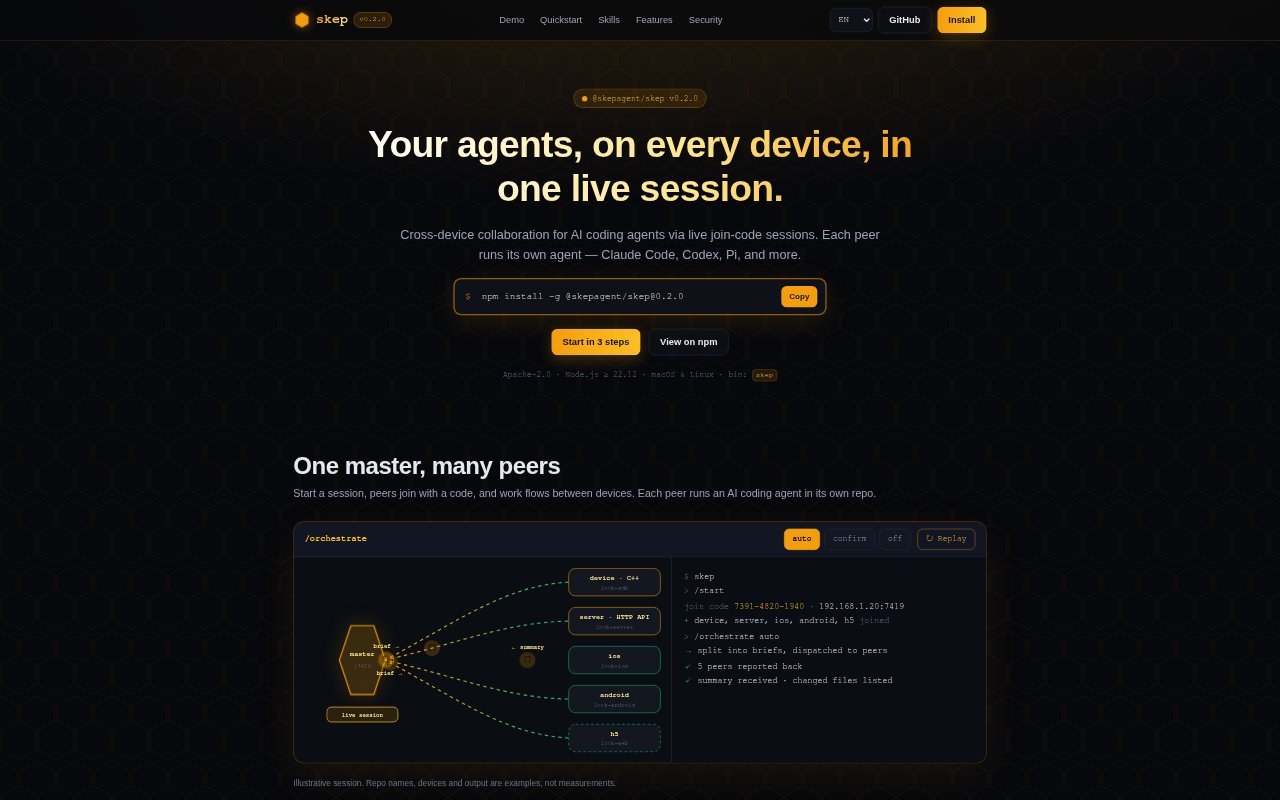
Skep is an open-source command-line tool for coordinating AI coding agents across devices. One device starts a live session, and peers join from their own repository checkouts, each running its own agent. It supports macOS and Linux with Node.js 22.12 or later. Agent logins remain on their respective devices; hardware, bench, and real-device testing remain the team’s responsibility.
Skep Features:
Cross-Device Sessions: Start a session on one device, then let peers join with a code and address from other devices and repository checkouts.
Independent Agents: Each peer runs an AI coding agent in its own repository, with support for agents such as Claude Code, Codex, and Pi.
Work Orchestration: Use auto, confirm, or off modes to control how the orchestrator divides work, or send an intent yourself.
Packaged Skills: Choose workflows with roles, stages, and checks, including a generic default and an example for cross-stack BLE features.
Role Briefs: Bind peers to roles and provide staged briefs that carry a shared contract across the participating repositories.
Cross-Stack Check: The session summary compares what each role reported and identifies issues that need human attention.
Session Interfaces: Work through a terminal interface with split panels and scrollback, or open the session in a browser UI.
Skep Benefits:
Distributed Work: Teams can divide a request across separate checkouts without first bringing every repository onto one machine.
Local Credentials: Keeping agent logins on their own devices means teams do not need to centralize provider credentials for a session.
Visible Mismatches: Comparing role reports against a shared contract helps teams spot inconsistencies before they decide what needs review.
Workflow Flexibility: Teams can reuse role-based processes for recurring work while keeping plain sessions available for other requests.
Clearer Review: A summary that names changed files gives reviewers a focused starting point for understanding session output.
Use Cases:
Cross-Repository Features: Coordinate a feature that requires changes in several repositories, such as device, server, and mobile client code.
Remote Agent Handoffs: Have peers on different devices join a session and take on work from their own repository checkouts.
Recurring Team Workflows: Create a team skill with roles, prompts, and checks for a repeatable process across projects.
Guided Implementation: Use staged role briefs and a shared contract when several agents need to implement parts of one feature.
Human Review: Review a cross-stack session summary to see what each role reported and which points still need human attention.