
What is Sorcerer?
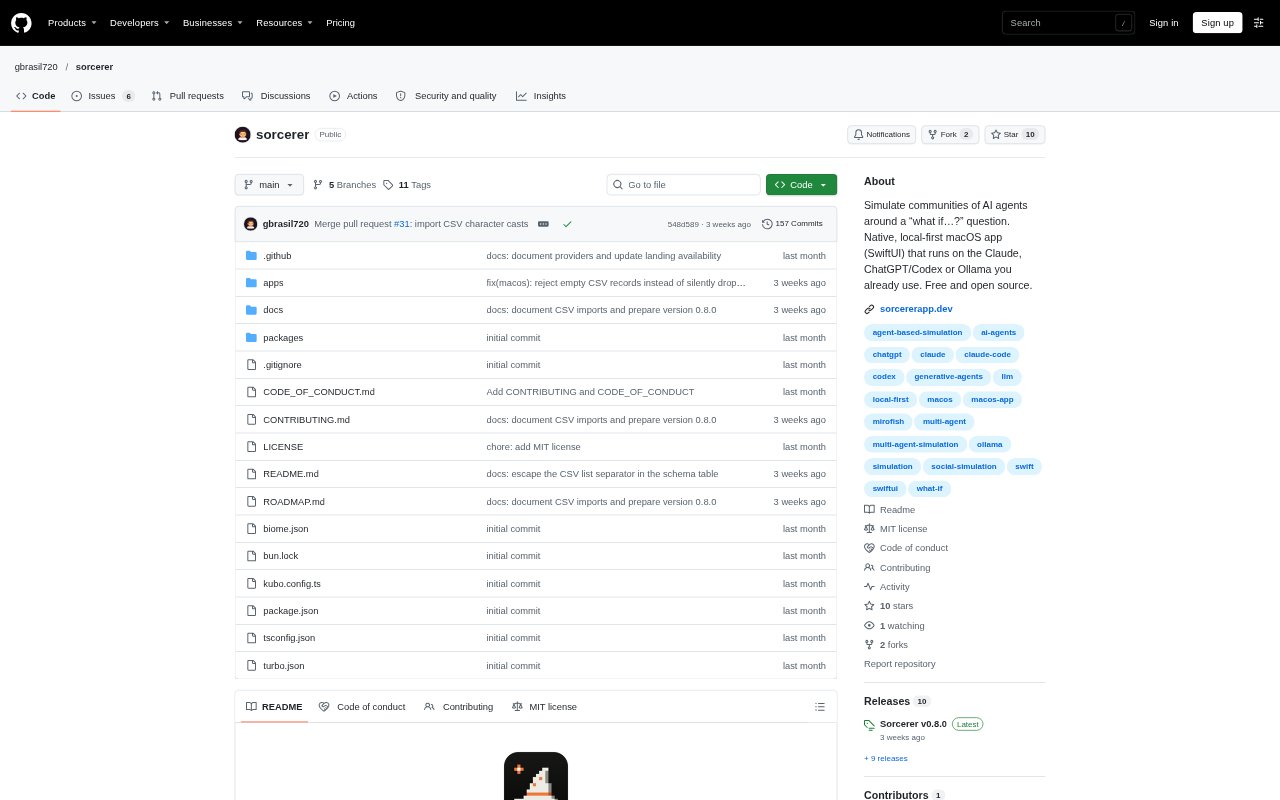
Sorcerer is a native, local-first macOS app for exploring “what if” questions through simulated communities of AI characters. Set up a cast with personalities, goals, relationships and memories, give it context about a product or situation, then run rounds and compare possible reactions. Sorcerer uses AI services or local models you connect rather than supplying its own model, and is free and open source for macOS 15 or later. Its results are hypotheses to investigate, not evidence of real-world behavior.
Sorcerer Features:
Character Memory: Characters have individual personalities, interests, goals and relationships, and retain memories across simulation rounds.
Context Briefs: Create a brief from a repository, folder, website or notes, then mark facts as public, insider or hidden.
Community Import: Summon a cast or import 2–16 characters from a CSV file, review them and edit their details before starting.
Branch Comparisons: Freeze a community at a chosen round, replay its history and fork it to test a different decision with the same characters and memories.
Polls and Actions: Ask characters questions during a run and track actions such as upgrading, cancelling, leaving or inviting someone.
Provider Choice: Use Claude, ChatGPT through Codex, Gemini, Ollama, LM Studio or an OpenAI-compatible endpoint, with separate models for characters, reports and chats.
Usage Controls: Monitor Claude usage windows and pause a run before the limit, then resume when the window resets.
Sorcerer Benefits:
Surface Objections: Possible concerns and reasons behind reactions become easier to spot before committing to a decision.
Compare Decisions: Seeing different branches side by side helps clarify how a changed choice could alter the conversation.
Trace Findings: Reports link findings to the posts behind them, making it easier to inspect how a conclusion emerged.
Keep Work Local: Local storage and support for on-device models let you keep worlds on your Mac when using local inference.
Use Existing AI: Connecting models and subscriptions you already use avoids needing a model bundled with the app.
Use Cases:
Test Product Pricing: Explore how a simulated customer community might respond to a price change or a proposed subscription tier.
Review Launch Timing: Compare possible reactions to launching a product before a rival or announcing it to customers.
Assess a Headline: Model how a headline might play out in a group chat and surface questions people could raise.
Explore Workplace Changes: Consider possible staff reactions to a four-day workweek or another proposed change to office routines.
Try Community Rules: Examine scenarios such as banning anonymous posts, electing moderators or requiring a credit card at signup.