

What is SpecDeck?
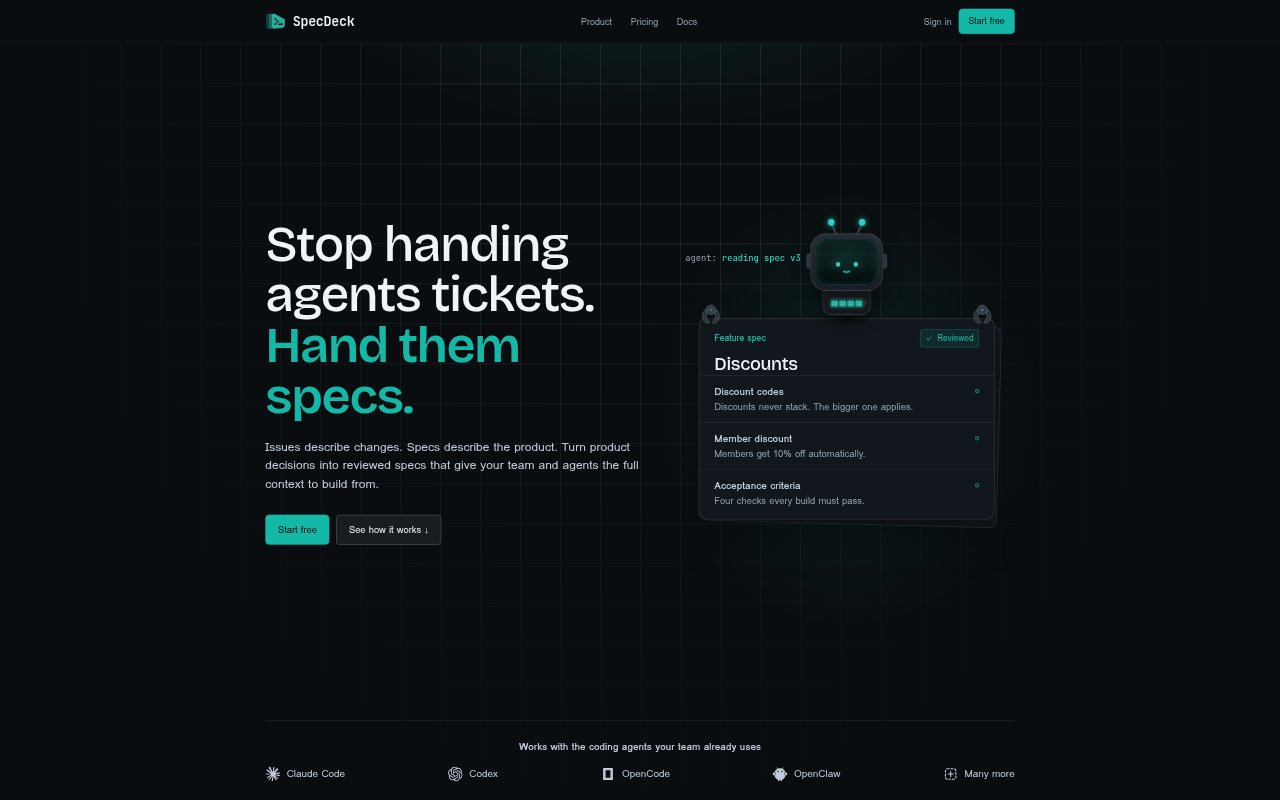
SpecDeck is a spec-driven development workspace for product and engineering teams building software with coding agents. It brings project context, feature requirements, decisions, and acceptance criteria together so agents and teammates can work from the same product information. Teams can draft and review specs, hand goals to agents or people, and check completed work against the criteria before accepting it.
SpecDeck Features:
Project Context: Capture project terminology, technical context, and decisions in foundational documents that teammates and agents can consult across workspaces.
Feature Specs: Describe what a feature should do and how to check it, with requirements and acceptance criteria kept alongside relevant product decisions.
Visual Editor: Write and refine specs in a browser-based editor without needing coding tools or Markdown, making it accessible to product and design colleagues.
Agent Planning: Agents can plan goals from ready specs in build order, while teams can delegate a goal, guide the work, or take ownership themselves.
Reviewable Changes: Spec changes return as diffs for review, and an agent can flag a goal for team input when it needs a decision.
Built-In Assistant: Product colleagues can use an AI assistant to draft requirements, identify conflicting decisions, and propose spec edits for the team to accept.
Acceptance Checks: When agents submit work, they mark each acceptance criterion met or unmet, leaving the team a checklist to verify.
SpecDeck Benefits:
Fewer Context Gaps: Keeping decisions beside requirements helps reduce the chance that an agent follows a ticket while missing a product rule recorded elsewhere.
More Consistent Work: A shared source for terminology and decisions gives different agents and teammates a common reference as they work across features.
Clearer Handoffs: Because goals draw on the same specs, another teammate or agent can pick up work without relying only on informal explanations.
Product Involvement: Product and design colleagues can shape requirements in the browser without first learning a coding tool or writing Markdown.
Easier Verification: A criteria checklist makes it clearer what the team still needs to verify before deciding whether submitted work is acceptable.
Use Cases:
Document Product Decisions: Record a rule such as whether discounts can stack next to the feature spec, so an agent can account for it when changing checkout behavior.
Prepare Agent Work: Turn a feature request into a reviewed spec with relevant context and acceptance criteria before asking a coding agent to build it.
Plan Feature Goals: Use ready specs to organize goals in build order, then assign them to an agent, guide the work, or take them on as a teammate.
Draft Requirements: Have a product colleague use the built-in assistant to shape a requirement, spot a conflict with an existing decision, and propose edits.
Review Completed Work: Check an agent's met and unmet acceptance criteria against the team's own checklist before accepting a feature result.