
What is Squadra?
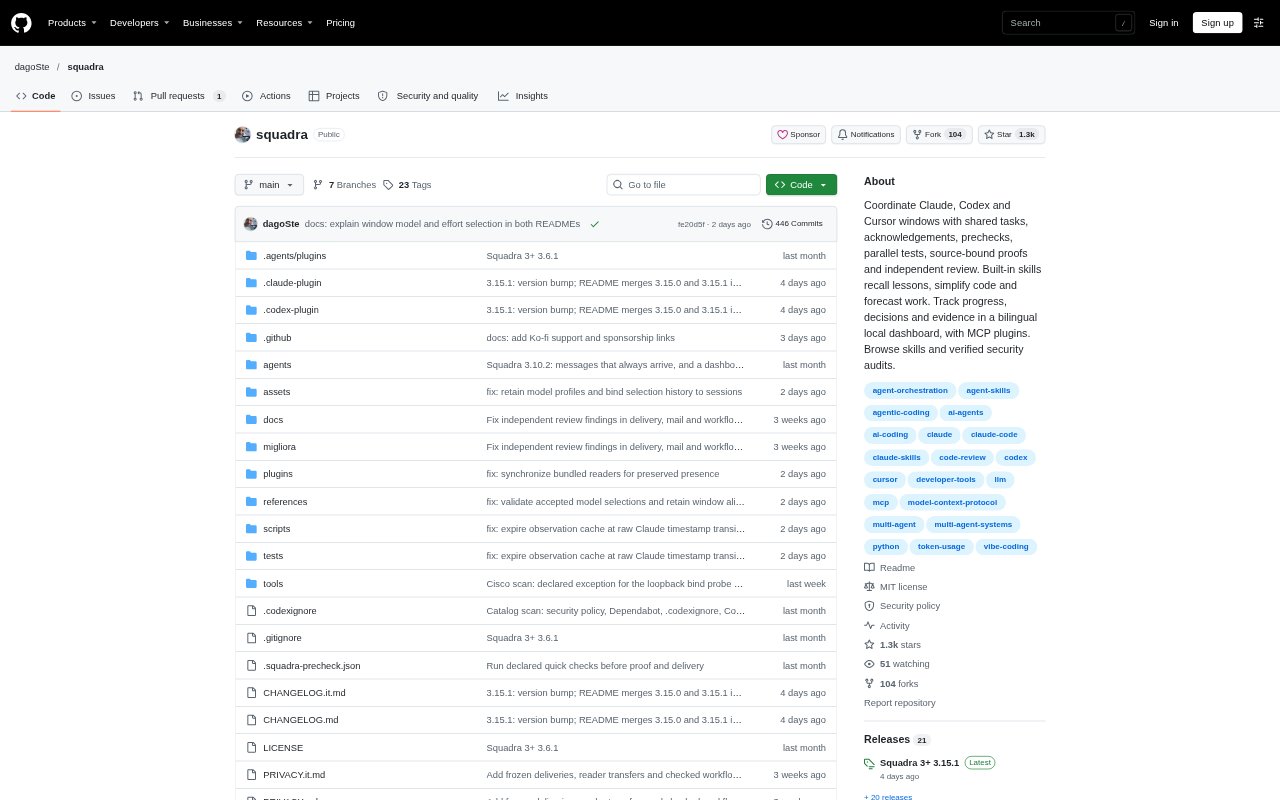
Squadra is a local coordination system for teams using multiple coding-agent sessions on one software project. It gives Claude Code, Codex and interactive Cursor windows a shared workflow for assigning work, recording decisions and checks, and having a different window review code; each can work in its own checkout while contributing to the same registry. Its CLI and local dashboard show task ownership, evidence and requests for human input, in English or Italian, without requiring an account.
Squadra Features:
Shared Task Registry: The CLI records task assignments, messages, executed checks and decisions in a shared registry stored on the local machine.
Role-Based Workflow: A coordination skill guides agent windows through coordinator, builder and reviewer roles, keeping the reviewer separate from the window that wrote the code.
Confirmed Handoffs: A task cannot begin until its assigned recipient confirms that the work has been received.
Code-Bound Evidence: Checks and review reports are bound to the code they cover and no longer count if that code changes.
Local Dashboard: The dashboard presents progress, evidence and requests for human input in English or Italian, with a live view of the project.
Usage Tracking: Usage views show token totals by window, model and task across Claude Code and Codex, with suggestions for which window or model should take the next task.
Automatic Model Selection: For turns managed by squadra run, configurable profiles can select an economy or quality model and effort setting based on the task.
Squadra Benefits:
Keep Work Organized: Teams can follow ownership, decisions and completed checks across separate agent sessions instead of relying on each window’s chat history.
Catch Review Gaps: Separating the writer from the reviewer makes it easier to ensure a change receives an independent check.
Spot Stale Evidence: Teams can tell when a code change means previous checks or reviews need to be redone.
Focus Human Attention: Requests for input and recorded decisions help people see where their judgment is needed next.
Keep Records Local: Teams can coordinate without creating an account, while keeping the shared registry on their own machine.
Use Cases:
Parallel Feature Work: Coordinate several coding-agent windows implementing different tasks for the same software project.
Independent Code Review: Assign one agent window to implement a change and another to review it before the team closes the task.
Separate Checkouts: Let agents work in their own project checkouts while sharing assignments, decisions and evidence through one registry.
Human Decision Points: Track a task that needs a person to choose between options or confirm a recommendation before work proceeds.
Agent Usage Planning: Review token totals and suggestions when deciding which Claude Code or Codex window should handle the next task.