

What is Superlines?
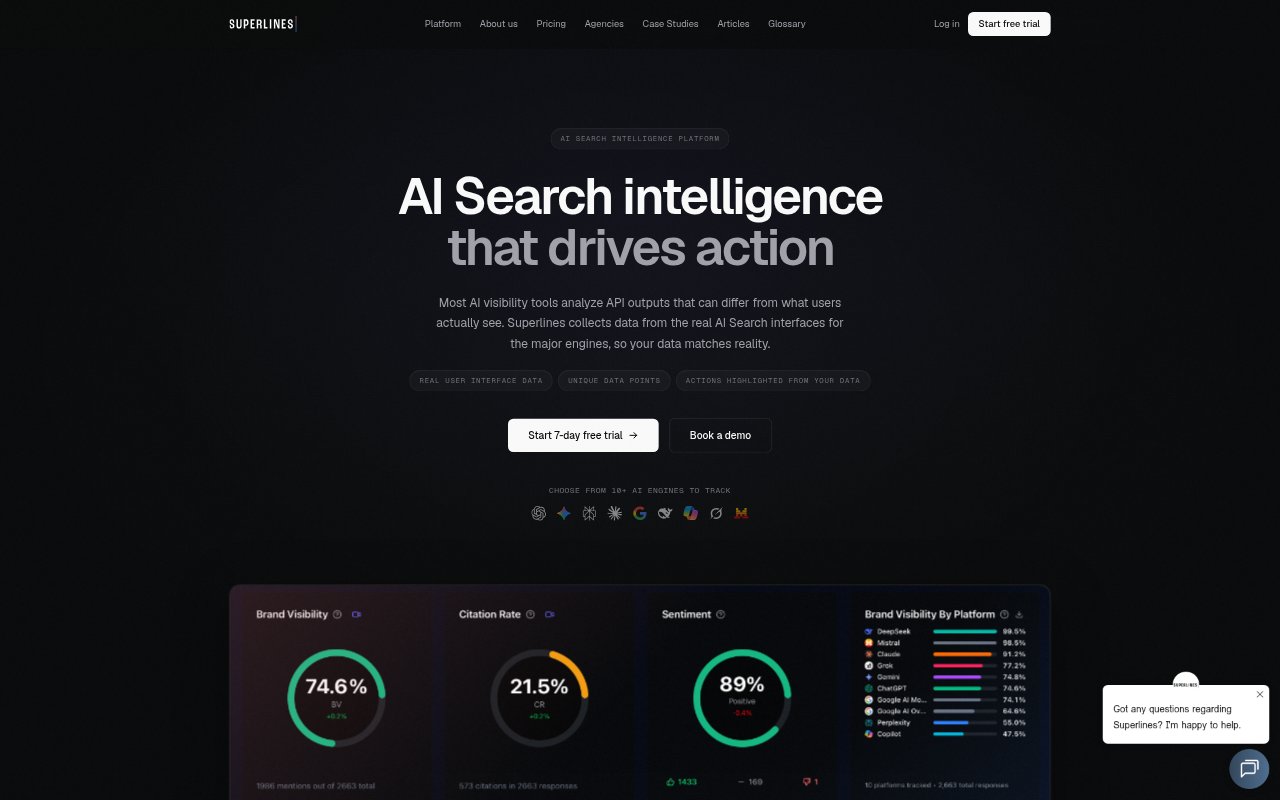
Superlines is an AI Search intelligence platform for enterprise marketing teams and agencies that need to understand how brands appear in AI-generated answers. It tracks brand visibility, citations, position and competitors across AI engines, markets and languages, using real user-facing interfaces for most engines. Teams can review the data in the platform or connect it to their workflows through the API and MCP server, with self-service plans also available for smaller teams.
Superlines Features:
AI Engine Tracking: Monitor brand appearances across more than 10 AI engines, including ChatGPT, Gemini, Perplexity, Google AI Overviews, Claude and Microsoft Copilot.
Real Interface Data: Collect responses from the AI interfaces people use, with data from official APIs clearly identified when an interface cannot be used.
Visibility Metrics: Review brand visibility, citation rate, average position, sentiment, mentions and share of voice across engines and prompts.
Prompt Analysis: Create custom prompt sets, import prompts from SEO data, track changes per prompt and discover fan-out queries used by AI models.
Competitor Benchmarking: Compare brands across markets and engines, follow visibility trends, and inspect cited URLs and gaps in competitor citations.
Action Planning: Use an AI agent and Action Center to turn visibility gaps into prioritized recommendations, briefs and tasks across content, technical fixes and outreach.
Workflow Connections: Access data through the platform, API or MCP server, and connect Superlines to assistants and tools such as Claude, ChatGPT, Cursor and n8n.
Superlines Benefits:
Grounded Decisions: Seeing the responses and citations users encounter helps teams base brand decisions on observed AI results rather than API-only estimates.
Clearer Priorities: Prompt-level and competitor comparisons help teams focus work on the topics, pages and markets where visibility gaps are most apparent.
Shared Understanding: A common view of brand representation gives SEO, content, communications and digital teams a clearer basis for coordinating improvements.
Client Reporting: Agency teams can use comparable visibility data to explain client performance and show how AI Search presence changes over time.
Faster Follow-Through: Prioritized actions and briefs reduce the effort of translating analytics into specific content, technical or outreach work.
Use Cases:
Brand Visibility Reviews: Marketing teams can check how AI answers describe their company and whether it is mentioned or cited for important category prompts.
Market Comparisons: Global teams can compare brand visibility and competitors across regions, languages and AI engines when planning market-specific work.
Agency Client Reports: Agencies can monitor several client brands, compare them with competitors and prepare reports on AI Search visibility trends.
Content Planning: Content teams can use fan-out queries, cited URLs and visibility gaps to decide which pages to update or new articles to create.
Competitor Monitoring: SEO and brand teams can track which competitors appear in AI answers, which sources support their visibility and how their share changes.