

What is SurgeGraph?
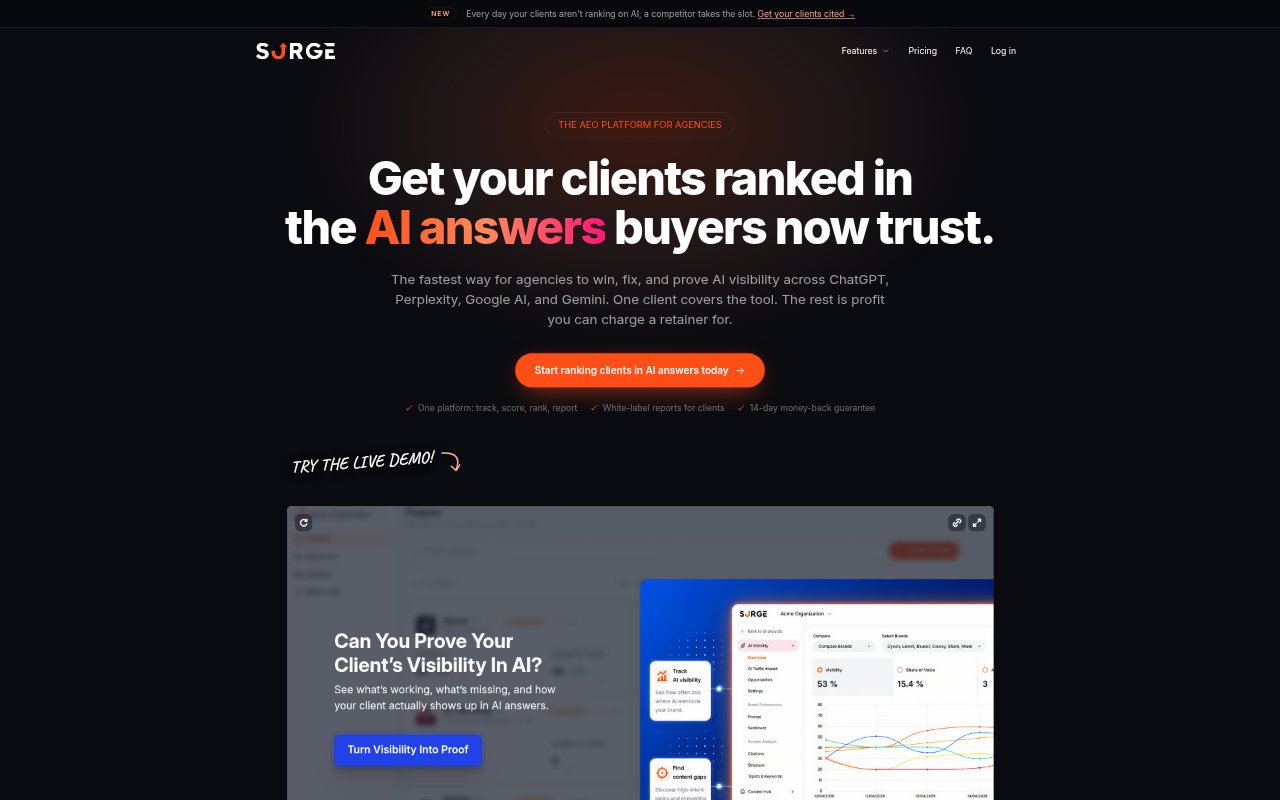
SurgeGraph is an answer engine optimization and AI visibility platform for agencies and marketing teams. It tracks how brands appear in answers from AI search engines, highlights citation and content gaps, and provides tools to address them. Teams can also create and optimize articles, research topics and competitors, and share visibility reports with clients or stakeholders. Available engines and update frequency vary by plan.
SurgeGraph Features:
AI Visibility Tracking: Monitor brand mentions, citations, sentiment, and share of voice across supported answer engines, with tracking frequency depending on the plan.
Prompt Rankings: Track individual queries to see which brands appear in AI answers, where your brand ranks, and which prompts have low visibility.
Citation Analysis: Review the sources AI engines cite, compare citation overlap with competitors, and assess the difficulty of citation opportunities.
Content Optimization: Score existing pages for SEO and AEO, identify improvements, and apply one-click fixes or push updates to WordPress.
Article Generation: Create articles from keywords, generate up to 50 drafts from a CSV, and choose between OpenAI and Google Gemini models.
Brand Knowledge: Build knowledge libraries from URLs, documents, and text, then use author profiles to guide content toward a client’s voice and expertise.
Client Reporting: Export reports and, on eligible plans, share branded PDFs or links showing AI visibility and traffic impact.
SurgeGraph Benefits:
Clearer Priorities: Teams can focus effort on pages and topics with identifiable visibility gaps instead of choosing updates by guesswork.
Stronger Client Reviews: Shareable evidence of citations, competitor visibility, and AI-referred traffic gives client conversations more substance than rankings alone.
More Consistent Content: Using client knowledge and voice profiles helps teams produce material that reflects a brand’s expertise and style.
Less Repeated Work: Topic research, bulk drafting, and page optimization bring several content tasks into one workspace for agency teams.
Earlier Competitive Signals: Changes in citations, sentiment, and competitor presence help teams spot where a brand is gaining or losing ground.
Use Cases:
Agency Client Audits: Review a client’s presence across AI answers, compare it with competitors, and identify missing prompts or citations.
Monthly Reporting: Prepare a client update that covers AI visibility, brand sentiment, citations, and traffic from AI platforms.
Content Backlogs: Assess existing site pages for AEO and SEO issues, then prioritize older content that could be improved.
Editorial Planning: Use topic and domain research to find coverage gaps and turn selected keywords into article briefs or drafts.
Brand Voice Content: Create campaign or client articles using reference material and author profiles to keep the output aligned with the brand.