

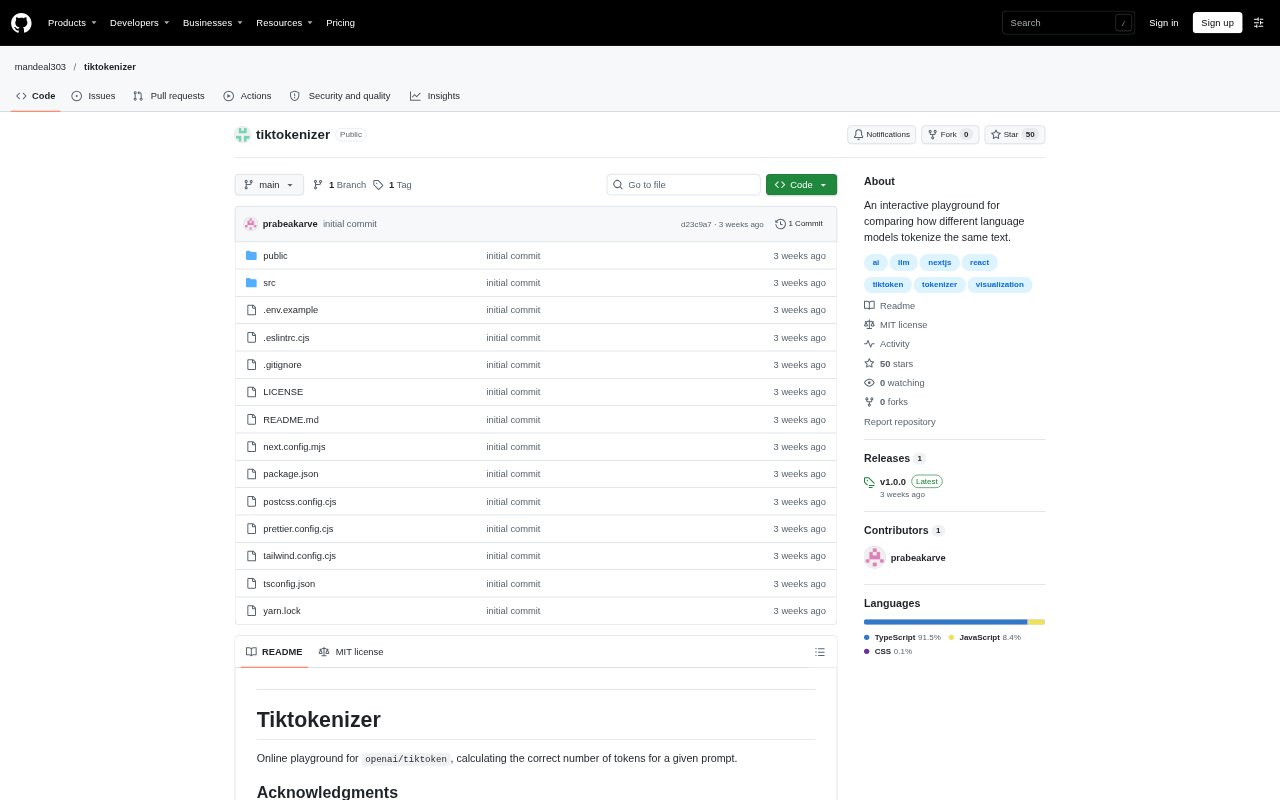
What is tiktokenizer?
Tiktokenizer is an online playground for calculating token counts for prompts and comparing how different language models tokenize the same text. It is for people who want to inspect tokenization results while preparing or reviewing prompt text. Rather than treating a prompt’s length as a word or character count, users can check its token count and see how that text is tokenized across models.
tiktokenizer Features:
Prompt Token Counts: Enter a prompt to calculate its token count, giving you a count for the specific text you are considering.
Model Comparison: Compare how different language models tokenize the same text and examine whether their token counts differ.
Same-Text Testing: Use identical text in a comparison to focus on differences in how models tokenize the input, rather than differences in wording.
Interactive Playground: Work with tokenization in an online playground, with prompt text as the input and token counts as the result.
Tiktoken Calculation: The playground is built around OpenAI’s tiktoken, and its stated purpose is to calculate the correct token count for a prompt.
tiktokenizer Benefits:
Clearer Prompt Length: A token count gives you a more relevant view of prompt size than judging its length from the number of words alone.
Model Differences: Seeing the same text tokenized across models makes differences in their treatment of that input easier to notice.
Informed Prompt Review: Checking a prompt’s token count helps you review its size before deciding whether its wording needs further attention.
Direct Inspection: Results tied to the text you enter make it easier to examine a particular prompt instead of relying on a general estimate.
Focused Comparison: Holding the text constant keeps attention on how models tokenize it, supporting a more useful comparison of their results.
Use Cases:
Check a Draft Prompt: Review the token count of a prompt draft while preparing it for use with a language model.
Compare Model Results: Check how several language models tokenize one prompt when considering which model to use for the same text.
Inspect Revised Wording: Calculate the token count for a prompt after editing its wording and compare it with the earlier version.
Explore Tokenization: Try the same passage across different language models to observe how their tokenization of that text compares.
Review Prompt Size: Use a direct count to assess the size of a prompt before incorporating it into a model-based task.