

What is UnicornFork?
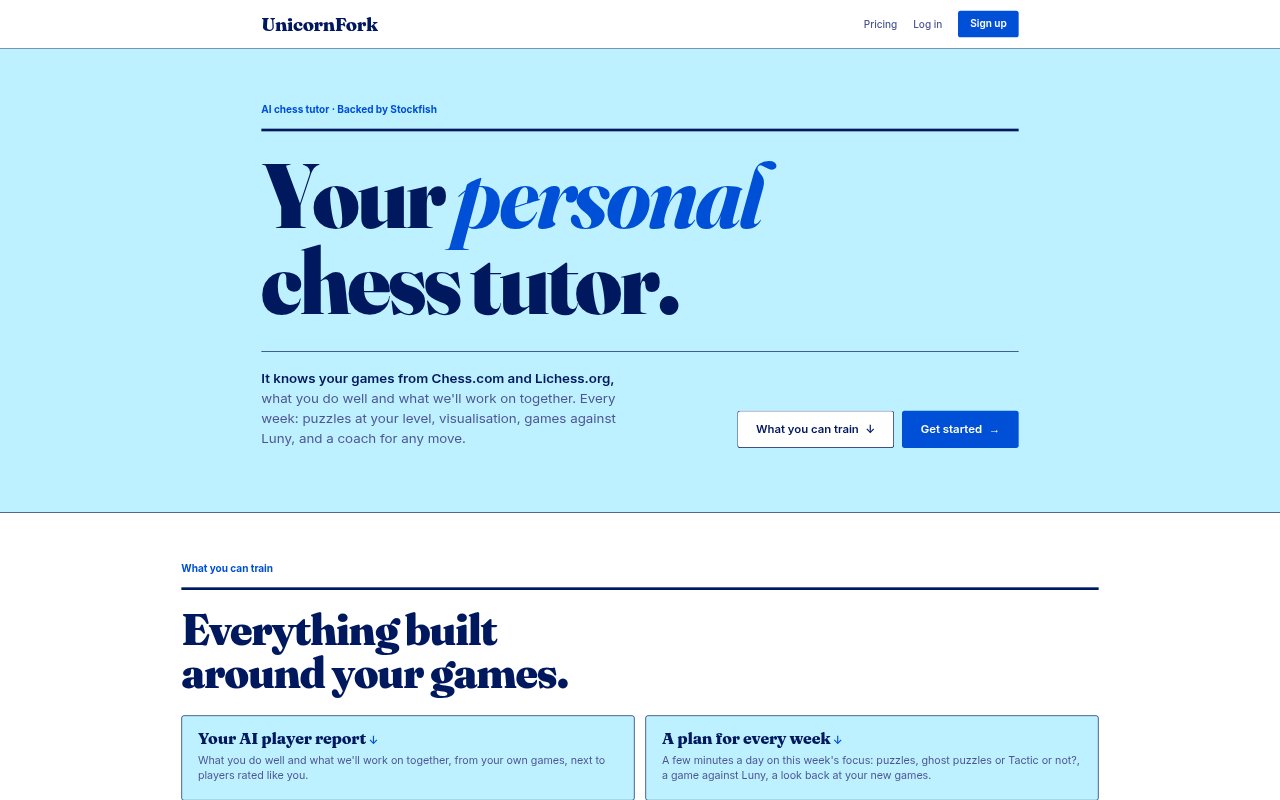
UnicornFork is a chess tutor for players who want training tied to their own games rather than a generic practice routine. It connects to chess accounts and uses Stockfish analysis to identify strengths and areas to work on, then builds a weekly training plan. Players can practise with puzzles, visualization drills and an AI opponent, or ask a move coach for an explanation. The tool is free to start, while paid plans add additional AI models and server-based Stockfish.
UnicornFork Features:
Game Report: Stockfish reviews up to 100 rated blitz, rapid and classical games from linked accounts, covering mistakes, openings, clock trouble and positions won or saved.
Weekly Training: A weekly plan focuses on an area from the player report and schedules a small daily mix of puzzles, review, visualization or play.
Move Coaching: Players can ask about any move in plain language, choose how the coach explains it and follow the suggested moves on the board.
Level-Based Puzzles: The puzzle collection draws from real games, adapts to the player's level and tracks puzzle performance across themes and openings.
Ghost Puzzles: The board stays several moves behind as players picture the changing position and try to find the tactic.
Tactic or Not: Real-game positions mix tactical opportunities with positions that call for a good move but contain no tactic.
Luny Opponent: Luny plays human-like moves at the player's level, with options to choose an opening or continue from a position in the player's own game.
UnicornFork Benefits:
Focused Practice: Basing the plan on recurring patterns in a player's games helps direct practice toward relevant weaknesses instead of treating every chess skill as equally urgent.
Clear Priorities: Comparisons with players at a similar rating give learners context for deciding which strengths to build on and which areas deserve attention.
Practical Explanations: Move-by-move answers on the board make it easier to connect an explanation to the position being studied.
Realistic Tactics: Mixing tactical positions with ordinary game positions gives players practice judging when a combination is present instead of assuming every position is a puzzle.
Flexible Sparring: Choosing an opening or resuming a game position lets players practise a particular line or revisit a chance they missed.
Use Cases:
Reviewing Recent Games: A club player can link chess accounts to find patterns in missed tactics, opening results, time trouble or lost winning positions.
Building A Routine: A learner who wants a regular practice habit can follow a daily plan with a selected weekly focus and a choice of training activities.
Studying An Opening: Players preparing a particular opening can choose it for a game against Luny and practise the line against an opponent at their level.
Training Visualization: Players working on calculation can use ghost puzzles to picture piece locations after several moves before searching for a tactic.
Replaying A Missed Win: After a promising game, a player can start Luny from one of its positions and practise converting the advantage into a win.