

What is Velu?
Velu is a documentation platform for teams that need their product docs to work for human readers and AI agents. It provides a checker that scores documentation against an open standard, alongside tools to create, publish, and maintain docs. Teams can write in a web editor or work from a repository, then publish pages with machine-readable formats and agent access built in. It supports SaaS and AI product documentation, including API references and versioned docs.
Velu Features:
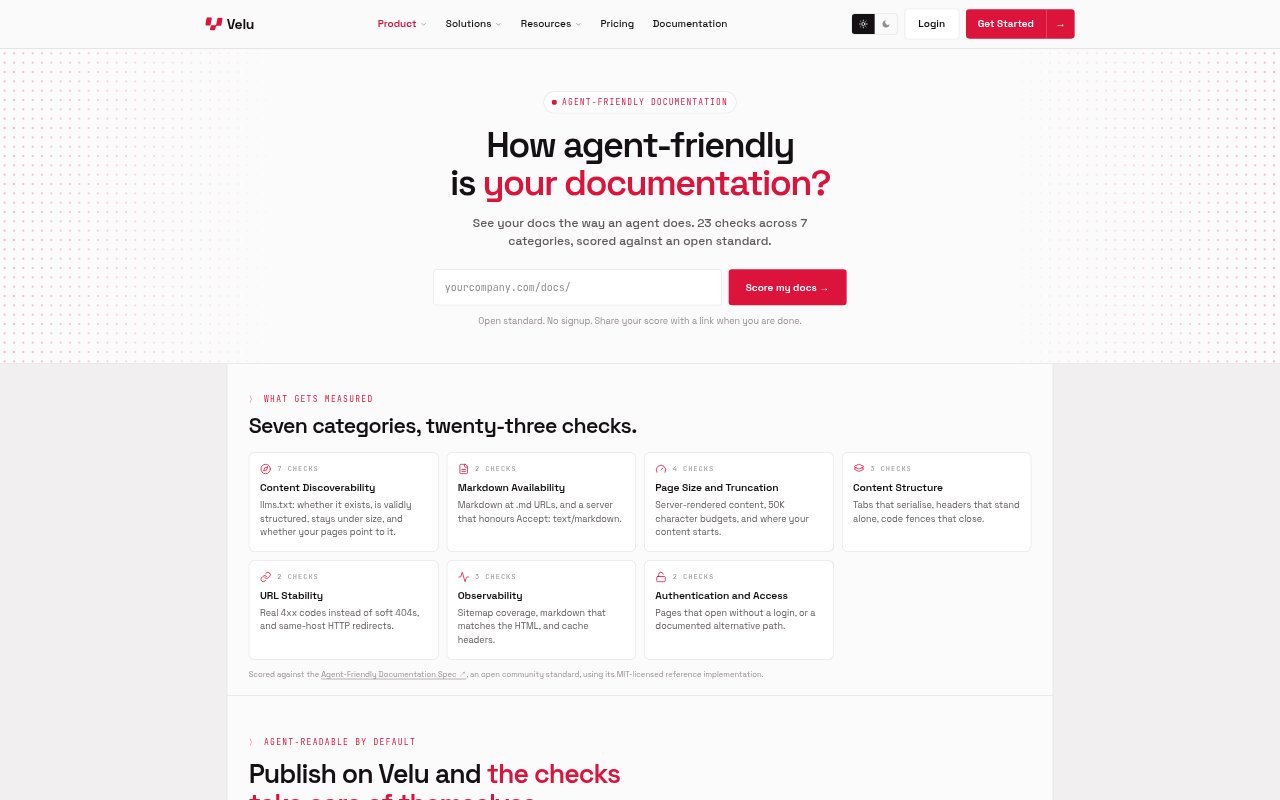
Documentation Audit: The checker evaluates a sample of your pages against 23 checks in seven categories, including Markdown access, page size, URL stability, and authentication.
Agent-Ready Exports: Velu generates and maintains llms.txt and skill.md, serves Markdown versions of pages, and provides an MCP server for agents to search, read, and cite docs.
Repository Workflows: Connect a code repository to draft documentation updates from product changes, review them as diffs, and open pull requests for approval.
Docs Authoring: Write in the web editor or from a repository using reusable blocks such as tabs, accordions, code groups, Mermaid diagrams, and callouts.
Reader Answers: Ask AI answers questions from published docs and links to the pages it used, while Agent V can provide answers with citations, code snippets, and page links.
API Documentation: Generate API references from an OpenAPI spec and add an API playground where developers can send requests and inspect responses.
Versions and Search: Maintain documentation for multiple product versions, with full-text search, a changelog page, and an RSS feed for release notes.
Velu Benefits:
Find Agent Gaps: A scored audit makes it easier to spot where agents may struggle to discover, fetch, or interpret your documentation.
Reduce Manual Updates: Repository-based drafts and automatically maintained agent files help teams spend less time keeping docs aligned with product changes.
Review Before Publishing: Diff-first reviews and pull requests let teams check proposed documentation changes before they reach readers.
Support Faster Answers: Cited responses and searchable docs help readers find relevant guidance without relying only on manual browsing.
Serve Multiple Releases: Separate documentation versions help customers find guidance that matches the product release they use.
Use Cases:
Audit Existing Docs: A documentation team can check whether its current site is discoverable and readable by agents before planning improvements.
Document Product Releases: A SaaS team can connect its repository and review suggested page updates as a release changes product behavior.
Publish API Guides: An AI company can generate an API reference from its OpenAPI spec and let developers try requests from the documentation.
Maintain Model Versions: A team changing models or APIs can keep separate docs for older generations while publishing current guidance at the main address.
Help Docs Readers: A product team can offer search and cited AI answers so customers can locate instructions and see which page supports an answer.